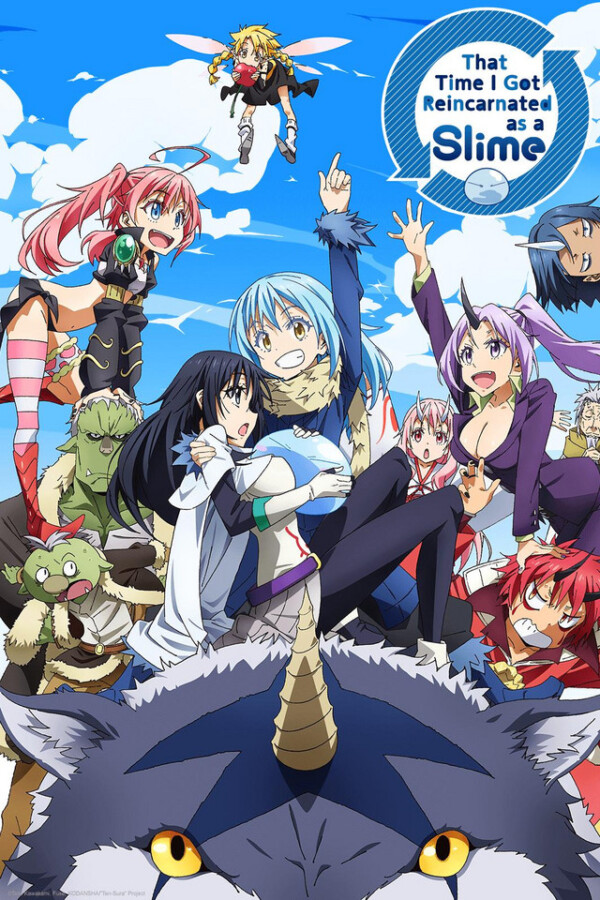
One Fact and Spoilers page for That Time I Got Reincarnated as a Slime — hub tab, not a news dump. This map runs through the aired TV through Season 4 Episode 17. Character names link to guides.
What the anime rarely explains
Predator / Gluttony is analysis and storage, not “loot the corpse.” Naming spends Rimuru’s magicule budget and evolves the named. Monster ranks (D through Special S) are a Western-Church grading habit, not a video-game HUD the characters see. The Rimuru page covers the skill stack; this tab is the series map.
Watch order
- Season 1 (24) → Season 2 Part 1 (12) → Season 2 Part 2 (12) → Season 3 (24) → Season 4 (airing)
- Slime Diaries is optional comedy. Visions of Coleus sits between S1 and S2. OADs are extras.
- Start at Episode 1. Do not jump to Season 4.
Season 1 — village to nation
Veldora in the cave; goblin village via Rigurd, Rigur, Gobta; Ranga from the direwolves. Dwargon adds Kaijin and Gazel Dwargo. Shizue and Ifrit change Rimuru’s face and will. Ogres become Benimaru, Shuna, Shion, Souei, Hakurou. The Orc Disaster ends with Geld named instead of erased. Gabiru and Souka join the marsh politics. Milim crash-lands. Charybdis is a storm weapon. Ingrassia introduces Yuuki and Shizu’s students — Chloe especially. Diablo answers a summon at the season’s extra beat.
Season 2 — Falmuth, harvest, Walpurgis
Trade with Eurazania (Carrion, Albis, Suphia, Phobio). Falmuth’s invasion — Edmaris, Razen, otherworlders Shogo / Kirara / Kyouya — ends in Megiddo and a True Demon Lord harvest. Shion’s death and revival is the cost. Walpurgis seats the Octagram: Guy, Milim, Ramiris, Dagruel, Dino, Luminous, Leon, Rimuru. Clayman is the banquet’s loser. Ramiris and the labyrinth become Tempest infrastructure. Youm is installed as the human-facing king. Mjurran, Laplace, and Footman sit on Clayman’s Moderate Clown Troupe side of the board.
Season 3 — Church, Empire-adjacent, festival
Hinata Sakaguchi and the Western Holy Church / Seven Days collide with Tempest on bad intel. Luminous Valentine is the god behind the church. Founding Festival diplomacy brings Gazel, Elmesia, Youm, and a “hero” named Masayuki. Labyrinth opens as national product. Primordial demons Testarossa, Ultima, Carrera enter Rimuru’s staff beside Diablo. Stop before Season 4 if you want the festival as an ending for a while.
Season 4 (through Episode 17) — West, Greed, Lubelius
New days of diplomacy: Western Council, invitations, dungeon evolution, avatar teams. Through Episode 17 the board is the Council of the West, a greed-line investigation around Mariabell Rosso and Granbell, Milim’s friend, Tempest evolving again, new companions, and Diablo’s Black Numbers. Then Lubelius, the Point of Convergence (aired 7 Aug 2026 after delay) — Luminous’s domain, Hinata’s church politics still in the room. This tab does not invent Episode 18+ fight outcomes. Read Season 4 Episode 17 for that hour. Full grid: Characters & powers.
Manga / LN context the TV softens
Ranks, naming cost, and some inner-voice skill talk are denser on the page. The anime is the watch-order source for this site. We do not treat unadapted LN volumes as required homework for the episode guides.
Full named cast (click)
Hub list: Characters & powers. Core officers plus the expanded TV cast are linked from that grid as pages go live.
FAQ
Is the facts tab a Season 4 recap? No. It is the spoiler map. Episode reviews are the hour-by-hour pages.
Do I watch Diaries first? No.
Where next? Hub · Overall review · Season 1
Sources: Crunchyroll titles; Wikipedia Tensura episode list; official Tensura anime site; AniList character credits.