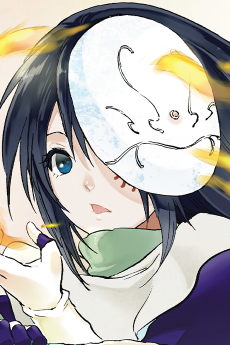
Shizue Izawa — Shizu to almost everyone who matters — is the human teacher whose story hits harder than most of Tensura’s power fantasy. Other-worlder, mask, flame magic, exhausted kindness: if Rimuru is the series’ engine, Shizu is Season 1’s heart. This guide covers who she is, why her arc matters, and how she connects to Rimuru without turning the whole page into a spoiler wall.
Quick information
- Role: Otherworlder ally / emotional cornerstone of Season 1
- Also known as: Shizu; Shizue Izawa; Conqueror of Flames (title used around her reputation)
- First appearance: Season 1 (mid-season arc; anime)
- Voice: Yumiri Hanamori (JP) · Dawn M. Bennett (EN)
- Series: That Time I Got Reincarnated as a Slime
Who is Shizue Izawa?
Shizu is a Japanese girl summoned to another world young, forced to survive as a weapon, and eventually shaped into a teacher who still carries battle scars under a calm smile. The antimagic mask is not a fashion choice — it is a control tool for a power that can burn her life away. By the time Rimuru meets her, she is competent, tired, and trying to give kids a softer path than the one she got.
She matters because Tensura’s comedy nation-building suddenly has to sit with real trauma. Shizu is proof that “isekai lucky protagonist” is not the only otherworlder story. Some people get summoned, used, and left negotiating with a curse. When Rimuru connects with her, the show stops being only vibes-and-evolution and asks what a reincarnated adult owes someone who never got a fair second chance.
If you are browsing from the characters index, Shizu is the one page you should read before calling Tensura “just power fantasy.” She is also the bridge between Rimuru’s human past and monster future — literally and thematically.
Shizu’s backstory also widens the map. Summoning, exploitative kingdoms, spirit contracts, and “hero” titles that feel more like job descriptions than honor all sit behind her calm voice. Tensura uses her to say the human side of the world can be as predatory as any orc army. That matters when Rimuru later negotiates with humans: the slime already knows “civilization” is not automatically moral.
Fans still argue about how hard the arc swings compared to the show’s usual comedy. Fair. The tonal drop is real. It is also the reason Season 1 is remembered as more than a slime city-builder. Without Shizu, Rimuru’s kindness risks looking like a gameplay perk. With Shizu, it looks like a promise.
Personality
Shizu is gentle in conversation and steel in crisis. She teaches with patience, fights with precision, and rarely wastes words on self-pity even when the story makes it clear she has earned plenty. Around children she softens; around threats she becomes the Conqueror of Flames people whisper about.
There is also quiet loneliness. Decades of not aging like a normal human, carrying a spirit’s burden, and living between worlds leave her polite but distant — until Rimuru treats her like a peer who deserves rest. That recognition is why their bond lands. Shizu does not need worship. She needs someone who understands both classroom chalk and battlefield fire.
Her teacher mode is not a costume she puts on after combat. It is the identity she fought to keep when the world tried to freeze her as a weapon. That is why scenes with students hit harder than another flame beam. Shizu’s rebellion against her own tragedy is ordinary care — lesson plans, patience, the refusal to pass her damage down as curriculum.
Powers & skills
Shizu’s combat identity is controlled inferno plus trained swordsmanship. The mask is part of the kit and part of the tragedy.
Core abilities
- Flame magic / combat casting: High-end fire power that made her reputation among humans and monsters.
- Sword skill: Not a pure mage — she fights like someone drilled for real war.
- Antimagic mask: Suppresses and regulates the spirit-linked power that would otherwise consume her.
- Otherworlder resilience: Summoned-human traits that put her above ordinary soldiers even when exhausted.
Evolutions & forms
Shizu’s “evolution” is not a flashy monster naming scene. It is the opposite: a human story about inheritance, release, and what Rimuru carries forward after their meeting. Heavier outcome details sit behind the spoiler line below — fair warning if you are mid-Season 1.
Role in the story
Shizu’s arc is Season 1’s emotional peak. She enters as a mysterious masked fighter, becomes a guest and friend in Tempest’s orbit, and forces Rimuru to confront mortality, memory, and the cost of power. Her connection to the children she teaches expands the world beyond monster politics into human institutions and summoning abuse.
For Rimuru specifically, Shizu is catalytic. The humanoid form many viewers think of as “default Rimuru” is tied to her image and will. Story-wise, that is not fanservice first — it is grief, respect, and continuity. After Shizu, Rimuru’s protectiveness toward the weak stops being abstract philosophy. It has a face. Pair this page with the Season 1 review if you want the arc’s pacing context.
Her influence also lingers in how Tempest treats children, teachers, and otherworlders who did not get Rimuru’s lucky skill kit. The series does not turn every episode into a Shizu tribute — it does not need to. The protagonist’s face and several later priorities are already carrying her forward. That is quieter storytelling than a resurrection gimmick, and it fits Tensura’s better instincts.
Relationships
- Rimuru Tempest: Kindred otherworlder; the person who finally sees Shizu as more than a weapon or legend.
- Hakurou: Fellow Tempest-era mentor energy; different students, same “discipline saves lives” ethos.
- Veldora Tempest: Exists in Rimuru’s early mythic circle that Shizu’s human story contrasts against.
- Shion: Later Tempest protector-types who inherit Rimuru’s sharper guardianship after Shizu’s influence.
- Benimaru: Military pillar of the nation Shizu’s arc helps emotionally justify protecting.
Best moments
Shizu’s classroom scenes do more character work than many fight episodes. The mask reveals and flame clashes show why kingdoms feared and needed her. Quiet talks with Rimuru about home, aging, and regret are the series at its most human. And the farewell stretch — handled with unusual sincerity for a show that loves hot-spring jokes — is why fans still talk about her years later. If a “best moment” list for Tensura ignores Shizu, it is incomplete.
FAQ
How strong is Shizue Izawa?
Elite human-tier with spirit-boosted flames — dangerous enough to headline crises, not True Dragon tier. Her importance is emotional and catalytic more than endless power-scaling.
When does Shizu first appear?
Mid Season 1 in the anime, after Tempest’s early founding stretch. Exact episode numbers vary by cut; she is not an Episode 1 character.
Why does Rimuru look like Shizu?
Rimuru’s humanoid appearance is connected to absorbing/inheriting her form and lingering will after their arc resolves. It is tribute and transformation, not a random redesign.
Should I know about Shizu before watching?
No — and please do not wiki her ending. Her impact depends on going in cold.
Is Shizu a Demon Lord?
No. She is a summoned human tied to a powerful flame spirit burden, not a Demon Lord seat-holder like Milim.
Is her arc worth the tone shift?
Yes, if you want Tensura to mean something beyond city upgrades. If you only want comedy conquest, you may find it heavy — that discomfort is the point.
Keep exploring
Your turn
Did Shizu’s arc change how you read Rimuru afterward? Favorite quiet Shizu scene vs. combat scene? Who else from the human side of Tensura should get a guide next?