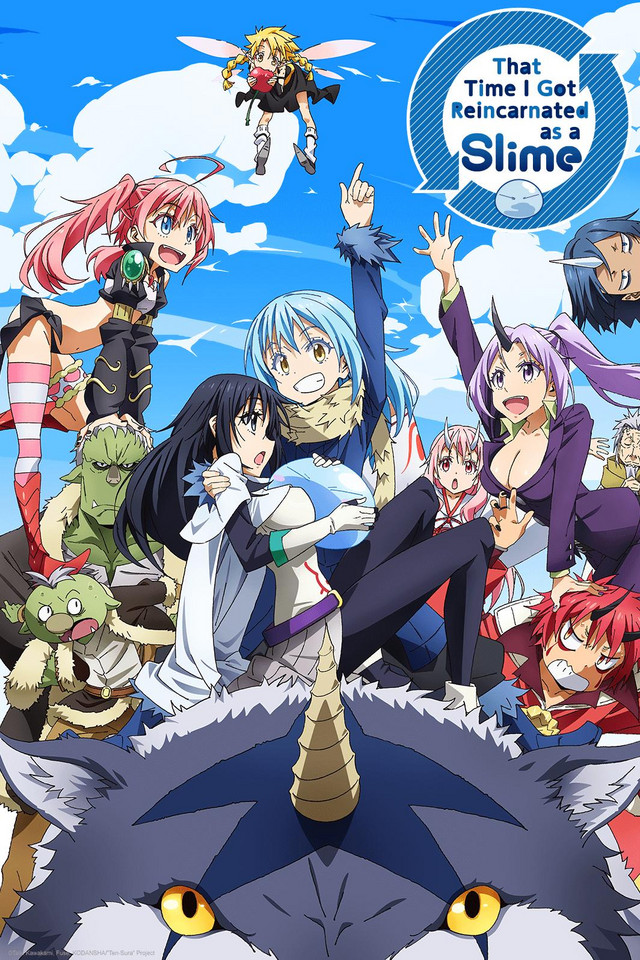
 Rimuru and the Tempest cast” />
Can a lonely office worker’s worst day become the start of a fantasy legend — even if he wakes up as a slime? Episode 1 of That Time I Got Reincarnated as a Slime answers with a pilot that is funny, oddly tender, and smarter than its meme premise suggests. Stay for the hook. Stay for the recap. Stay if you want to know whether this isekai is worth your next binge.
Hook
Imagine waking up in another world… not as a legendary swordsman or a chosen mage with a glowing system menu in your face, but as a tiny blue slime bouncing through a dark cave. It sounds like a joke. For the first few minutes, the show almost wants you to laugh at the absurdity.
Then something quieter happens. The death that starts this fantasy adventure does not feel like a loading screen. The loneliness that follows does not feel like setup text. And when the “monster” at the end of the cave turns out to be just as starved for company as the protagonist, Episode 1 stops being a gimmick and starts feeling like the beginning of a real relationship-driven story.
That is the competitive edge of this premiere. Plenty of isekai open with spectacle. This one opens with a mood: tired adult energy, cave-bound curiosity, and a sealed dragon who wants someone to talk to. So the question this page answers is simple: is Season 1 Episode 1 just a cute slime gag — or one of the cleanest modern isekai openings?
If you are deciding whether to start Tensura tonight, or you already finished Episode 1 and want the recap explained properly, this is the page for both of you.
Quick Information
- Anime: That Time I Got Reincarnated as a Slime (Tensei Shitara Slime Datta Ken)
- Season / Episode: Season 1, Episode 1
- Japanese episode title: 暴風竜ヴェルドラ (“The Storm Dragon, Veldora”)
- Runtime: about 24 minutes
- Studio: 8bit
- Genres: Fantasy, Adventure, Isekai, Comedy
- Original air date: October 2, 2018
- Kagex score: 8.8 / 10
- Where to watch legally: Crunchyroll (availability can vary by region)

Should You Watch It?
If you have not started the series yet, Episode 1 is an easy entry point. It assumes almost no franchise knowledge. You meet Satoru Mikami as a tired adult, watch the reincarnation land with emotional weight, and leave understanding the show’s tone: cozy power fantasy with real loneliness underneath.
Is it worth watching? Yes — especially if you like character-first fantasy more than tournament arcs. Episode 1 does not try to sell the whole nation-building saga in twenty-four minutes. It sells a personality. That is the smarter pilot move for a long-running fantasy adventure.
Is it slow? Compared with action-heavy isekai pilots, yes. There is tension and a massive dragon presence, but the episode spends more time on discovery and conversation than fights. If you need a dungeon raid before the opening credits end, this may feel soft. If you like watching a character learn the rules of a new body, the pacing feels confident rather than empty.
Is it beginner friendly? Very. No prior light novel homework required. The comedy is readable. The fantasy rules are introduced through play, not a lecture. You can walk in cold and understand every major beat.
Who will enjoy it? Fans of found-family vibes, dry humor, skill-system curiosity, and fantasy adventure that starts small. People who bounce off slime designs or want constant combat may want to give Episode 1 a little patience before judging the whole show.
Who might bounce? Viewers who want immediate kingdom politics, dark grimdark stakes, or a human protagonist face for the entire runtime. Fair — this premiere is almost entirely mood, mechanics, and one important friendship.
Bottom line for newcomers: watch Episode 1. If the Veldora hangout makes you smile, keep going. If you only wanted nonstop battles, this may not be your isekai — but give the pilot a fair shot before you decide.
Spoiler Warning
Spoilers for Season 1 Episode 1 follow. If you have not watched yet and want a clean first viewing, stop after the section above. The rest of this page is for readers who want a recap, explanation, and deeper analysis of what Episode 1 sets up.
Story Recap
Ordinary Life
Before the fantasy begins, the episode grounds us in something painfully ordinary. Satoru Mikami is an adult with a routine, a job, and a social life that feels half-empty. He is not framed as a secret genius waiting for a destiny speech. He feels tired. That matters, because when the reincarnation fantasy starts, it is not escaping a cartoon life — it is escaping a hollow one.
The Japan-side scenes are short, but they do real work. They make the later slime comedy possible. Without that human weight, “I woke up as a slime” would be only a meme. With it, the joke has a bruise under it. Episode 1 understands that you cannot sell a cozy second life if the first life never felt real.
Satoru’s loneliness is not melodramatic. It is quiet, almost mundane — the kind of adult emptiness that does not announce itself with a sad piano cue. That restraint is why the later warmth lands harder.
Unexpected Incident
Satoru’s old life ends suddenly and unfairly. The episode does not linger for shock value, and it does not treat death as a punchline. His final thoughts are messy and practical rather than heroic — and that detail becomes the bridge into the new world. The skills he gains later are not random loot boxes. They feel tied to who he was in his last moments.
There is also a quiet promise involving his friend and his computer. It is a small cutaway, but it keeps the reincarnation from floating free of consequence. Someone back home still has to clean up a life that ended too soon. That one beat separates Tensura’s pilot from dozens of isekai openings that treat Earth as disposable packaging.
By the time the screen flips to the cave, you already understand the emotional thesis: this is not a power trip first. It is a second chance for someone who never got to finish being a person.
New World
Satoru wakes in darkness and quickly realizes the body he inhabits is not human. He is a slime: soft, limited, strangely durable, and completely unprepared for fantasy adventure. Panic mixes with curiosity. Instead of freezing forever, he starts testing what this body can do.
This is where the show’s beginner-friendly strength shows. The cave is not a lore dump. It is a classroom. Predators exist. Magical plants exist. Skills exist. The world feels dangerous without needing a villain monologue. You learn the rules the same way he does — by poking the environment and surviving the answer.
The slime body also forces a kind of honesty. He cannot bluff with cool armor or a heroic silhouette. Every gain has to come from attention and adaptation. For a Season 1 Episode 1 of a big franchise, that is a brave starting point.

First Discovery
With the help of Great Sage — an internal skill that answers like the world’s calmest walkthrough — the slime begins learning survival. Eating becomes progress. Perception becomes power. The comedy lands because a grown man’s brain is stuck inside a bouncing blob, while Great Sage remains ruthlessly practical.
Importantly, the episode lets experimentation stay fun. The slime does not instantly dominate the setting. He learns. That keeps the power fantasy from feeling cheap this early. Skills have names and functions, but the show still treats curiosity as the main engine. You are watching someone figure out a body, not watching a checklist of cheats unlock on schedule.
This stretch also establishes the series’ comfort zone: soft comedy plus systems curiosity. If that mix works for you here, the rest of Season 1 has a clear runway.
Important Encounter
At the far end of the cave waits the Storm Dragon, Veldora — sealed for centuries, enormous in presence, and desperately bored. Fear makes sense. Conversation is the twist. What could have been a boss fight becomes a hangout between two lonely beings who finally have someone to talk to.
The recap’s climax is not a battle map. It is a relationship forming in the dark. Veldora is mythic on paper and chatty on screen. The slime is weak on paper and socially fearless enough to keep talking. By the end of Episode 1, the core promise of the series is already visible: this isekai will grow through relationships, not only through stats.
That is why this episode still holds up on rewatch. The plot setup is clean, but the emotional setup is cleaner. You leave wanting to know what these two will become to each other — and what kind of world waits outside the seal.
Story Analysis
Episode 1 works because it refuses the usual isekai checklist. There is no goddess orientation, no instant harem intro, no tournament poster. Instead, the pilot builds three feelings in order: pity, curiosity, then warmth. That sequence is the real structure under the plot beats.
Pacing is deliberate. The cave stretch trusts silence and small discoveries. Some viewers will call that slow. Fair. But the slow sections are doing character work. When Veldora arrives, the episode has already taught you how this protagonist thinks — so the friendship lands instead of feeling random. A faster pilot could have shown more map; this one shows more personality.
Emotional impact comes from contrast. The death is abrupt; the slime rebirth is weirdly gentle. The Japan-side promise scene is quiet; the dragon is loud. That rhythm keeps the comedy from becoming empty. You laugh, then you remember why the second life matters.
Comedy grows out of situation, not constant punchlines. A serious internal AI explaining slime biology is funny. A sealed catastrophe wanting a chat is funnier. The jokes respect the characters instead of turning them into meme machines.
Mystery stays light but present. Why this cave? Why these skills? What kind of world waits outside? Episode 1 answers enough to satisfy and withholds enough to pull you forward. That is good pilot craft for a long fantasy adventure.
World-building is practical. Skills have names and functions. Predation and perception are shown, not essayed. The sealed dragon introduces history without a textbook chapter. For a Season 1 Episode 1 of a long franchise, that is disciplined writing — and it is why the episode still feels like a destination page worth reading after you watch.
Character Analysis
Satoru Mikami / the slime who becomes Rimuru
First impression: not a blank self-insert with a cheat sheet attitude. He is awkward, polite, lonely, and surprisingly adaptable. His motivation in Episode 1 is not “become the strongest.” It is “don’t die again” and “understand what I am now.” That makes him easy to root for. Power will come later. Personality arrives immediately. For the full powers / story-role guide, see Rimuru Tempest explained.
The slime body also becomes character. He cannot bluff with cool poses. He has to think, eat, listen, and talk. The episode uses that limitation well. You learn that this protagonist will solve problems through curiosity and social courage more than swagger — a first impression that still defines the series.
Great Sage
Great Sage is less a sidekick and more a tone-setter. Calm, informative, slightly inhuman — the perfect comedy partner for a panicked adult brain. First impression: this skill will be overpowered someday, but right now it is a teacher. That keeps early exposition entertaining. Without Great Sage, the cave section would be a lecture. With Great Sage, it becomes a two-voice comedy about learning a body in real time.
Veldora, the Storm Dragon
On paper, apocalypse fuel. On screen, a chatty immortal who has been alone too long. His motivation is almost embarrassingly simple: company. That is why the encounter works. Fear melts into banter, and the sealed cave becomes the series’ first real relationship. If you leave Episode 1 caring about Veldora, the pilot succeeded. Deeper guide: Veldora Tempest explained.
Veldora also reframes the show’s ambition. This is not only “weak monster gets strong.” It is “lonely beings find each other.” That theme is already online before Rimuru has a humanoid form, a nation, or a reputation.
World Building
Episode 1 introduces a fantasy world through a single location: a sealed cave that feels old, dangerous, and full of resources. Magical flora and materials are not wallpaper; they are systems the protagonist can interact with. Skills function like tools with clear effects. Predation suggests growth through consumption. Mana perception hints that sensing the world matters as much as hitting it.
The seal around Veldora is the episode’s biggest lore drop. Someone powerful enough to imprison a storm dragon existed centuries ago. The world outside is not empty. History has teeth. Episode 1 does not explain every rule of magic, and that restraint is a feature. You learn enough to understand the slime’s first day — and enough to wonder what kind of continent waits beyond the cave mouth.
For beginners, the important takeaway is simple: this setting has ecosystems, sealed myths, and skill logic that rewards curiosity. The franchise can get bigger later because Episode 1 starts small and specific.
Animation Review
Studio 8bit does not open with nonstop sakuga, and that is fine for this story. The cave has atmosphere: damp stone, muted blues and earth tones, weird plants, and a sense of sealed time. The slime design is simple on purpose — soft, readable, instantly comic. That simplicity is a design win, not a budget tell. Expression has to come from movement, voice, and timing, and the episode commits to that challenge.
Character work on Veldora carries more weight than flashy effects. When the episode wants presence, the dragon feels huge. When it wants warmth, the framing gets closer. Visual effects support the skill reveals without turning every second into noise. Background art sells a lived-in fantasy environment rather than a neon theme park. For a premiere focused on mood and conversation, the animation priorities are correct.
If you are judging Episode 1 as spectacle anime, you may underrate it. Judged as atmosphere and character staging, it is quietly strong.
Music and Voice Acting
Episode 1 uses “Nameless Story” by Takuma Terashima in a special way for the premiere, covering the ending slot before the season settles into its regular opening/ending pattern. The track’s adventure energy with a little melancholy underneath matches the pilot’s emotional mix: second chance, big world, leftover sadness.
Background music mostly supports rather than crowds. Cave scenes breathe. The score swells when Veldora’s presence hits. Voice acting is a major reason the episode works: Great Sage’s calm precision against the slime’s internal panic, and Veldora’s booming loneliness turning into friendship. The chemistry already feels like a buddy story waiting to grow into a fantasy adventure ensemble.
You do not need lyrics analysis to feel what the premiere soundscape is doing. It is selling possibility — and a little grief under the joke.
Hidden Details
Episode 1 is full of small touches that reward attention without needing later spoilers. The skills are tied to Satoru’s final human thoughts — a cleaner reincarnation logic than “random OP gift.” The computer promise cutaway reminds you the old world still had people in it. Veldora’s seal is not just a cage; it is a history lesson sitting in the dark. Even the slime’s early eating montage is world-building disguised as comedy: this setting has ecosystems, materials, and rules you can interact with.
Also notice how little the episode needs a human face to create charisma. Expression comes from voice, timing, and reaction. That is a bold choice for a premiere, and Episode 1 commits to it. Another detail first-timers often miss: the show is already teaching you that conversation can be as important as combat. The most important “win” in Episode 1 is not a kill count. It is trust.
Rewatchers can also track how carefully the pilot protects future mysteries. It teases a larger world without spoiling what waits outside. That restraint is why this page can dig deep without spoiling Season 1 beyond Episode 1.
Best Moments
The death that actually hurts a little. Too many isekai treat reincarnation like a free continue. This one lets the old life leave a mark before the slime comedy starts.
Learning the body through play. Watching the slime experiment is more entertaining than another skill-menu lecture, and it makes the systems feel earned.
Meeting Veldora. Fear to curiosity to friendship in one episode is ambitious — and it works because both characters are starved for connection.
The computer promise. A tiny, grounded reminder that someone back home still cared. Quietly excellent, and one of the pilot’s most human beats.
Pros and Cons
Pros: strong emotional setup, beginner-friendly world introduction, excellent first friendship, comedy that respects character, clear series identity from episode one.
Cons: slow if you want immediate action; slime protagonist design will not click for everyone; almost no map of the wider conflict yet, so impatient viewers may feel the “real story” is still loading.
Final Verdict
Season 1 Episode 1 is a near-perfect soft landing for a long-running isekai. It does not summarize the whole franchise. It introduces a voice — kind, funny, a little lonely — and asks whether you want to keep walking through the cave. For Kagex Blog, that is enough to call it a strong premiere and an easy recommend for the right viewer.
- Story: 9.0 / 10
- Characters: 9.2 / 10
- Animation: 8.2 / 10
- Music: 8.5 / 10
- Enjoyment: 9.0 / 10
- Overall: 8.8 / 10
Recommendation: start here. If the Veldora scenes make you smile, this fantasy adventure is for you. If you only want battles, sample one more episode before quitting — but know that Episode 1 is intentionally about mood and connection, not a fake action trailer.
What to Expect Next
Episode 1 mainly introduces the protagonist, the skill system, and the first important bond. The next episode begins expanding the adventure beyond that sealed starting point and brings new encounters that push the story from survival curiosity toward the wider world. No spoilers — just this: if Episode 1 made you care about the slime, Episode 2 tests how far that curiosity can travel.
FAQ
Is Episode 1 worth watching?
Yes. It is a complete mini-arc: death, rebirth, discovery, and a first alliance. You get the tone of the whole show in one sitting, which makes it a strong sample episode for new viewers.
Is this anime suitable for beginners?
Yes. Season 1 Episode 1 assumes almost nothing. If you enjoy character comedy and fantasy setup, you are fine. No light novel homework required.
Why is the protagonist a slime?
The reincarnation premise is the joke and the thesis. Starting as a slime forces personality and cleverness before cool form or status. Episode 1 uses that limitation for comedy and character instead of treating it as a temporary gag only.
Is this anime funny?
Episode 1 is gently funny more than gag-heavy. The humor comes from situation and character reactions, especially Great Sage and Veldora. If you want rapid-fire parody, this is softer.
Is the episode action-heavy?
No. There is danger and a powerful dragon presence, but the premiere focuses on atmosphere and conversation over fights. Action grows later in the series; Episode 1 is the emotional and mechanical foundation.
Is the ending of Episode 1 confusing?
Not really. The “ending explained” simply is: the slime’s first day becomes a friendship with a sealed storm dragon, and that bond is the true launch point of the series. The cave is a prologue location, not a dead end.
Where can I watch it legally?
The series has been widely available on Crunchyroll. Check your local catalog, since licensing can change by region.
Should I read the light novel first?
Not required. The anime premiere is self-explanatory for new viewers. Read the source later if you fall in love with the world and want more detail.
Is Tensura Episode 1 good for fantasy adventure fans?
Yes, if you like dungeon-crawl curiosity, skill systems, and found-family vibes more than grimdark fantasy. It is adventure with a soft landing.
Keep exploring
- That Time I Got Reincarnated as a Slime — anime hub
- Tensura Season 1 review
- Full series review
- Browse seasons & episodes
- Tensura characters & powers
- Rimuru Tempest explained
- Veldora Tempest explained
- Episode 2 review — Meeting the Goblins
Your turn
What was your favorite moment from Episode 1? Did the opening make you want to continue the series? What rating would you give this episode — and why?