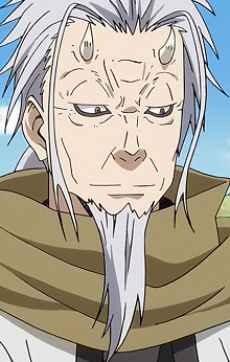
Hakurou is Tempest’s sword saint grandpa — an elderly ogre (later kijin) instructor whose calm blade work cuts through the series’ louder personalities. If you like mentor characters who still solo threats, this is your page. We cover who Hakurou is, how his skills read in plain language, and why Rimuru’s nation needs a teacher as much as it needs generals.
Quick information
- Role: Sword instructor / elite fighter of Tempest
- Also known as: Hakurou; Tempest’s master swordsman; “goblin boot camp incarnate”
- First appearance: Season 1 (ogre survivors arc)
- Voice: Houchuu Ootsuka (JP) · Charlie Campbell (EN)
- Series: That Time I Got Reincarnated as a Slime
Who is Hakurou?
Hakurou arrives with the ogre survivors as the old master of the group — the one who has already lived long enough to know pride gets villages killed if it is not paired with discipline. Where Benimaru burns and Shion smashes, Hakurou measures. Rimuru’s naming and the Tempest future give him a second career: turn a monster nation into a place with actual martial standards.
He is crucial because power fantasy casts often skip institutions. Hakurou is an institution. He trains Gobta, sharpens officers, spars Rimuru toward cleaner technique, and reminds everyone that longevity can beat loud youth. In a show about evolution shortcuts, Hakurou represents earned skill.
He also carries gentle melancholy. Old warriors in isekai are often joke geezers or secret final bosses. Hakurou is both teacher and still-deadly fighter without needing a fake-out every episode. Browse the rest of the corps via the characters index.
Hakurou’s value shows up in montage logic. A nation of named monsters could still fight like a mob. His drills create habits: stance, timing, unit trust, the difference between courage and stupidity. When Tempest wins cleanly, part of the credit belongs to the old man who made Gobta run laps until panic turned into muscle memory.
He also gives Rimuru a peer in craft. Analysis skills can solve many battles; they do not automatically teach elegant sword rhythm. Sparring with Hakurou lets the protagonist borrow a lifetime of technique the slime did not live. That exchange — monster evolution meeting humanoid martial tradition — is very Tensura.
Personality
Hakurou is polite, exacting, and quietly amused by Tempest’s chaos. He bows, corrects stances, and drops sparring partners before their boast finishes. Toward Rimuru he is respectful without empty flattery — a retainer who will say when footwork is sloppy. Toward Gobta he is lovingly merciless.
Under the courtesy is steel. Hakurou has lost a home once. He will not watch Rimuru’s nation die from soft training. That grief-turned-standard is why his kindness never feels mushy. He wants students alive.
Hakurou’s humor is dry enough that some viewers miss it. He is not a slapstick elder. He is the man who assigns impossible drills with a serene face and congratulates growth without sugar. That restraint makes praise from Hakurou feel expensive — which is why Gobta chasing it remains funny and weirdly moving.
As a fighter-philosopher, he also resists the series’ louder power-creep panic. New enemies arrive with bigger auras; Hakurou answers with better cuts. The fantasy is not that age is irrelevant. The fantasy is that mastery compounds. In a franchise about evolution shortcuts, that counter-theme keeps the martial side of Tempest from feeling pointless.
Powers & skills
Hakurou’s identity is peak swordsmanship: speed, perception, and technique over explosive theatrics.
Core abilities
- Master sword arts: Clean cuts, tempo control, and “fight ended before it started” timing.
- Hasten / body control: Movement skills that make age look irrelevant in a duel.
- Instructor’s eye: Reads talent and flaws fast — narrative power as much as combat power.
- Named kijin upgrades: Keep him competitive beside younger ogre elites.
Evolutions & forms
Like his ogre companions, Hakurou’s early evolution restores and elevates what age had begun to tax. The point is not a new costume; it is a master getting the body his skill always deserved. Later fights continue proving the old man ladder is not a myth in this universe. Viewers who only chase new skill names still get something here: Hakurou makes old fundamentals look newly lethal.
Role in the story
Hakurou is Tempest’s quality control. Armies need generals; generals need soldiers who will not panic after one aura flex. His training scenes — especially with Gobta — are both comedy and world-building: this nation invests in people. In combat arcs he is the precision option when overwhelming force would be messy.
He also mirrors other mentor energies in the series, including the more tragic human teaching story around Shizu. Different methods, same theme: skills and care outlast raw stats. For season placement, see the Season 1 review.
In ensemble terms, Hakurou stabilizes the ogre trio’s vibes. Benimaru’s fire, Shion’s volume, Souei’s silence — Hakurou is the elder grammar that keeps them a family instead of three competing bosses. He rarely needs the last word in meetings because his standards already shape how the younger officers show up.
If you like mentor characters who remain threats, Hakurou belongs on your shortlist. He is not waiting in a dojo until the finale. He is in the field, in the yard, and in Gobta’s nightmares — which is to say, he is doing the job every day. Tempest’s sharpness has a teacher’s signature on it. Respect the syllabus. In a franchise that loves naming ceremonies, Hakurou is the rare arc about practice after the name — the boring weeks that make flashy battles look inevitable. That is the real Tempest flex.
Relationships
- Rimuru Tempest: Lord and occasional student; mutual respect in blade and policy.
- Gobta: Prime pupil / victim of mentorship; the odd couple that works.
- Benimaru: Younger commander Hakurou supports and sharpens.
- Shion: Powerhouse student-type who needs technique around the rage.
- Souei: Fellow precision specialist; different battlefield lanes.
- Ranga: Allied combatant in the same defensive ecosystem Hakurou helps train.
- Shizue Izawa: Thematic mentor parallel on the human side of Season 1’s heart.
Best moments
Hakurou’s first serious draws of the sword recalibrate what “old ally” means. Gobta training montages are endlessly rewatchable. Sparring insights with Rimuru add craft to a protagonist who often wins through skills and analysis. And battlefield interventions where Hakurou arrives like a closing argument never get old — silence, cut, lesson learned. Bonus appreciation moment: any council scene where he says little and the younger officers still straighten up. Presence is a skill too.
FAQ
How strong is Hakurou?
Top-tier among Tempest’s technicians. He may not out-nuke Shion or out-command Benimaru’s entire army, but in a duel of pure sword skill he is the nightmare matchup.
When does Hakurou first appear?
Season 1 with the ogre survivor group.
Is Hakurou stronger than Benimaru?
Different specialties. Hakurou wins many pure technique conversations; Benimaru’s flame command and youth-scaled evolution path complicate blanket rankings. The show enjoys their mutual respect more than a final list.
Should I know about Hakurou before watching?
No. He plays best as the surprise master inside the ogre arc.
Why is Hakurou important if Rimuru is overpowered?
Because Tempest is not only Rimuru. Institutions, students, and standards are how a nation survives the next war Rimuru cannot personally solo in time.
Is Hakurou only a teacher?
No. Teacher is the vocation; elite combatant is still the job description when Tempest is threatened.
Keep exploring
Your turn
Favorite Hakurou student arc — Gobta pain, Rimuru sparring, or officer sharpening? Where do you rank him among Tempest duelists? Who should get the next mentor-style character guide?