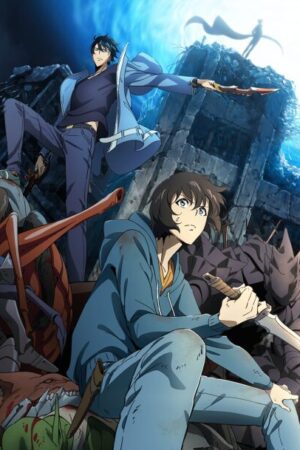
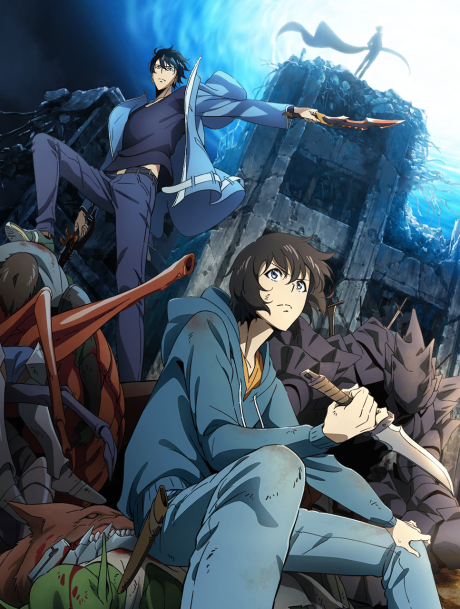
Solo Leveling review in one line: yes, it is worth watching if you want a dark fantasy power climb with modern action polish — as long as you accept an Episode 1 that is cruel before it is cool. This page is Kagex Blog’s full Solo Leveling anime review for beginners: who it is for, where to start, and whether the hype matches the show.
Hook
Solo Leveling became a global search term before many viewers finished Episode 1. Trailers sold shadow armies and aura. The anime sold something smarter first: Sung Jinwoo as the weakest hunter of mankind, used to pain, used to insults, not used to winning. That contrast is why the series ranks in recommendation threads and why this Solo Leveling review starts with expectations management.
If you want cozy slice-of-life, look elsewhere. If you want dungeon dread turning into a level-up fantasy with A-1 Pictures muscle, keep reading.
The hype is real, but it is also specific. Solo Leveling is not trying to be the most tangled fantasy story on television. It is trying to make a single character’s rise feel enormous, then stage that rise with enough polish that every new threshold lands like an event. Season 1 builds the floor. Season 2 expands the scale and lets the shadow-era promise breathe. Together, they make a very easy series to binge if “one more episode” is your favorite genre.
That focus comes with a trade-off. The show trusts Jinwoo so completely that other characters can sometimes feel like witnesses to his transformation instead of equal engines of the plot. Whether that bothers you depends on what you want from action fantasy. If you want an underdog-to-overpowered ride with a sharp visual identity, Solo Leveling delivers. If you need every guild member to have the same narrative weight, go in knowing the spotlight is not shared evenly.
Quick Information
- Title: Solo Leveling (Ore dake Level Up na Ken)
- Source: Web novel / webtoon by Chugong
- Studio: A-1 Pictures
- Season 1: 12 episodes (Jan–Mar 2024)
- Genres: Action, Adventure, Fantasy
- Where to watch: Crunchyroll (region dependent)
- Kagex overall: 8.6 / 10
- Start here: Episode 1 review
- Season 2 context: continues the story after Season 1 and raises the threat level without replacing the original starting point
- Upcoming franchise news: Solo Leveling: Beyond the System movie announced
Is Solo Leveling Worth Watching?
Yes — with a clear audience. Solo Leveling is worth watching if you like underdog-to-overpowered arcs, raid politics, and set-piece fights. It is less worth it if you need deep ensemble politics every episode or hate system/game-like progression.
For SEO searchers typing “is Solo Leveling worth watching,” the honest Kagex answer: start Episode 1. If the double dungeon unsettles you in a good way, binge Season 1. If you bounce off Jinwoo’s early helplessness, the later clips will not feel earned for you anyway.
Watch it for the climb, not only the finish line. The internet’s favorite Solo Leveling images tend to come from a more confident, more frightening Jinwoo. Those are fun images, but the anime works because it spends time making his original position feel degrading and dangerous. Episode 1 is a survival-horror hook. Season 1 turns that pressure into a progression rhythm. Season 2 gives the larger action payoff more room. Skipping ahead would remove the reason the transformation has weight.
It is beginner friendly. You do not need the web novel or webtoon to understand Gates, Hunter ranks, dungeon parties, or the central mystery. The world has enough rules to feel solid, but the anime explains them through raids and mistakes rather than a huge lore lecture. It is one of the cleaner modern entry points for viewers who like game-system fantasy but do not want homework before episode one.
It may not be for you if… You dislike protagonists who become dramatically stronger than their peers, want romance or comedy to be the central flavor, or prefer a large ensemble over a tightly focused lead. Solo Leveling has side characters with presence, but its storytelling energy keeps returning to Jinwoo’s choices, secrets, and next fight. That is a feature for some viewers and a limitation for others.
Spoiler Warning
Light spoilers for premise and Season 1 shape below. Heavy fight-by-fight spoilers live on episode pages.
Story Overview
Gates open between Earth and monster realms. Hunters clear them for money and status. Jinwoo is E-rank — statistically disposable — until a catastrophic double dungeon forces the story’s true premise into view. Season 1 is the climb from humiliation to frightening competence. Season 2 expands the shadow-era spectacle for fans who finished the first cour hungry.
This overall Solo Leveling anime review will not dump every arc name. It will say this: the show is structured as a progression fantasy with horror gates at the bottom and raid-scale action as the reward.
Season 1: the floor, the System, and the first real choice
Season 1 begins where the show is strongest emotionally: Jinwoo is weak enough that his presence in a raid feels like a liability, yet responsible enough that he keeps showing up. The double dungeon strips away the Hunter world’s usual confidence and leaves a group trapped in a ritualistic killing ground. That event changes Jinwoo’s life, but it also establishes the series’ key mood: power here is never entirely free. A new ability can be a rescue rope, a burden, a secret, or a demand from something Jinwoo does not understand.
From there, the season moves through training, instance dungeons, morally ugly raids, and a job-change threshold that gives the anime its famous visual vocabulary. The arc design is straightforward in a satisfying way. Jinwoo faces a limit, learns a rule, grows past it, then discovers the next ceiling. Because the series remembers his original fear, the loop stays compelling longer than a pure checklist would.
Season 2: bigger rooms, heavier consequences
Season 2 continues after that foundation and broadens the sense of what Jinwoo’s growth means. The action has more confidence, the threats reach further, and the shadow-based identity teased by Season 1 becomes a fuller part of the show’s appeal. This review will stay light on specific Season 2 turns: new viewers deserve the surprise, and the series is more fun when it escalates naturally. The important context is simple — Season 2 is a continuation, not a replacement for the first season’s setup.
The franchise is still moving too. If you are tracking what is next beyond the aired anime, see our Solo Leveling: Beyond the System movie announcement. Treat news separately from the main viewing order; the smart starting place remains Season 1, Episode 1.
Characters
Sung Jinwoo is the product. Everything orbits his growth curve. Early allies like Lee Joohee and Song Chi-Yul matter because they prove Jinwoo had a human circle before he became a highlight reel. Browse more on the characters index as we unlock pages.
Sung Jinwoo — why the main-character focus works
Jinwoo’s best quality is not the ability to win later fights. It is that the anime gives him a recognizable survival mentality before it gives him a power set. He is observant, cautious when he needs to be, and used to being treated as the smallest person in the room. When his circumstances change, the series lets that history stay visible. His growing quietness and confidence are satisfying partly because they are not the personality of Episode 1.
There is a darker edge to the arc too. Strength gives Jinwoo choices that he never had before, and the show does not always make those choices comfortable. His secrecy makes sense in a Hunter society built around rankings, money, and public prestige, but it isolates him. That tension keeps the series from becoming only a victory montage.
The supporting cast — useful, memorable, not always equally served
Lee Joohee and Song Chi-Yul carry much of the human weight in the opening. Joohee’s fear makes the cost of dungeon work visible, while Song brings an older hunter’s practical responsibility. As the series expands, more people enter Jinwoo’s orbit: rivals, guild figures, hunters who doubt him, and hunters who learn too late how far he has moved.
They are often entertaining, but the critique is fair: not all of them receive enough space to become as layered as the protagonist. The show regularly uses a new character’s reaction to measure Jinwoo’s growth. That is great for payoff and weaker for ensemble balance. Your tolerance for that structure will shape your overall score more than any one animation cut.
Animation & Music
A-1 Pictures gives Solo Leveling a modern action profile — impact frames, creature design, and dungeon atmosphere that made Episode 1 travel. Sawano-linked musical branding helps weekly episodes feel “event.” Not every cut is flawless; the overall package still looks like a flagship.
A-1 Pictures does not merely make the fights loud; it makes escalation legible. Early Jinwoo is framed as a small figure in rooms that can crush him. Later, the camera lets him own more of the frame. That is simple visual storytelling, but it is exactly right for a series about changing your place in a hierarchy. The dungeons are also varied enough to avoid feeling like generic game maps: some are practical workspaces, some are survival traps, and some look like the world itself is withholding information.
There are CG-assisted elements and effects-heavy passages that will not satisfy every animation purist. Still, the direction understands impact, pauses, and silhouette. When Solo Leveling wants an entrance to feel enormous, it gives the moment room. When it wants panic, it keeps the geography readable. That is why the action remains satisfying even when the plot is moving at full speed.
The musical package supports the series’ event status. Hiroyuki Sawano’s involvement brings big-scale energy, while the opening and ending tracks help episodes feel like part of a weekly ritual. The score is strongest when it does not announce every emotion; a quiet beat before a fight often creates more anticipation than another immediate blast of noise.
World Building
Solo Leveling’s world-building is efficient rather than encyclopedic. Gates have changed modern society, and Hunter rankings turn supernatural ability into employment, status, and danger. That framework gives the anime an economy: people form parties because no one class can safely do everything, low-rank Hunters take awful risks because the money matters, and high-rank power draws public attention.
The System disrupts that apparent order. Jinwoo is no longer living inside the categories everyone else understands, and every new step raises the question of who or what is setting those rules. The show wisely holds back much of the answer. You get enough information to enjoy the next dungeon without having the larger mystery explained into dust. For a progression fantasy, that restraint is a major part of the hook, especially across both aired seasons.
The setting is strongest when it remembers the human result of all those rules. A rank is a number, but it determines whether a person is treated as a valuable colleague or a burden a party can leave behind. A Gate is a fantasy location, but it is also a workplace where money, injury, and reputation overlap. That makes the early episodes more grounded than their flashy premise suggests. Even when the series reaches its biggest action, you can still feel the smaller system that taught Jinwoo he was expendable.
There is also a useful restraint in how the anime handles lore. It hints at institutions, international stakes, and monster disasters without stopping the climb for an encyclopedic briefing. That will frustrate viewers who want every question answered immediately. For the intended experience, it works: the audience learns the world at roughly the same pace that Jinwoo realizes he no longer fits inside it.
Pros and Cons
Pros: an excellent horror-tinged premiere; addictive progression that remembers where Jinwoo started; modern, readable action from A-1 Pictures; approachable world rules; strong binge momentum across Seasons 1 and 2; a franchise future that remains easy to follow through the Beyond the System movie news.
Cons: side characters can orbit Jinwoo hard; the story is narrower than its huge world sometimes suggests; viewers who dislike system screens or overpowered trajectories may find the destination predictable; a few effects-heavy scenes will be less appealing to viewers seeking an entirely traditional animation look.
Final Verdict
Solo Leveling is an easy recommend for action-fantasy fans who want a clean binge with a memorable floor-to-ceiling power curve. Season 1 earns the transformation with fear and humiliation; Season 2 benefits from that groundwork without requiring this review to spoil its turns. It is not perfect — the supporting cast often exists in Jinwoo’s shadow, and the system-driven structure will never win over viewers who hate the genre. But the show knows its lane, looks excellent in it, and delivers its biggest moments with real confidence. 8.6 / 10.
- Story: 8.4 / 10
- Characters: 8.2 / 10
- Animation: 8.8 / 10
- Music: 8.5 / 10
- Enjoyment: 8.9 / 10
- Overall: 8.6 / 10
FAQ
Is Solo Leveling worth watching in 2026?
Yes if you like action progression fantasies. Start Season 1 Episode 1.
Is Solo Leveling good for beginners?
Very. No prior webtoon required.
How many episodes in Season 1?
12 — see our Season 1 review.
Where to watch Solo Leveling?
Crunchyroll for most regions.
Should I watch Season 2 next?
After Season 1. Do not skip the weak-Jinwoo foundation.
Is Solo Leveling too overpowered?
It becomes a major power fantasy, yes, but the anime spends meaningful time on Jinwoo’s weak starting point and the risks around his growth. If you enjoy that genre, the payoff is the appeal.
Do I need to read the manhwa or webtoon?
No. The anime works as a first experience. Read the source if you want more detail after watching, not because the show is impossible to follow.
Is Solo Leveling scary?
The opening double dungeon has real horror energy, and several raids are tense or violent. The overall tone is dark action fantasy rather than pure horror.
Who animated Solo Leveling?
A-1 Pictures produced the anime adaptation.
What is next for the franchise?
For confirmed movie context, see our Solo Leveling: Beyond the System movie announcement. Watch Seasons 1 and 2 in order before chasing future material.
Is this a good anime to binge?
Very. The episodes are structured around clear discoveries, rising danger, and cliffhangers, so it is particularly easy to keep watching once the premise clicks.
Keep exploring
Your turn
Is Solo Leveling living up to the hype for you, or is it “clips better than episodes”? What score are you giving — and did Episode 1 convince you to continue?