Saga of Tanya the Evil Episode 2 review time: “Prologue” finally answers the question Episode 1 refused to — how does a Japanese salaryman end up as the Devil of the Rhine? This page covers the full Season 1 Episode 2 recap, the Being X confrontation, the Silver Wings Assault Badge twist, and an honest score for whether the origin story earns the cruelty you already watched. Stay for Tokyo 2013. Stay for Tanya Degurechaff. Stay if you want the receipts behind the nickname.
Hook
There is a specific kind of audacity in getting shoved onto train tracks by a man you just fired, meeting a self-declared god mid-fall, and responding with a rules dispute. Most isekai leads say thank you for the second chance. Episode 2 of Saga of Tanya the Evil gives you a man who argues jurisdiction with the divine and loses on a technicality he never agreed to.
“Prologue” is the episode that should have been Episode 1 in a normal show. NuT and writer Carlo Zen chose to withhold it on purpose — sell you the finished Devil first, then hand you the invoice. That structural gamble is why this recap matters: it is not just backstory, it is the thesis statement for every ruthless decision Tanya made on the Rhine last episode.
So here is the question this Saga of Tanya the Evil Episode 2 review answers: does “Prologue” actually justify the character you already met, or is it just a sympathetic-villain excuse reel? Short answer — it earns it, because the episode refuses to make Tanya likeable. It makes her legible instead, which is a harder and more interesting trick.
Quick Information
- Anime: Saga of Tanya the Evil (Youjo Senki)
- Season / Episode: Season 1, Episode 2
- English episode title: Prologue
- Japanese episode title: プロローグ (Purorōgu)
- Runtime: about 24 minutes
- Studio: NuT
- Genres: Action, Military, Fantasy, Isekai
- Original air date: January 13, 2017
- Kagex score: 8.7 / 10
- Where to watch legally: Crunchyroll (check regional availability)
- Character to know: Tanya Degurechaff
Should You Watch It?
Is Saga of Tanya the Evil Episode 2 worth watching? Yes, and honestly it works best watched right after Episode 1 rather than before it. “Prologue” is the show explaining its own thesis: a man with zero faith gets punished with a life that should require faith, and instead of converting, he optimizes his way through it.
Is it slow? It covers roughly a decade of setup — Tokyo, the train platform, the orphanage, the academy, the Northern Theater — inside one episode. That is dense rather than slow. There is no filler stretch; every scene changes what you know about Tanya’s incentives.
Is it beginner friendly? Very. If Episode 1 confused you with cold-open combat and no context, Episode 2 is the missing manual. Some viewers even prefer starting the franchise here, though the official broadcast order (and this site) treats Episode 1 as the true pilot.
Who will enjoy it? Anyone who likes morally messy isekai, corporate-brain protagonists, and stories that treat divine punishment as a logistics problem. Fans of dark satire over destiny speeches will get the most out of it.
Who might bounce? Viewers hoping for a redemption arc will not find one here. Tanya does not learn to love; she learns to survive more efficiently. If you need your isekai leads to grow a heart, “Prologue” will frustrate you on purpose.
Bottom line: watch it. The Rhine only hits as hard as it did in Episode 1 once you understand the man calculating his way through it never wanted to be a hero — he wanted a desk job and a pension, and the universe kept saying no.
Spoiler Warning
Spoilers for Season 1 Episode 2 follow. Stop above for a clean first watch. This recap stays inside Episode 2’s own timeline — no Season 2 material appears below.
Story Recap
Ordinary Life (Tokyo, 2013)
The episode opens in modern Tokyo with a cold-hearted salaryman doing the least sympathetic job in any office: firing an underperformer. He delivers the news the way he delivers everything — flat, efficient, unbothered by the man’s pleading about bills and a family to support. There is no cruelty theater here, which is almost worse. He is not enjoying it. He simply does not care.
That detail matters more than it looks like it should. “Prologue” is not building a monster who savors suffering. It is building a man who has optimized empathy out of his decision-making entirely, because empathy is inefficient. Everything Tanya does later in the episode is a direct extension of this exact personality, just relocated to a battlefield.
Unexpected Incident (the platform and Being X)
The fired employee follows him to the train platform and, in a moment of broken desperation, shoves him onto the tracks. As the train bears down, time stops. A presence claiming to be God addresses him directly, demanding acknowledgment and faith. The salaryman — dying, mid-fall, completely unbothered by the metaphysics of the situation — refuses. He argues that a being with no evidence and no accountability is not God, and if it insists on a label, it can be “Being X.”
This is the entire franchise in one scene: a man treating a genuine deity like a vendor making an unverified claim. Being X does not appreciate the pushback. Rather than simply ending him, it decides the real problem is that his modern life never required faith to survive — so it will fix that by sending him somewhere faith becomes a survival tool.

New World (an orphan in alternate 1913 Europe)
Being X reincarnates him as an orphan girl in the city of Berun, inside an alternate early-1900s Europe already sliding toward continental war. The orphanage is underfunded and the future is bleak for a parentless child with no leverage. Then routine testing turns up something unusual: this particular orphan has exceptional magical aptitude, in a world where magic is a real, weaponizable military resource.
Here is where Episode 2 shows its cleverness. The old personality is fully intact — memories, cynicism, risk math and all — wearing a child’s body that happens to be magically gifted. Faced with a war-bound world and no safety net, Tanya makes the same kind of decision the salaryman always made: pick the path with the best risk-adjusted outcome. That path is the Imperial Army, specifically the mage corps, which she reasons will keep her further from the actual front lines than being drafted as ordinary infantry later.
First Discovery (a ruthless instructor, a horrified colleague)
Tanya rises fast through training and ends up entrusted with drilling new cadets at a military academy. She is brutally exacting — when recruits disrespect her or get physical, she puts them down hard and explains it as simple professional duty, not cruelty. Erich von Rerugen, present for this, watches with visible unease. He is not wrong to. Tanya is not building character in her students; she is building compliance, because compliance keeps people alive in her calculus.
The plan, as far as Tanya is concerned, is to finish training quietly, get good marks, and land a comfortable non-combat post. The Empire’s enemies do not consult her plan. Mid-course, her reconnaissance class is suspended, she is pulled onto active duty, promoted to second lieutenant, and sent to the front — the exact outcome she spent the whole episode trying to avoid.
Important Encounter (the Northern Theater and the Silver Wings Assault Badge)
By 1923, a nine-year-old Tanya is serving as an artillery observer at the Northern Theater Force Garrison as the Entente launches its invasion. Lieutenant Colonel Anson Sioux leads a company from the Entente’s 5th Aerial Mage Battalion directly at her position. Tanya is ordered to hold and delay the advance — and she does, at brutal personal cost, buying time the Empire needs while absorbing damage she never signed up for.
Back at Garrison Headquarters, the reward for surviving is the Silver Wings Assault Badge — one of the Empire’s highest honors, traditionally reserved for soldiers who did not live to receive it. Tanya’s reaction is not pride. It is dread. She understands immediately what a decoration like that signals about future assignments. Instead of the quiet desk job she engineered for, she gets dressed up and paraded as a living hero of the Empire — the opposite of invisible, the opposite of safe.
Story Analysis
As a Saga of Tanya the Evil Episode 2 review take: “Prologue” succeeds because it treats the origin story as argument, not sentiment. Most isekai use the “how I got here” episode to generate sympathy. This one uses it to generate understanding without asking for forgiveness. You are not meant to feel warmly toward the salaryman-turned-Tanya. You are meant to see exactly how his specific brand of amoral competence became inevitable once you strip away modern comfort.
Pacing covers roughly a decade in twenty-four minutes without feeling rushed, because every beat is functional: the firing establishes the personality, the train establishes the stakes, the orphanage establishes the constraint, the academy establishes the method, the Northern Theater establishes the trap she can never escape. Nothing is scenery.
Structure is the episode’s smartest choice. By running the origin after the Rhine instead of before it, the show forces you to reinterpret Episode 1 in real time. That aerial massacre was not a monster having fun. It was a man with no faith and no illusions doing the math on staying alive, the same math he ran in a Tokyo office.
Irony drives almost every scene. Tanya spends the entire episode actively trying to avoid the frontline hero path — and every choice she makes to be safer (join the mages instead of waiting for the draft, excel at training, perform well under pressure) drags her more directly toward exactly that fate. Being X does not need to punish her directly. Her own competence is the punishment mechanism.
Tone stays dry throughout, which is the correct call. A more sentimental score or softer color palette during the Tokyo scenes would undercut the joke that this man’s personality genuinely does not change between worlds. The comedy is bleak-adjacent — a demoted god arguing philosophy with a man mid-death — and the episode never oversells it with sitcom energy.
Thematically, “Prologue” reframes the franchise’s central question. It is not “will Tanya become good?” It is “what happens when a person with no faith is forced into a world that runs on faith and violence?” The answer, so far, is that the person gets very good at violence and remains completely uninterested in faith. That is a bleaker and more honest premise than most isekai are willing to commit to.
Character Analysis
Tanya Degurechaff — the same brain, worse odds
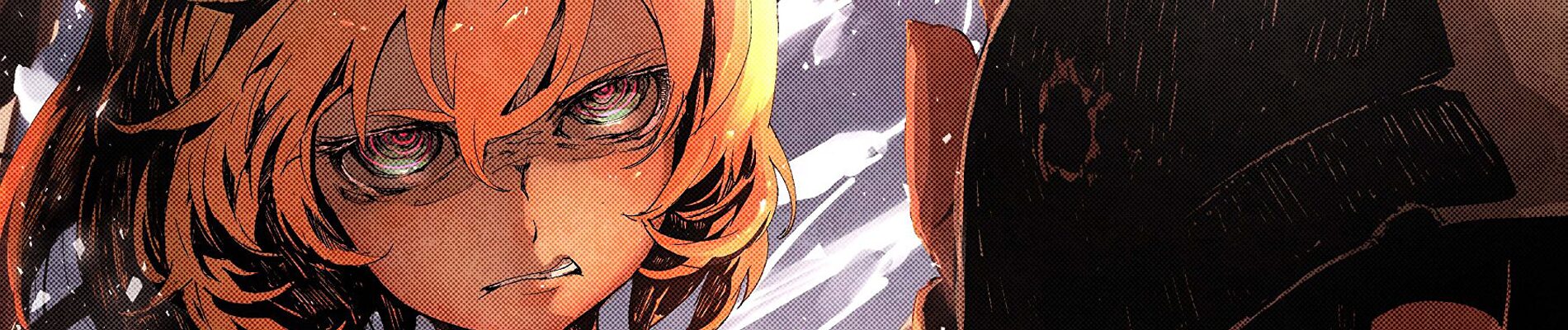
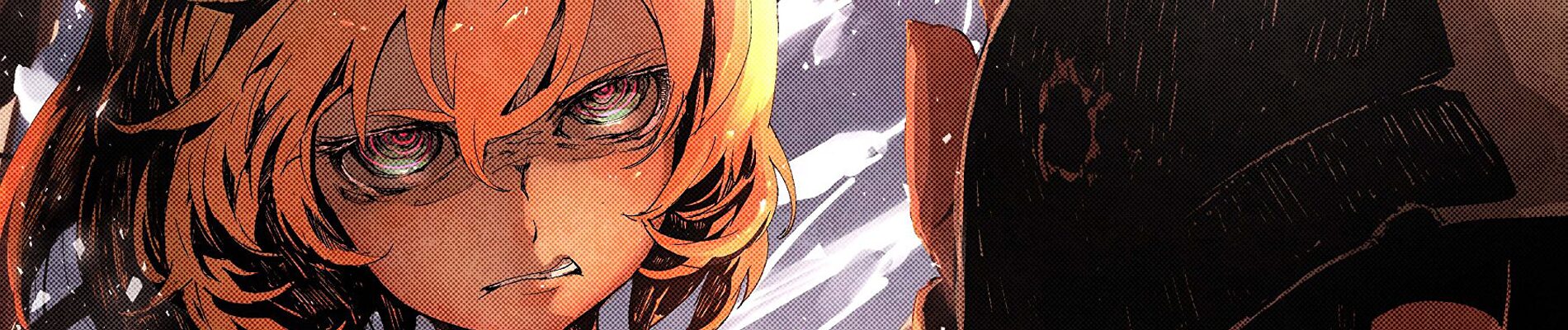
Episode 2 is the strongest character-work hour in early Season 1 because it proves Tanya was never “corrupted” by the isekai — she is simply the same cold optimizer from Tokyo, now with magic and a war to survive. Her motivation is never conquest or glory. It is risk reduction. Every ruthless choice traces back to a man who just wanted a boring, safe career and kept getting denied one. Full guide: Tanya Degurechaff explained — powers & story role.
Being X — a god who takes the bait
Being X’s decision to punish disrespect with hardship rather than simply erase the salaryman is the funniest and most consequential mistake in the franchise. It wanted faith born from suffering. It got a subject who treats suffering as a spreadsheet problem to be minimized, not a conversion opportunity.
Erich von Rerugen — the sane man in the room
Rerugen’s reaction to Tanya’s training methods is the audience surrogate. He is not a coward or a fool; he is simply someone who still processes cruelty as cruelty, watching someone who has stopped doing that math entirely.
World Building
“Prologue” quietly does more worldbuilding than Episode 1, because it explains how the Empire’s war machine actually recruits and processes people like Tanya. Magical aptitude is discovered through standardized testing, not destiny visions — a bureaucratic detail that fits the show’s obsession with institutions over prophecy. The mage corps functions like a career track with its own risk profile, which is exactly why Tanya picks it: not honor, but actuarial math.
The Silver Wings Assault Badge is the episode’s best piece of world-building because of what it implies about the Empire’s honor culture. A medal usually given posthumously tells you everything about how this war treats its soldiers — survival is the exception the system is not built around. Tanya receiving it alive is not a triumphant moment in-universe; it is an anomaly the Empire does not quite know how to file.
The alternate 1913-era Europe setting also gets sharper edges here: an Entente invading from the north, a continent already organized around aerial mage battalions as a real military branch, and orphanages that exist specifically because this world produces orphans faster than it can place them. None of this is delivered as lecture. It surfaces through Tanya’s decisions, which is the efficient way to build a setting.
Animation Review
NuT shifts visual registers cleanly between the modern Tokyo cold open and the period-war academy and battlefield sequences. The Tokyo scenes lean flat and mundane on purpose — office lighting, a train platform, nothing heroic — so the tonal snap into Being X’s intervention lands harder. The Northern Theater clash with Anson Sioux’s company is shorter and scrappier than the Rhine setpiece from Episode 1, but that scrappiness is the point: this is a nine-year-old getting chewed up buying time, not a victory lap.
Character acting carries more weight than spectacle this episode. Rerugen’s discomfort, the fired employee’s desperation, Tanya’s dread at receiving the medal — all of it reads clearly through posture and expression rather than dialogue explaining the emotion. That restraint keeps the episode from tipping into melodrama it does not need.
Music and Voice Acting
Aoi Yūki continues to be the season’s smartest casting decision. Her delivery barely shifts between the Tokyo firing scene (the adult personality bleeding through a child’s body) and Tanya’s calm battlefield instructions — that consistency is the entire performance thesis, proving this is one mind wearing two bodies. Scoring stays restrained during the origin stretch, letting dialogue carry the irony, then tightens up for the Northern Theater combat without overwhelming it.
Being X’s vocal performance deserves credit too — grand and self-important without tipping into cartoon villainy, which keeps the theological argument feeling like a real disagreement rather than a joke at the deity’s expense.
Hidden Details
Watch how the episode frames Tanya’s cruelty toward cadets as procedural language — “an officer’s duty,” not personal anger. That framing is consistent with the Tokyo firing scene at the start, where the salaryman treats layoffs the same clinical way. The show is training you to recognize this specific voice before you ever hear the word “monster” applied to her by anyone else.
Notice also that Being X never actually forces faith onto Tanya through the hardship — it just keeps escalating the hardship, betting she will eventually crack. Episode 2 plants the long game of that bet without resolving it, which is why the franchise’s central tension survives past this origin reveal instead of being solved by it.
Small but sharp detail: Tanya’s every attempt to choose the “safe” option (mage corps over infantry, training over combat, competence over mediocrity) is exactly what keeps escalating her danger. Rewatch Episode 1 after this and the Rhine slaughter reads less like villainy and more like someone still, stubbornly, trying to survive the safest way available to her — she just keeps being extremely good at the wrong kind of safety.
Also worth flagging for rewatchers: the episode never shows Being X’s face or a fixed form. It stays a voice and a pressure, which keeps the “god” ambiguous enough that Tanya’s skepticism never looks unreasonable, even to viewers who might otherwise side with a deity by default.
Best Moments
The train platform negotiation with Being X. A man argues theology while dying — pure franchise DNA in one scene.
Naming the entity “Being X.” Petty, precise, and it sticks for the whole series.
Rerugen watching the cadet discipline scene. The audience’s horror, externalized.
The Silver Wings Assault Badge reveal. A medal built for corpses, handed to a nine-year-old who wanted a desk job.
Tanya paraded as a hero. The exact opposite of what she spent the whole episode working toward — bleakly funny and quietly tragic at once.
Pros and Cons
Pros: excellent structural gamble running origin after the Rhine, sharp characterization of Tanya’s consistent amorality, efficient decade-spanning pacing, strong Being X setup, Silver Wings Badge as thematic payoff.
Cons: the Northern Theater combat is briefer and less spectacular than Episode 1’s aerial setpiece; viewers wanting a redemption arc will find none here; some exposition-heavy stretches ask you to track a lot of new names quickly.
Final Verdict
Saga of Tanya the Evil Episode 2 is the rare origin episode that makes its protagonist less sympathetic and more compelling at the same time. “Prologue” earns its title honestly: it is the missing setup for everything Episode 1 already showed you, and it refuses to soften Tanya into someone you would want to have coffee with. Kagex score: 8.7 / 10.
- Story: 8.8 / 10
- Characters: 8.9 / 10
- Animation: 8.4 / 10
- Music: 8.2 / 10
- Enjoyment: 8.6 / 10
- Overall: 8.7 / 10
Recommendation: watch immediately after Episode 1. Once you understand the man behind the medal, the rest of Season 1’s battlefield decisions read as consistent character logic instead of shock value.
What to Expect Next
Episode 2 closes the loop on Tanya’s origin but opens a new one: she is now a decorated, visible asset the Empire has every reason to keep using. Expect the following episodes to push her further from the safe desk job she never stops chasing, and to deepen the Being X standoff without resolving it. No heavy spoilers here — just know the war is not done asking things of her.
FAQ
Is Saga of Tanya the Evil Episode 2 worth watching?
Yes. It is the origin episode that explains everything Episode 1 withheld, and it is essential rather than optional.
What does “Prologue” mean for the episode order?
It runs second on purpose — the show wants you to meet finished Tanya before it explains how she got there.
Who is Being X?
A self-declared god who reincarnates the salaryman as punishment for his lack of faith, then keeps escalating hardship hoping he converts.
Why does Tanya join the military?
She calculates the mage corps as the safest available path in a world about to draft her anyway — not out of patriotism.
What is the Silver Wings Assault Badge?
One of the Empire’s highest military honors, typically awarded posthumously. Tanya receives it while alive, which she finds more alarming than flattering.
Is Episode 2 sad or funny?
Both, in the show’s signature dry register. The tragedy and the comedy come from the exact same personality trait.
Do I need to watch Episode 1 first?
Yes — the emotional impact of “Prologue” depends on already knowing what Tanya becomes.
Where can I watch Saga of Tanya the Evil Episode 2?
Crunchyroll, subject to regional availability.
Is there action in this episode?
Yes, a shorter aerial mage engagement against Anson Sioux’s company, though the episode is mostly character and origin focused.
Does Tanya change or grow in this episode?
No — that is the point. She survives more efficiently. Growth in the redemptive sense is not on the table.
Keep exploring
- Episode 1 review
- Saga of Tanya the Evil — anime hub
- Tanya Degurechaff explained
- Browse seasons & episodes
- Season 1 review — coming soon
- Episode 3 review — coming soon
Your turn
Did “Prologue” make you see the Rhine massacre differently, or were you already Team Tanya after Episode 1? Is Being X the real villain here, or just an inconvenienced bureaucrat? What score would you give Saga of Tanya the Evil Episode 2?