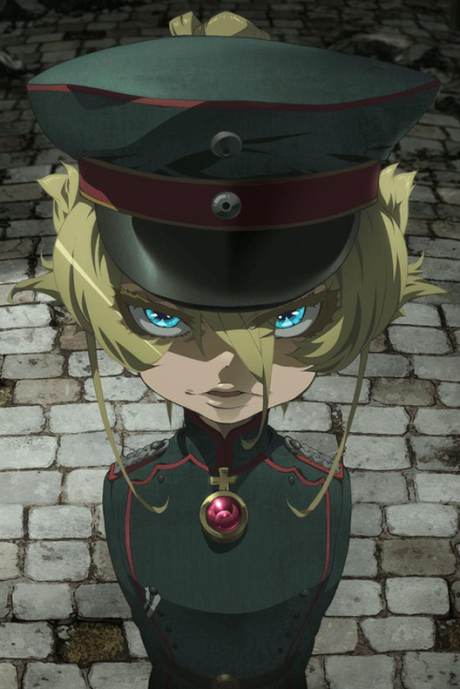
Saga of Tanya the Evil Episode 1 review time: is “The Devil of the Rhine” worth watching, or just a cold open for war-mage trailers? This page is the full Season 1 Episode 1 recap, beginner guide, and honest score — built so you can decide whether the salaryman-to-Tanya / Being X franchise starts strong on the battlefield. Stay for the Rhine. Stay for Tanya Degurechaff. Stay if you searched “Tanya Episode 1 review” because you want answers, not hype.
Hook
Most isekai pilots open with death, a goddess, and a tutorial. Saga of Tanya the Evil (Youjo Senki) opens with a finished product: a child-sized Imperial aerial mage already treating World War–adjacent slaughter like a quarterly review. Episode 1 does not hold your hand through the salaryman reincarnation or the Being X bargain up front. It drops you onto the Rhine, lets Tanya work, and asks whether you can keep rooting for competence when competence looks monstrous.
That is the SEO keyword everyone dances around and the storytelling point that matters. If you only know Tanya from cute-war-criminal memes, Episode 1 will feel meaner and more military than a gag reel. If you want to understand why the franchise’s dark comedy sticks, you need this battlefield baseline: doctrine, insubordination, attrition, and a nickname born from fear.
So the question this Saga of Tanya the Evil Episode 1 review answers: should you start tonight — and does “The Devil of the Rhine” actually deliver?
It does, mostly because it refuses to confuse “antihero” with “edgy child with a gun.” Tanya is small, precise, and already terrifying. Studio NuT sells flight combat with readable chaos, Aoi Yūki sells innocence wrapped around managerial cruelty, and the episode ends with enemy propaganda doing half the character work for free. The pilot also understands contrast. Soft isekai wants destiny speeches. This one wants kill zones, paperwork logic, and the ugly math of who gets left on the line.
Quick Information
- Anime: Saga of Tanya the Evil (Youjo Senki)
- Season / Episode: Season 1, Episode 1
- English episode title: The Devil of the Rhine
- Japanese episode title: ラインの悪魔 (Rain no Akuma)
- Runtime: about 24 minutes
- Studio: NuT
- Genres: Action, Military, Fantasy, Isekai
- Original air date: January 6, 2017
- Kagex score: 8.5 / 10
- Where to watch legally: Crunchyroll (check your region)
- Character to know: Tanya Degurechaff
Should You Watch Saga of Tanya the Evil Episode 1?
Is Saga of Tanya the Evil Episode 1 worth watching? Yes — if you want military fantasy with dark comedy and an antihero who treats war like labor economics. It is beginner-friendly as a tone sample, visually confident in the air, and deliberately cold.
Is it slow? Not in the “twenty minutes of tutorial menus” sense. It is dense: front-line mage ops, unit discipline, and a solo engagement that redefines Tanya’s reputation. Viewers who need soft found-family warmth in episode one may feel the temperature drop.
Who will enjoy it? Fans of war strategy anime, ruthless protagonists, aerial mage spectacle, and isekai that rejects blessing-from-a-goddess comfort. If Being X and the salaryman origin are why you clicked the franchise, know Episode 1 sells the finished officer first — the origin context follows soon after.
Who might bounce? Viewers who hate child soldiers on screen, who need a likable soft hero immediately, or who wanted comedy-first reincarnation vibes. Fair. Episode 1 is war first, thesis second.
Bottom line: watch Episode 1. If Tanya’s Rhine performance makes you lean in instead of look away, keep going. If you only wanted cute-girl memes without the meat grinder, this premiere will tell you the truth early.
One useful warning: this is a cold-open pilot, not a complete origin loop. It gives you enough combat and character to know the show’s voice, then leaves the “how did a child become this” question hanging for the next chapter. That can feel abrupt if you expected goddess exposition first. For everyone else, it is exactly the kind of ending that turns “I’ll try it” into “fine, one more.”
Spoiler Warning
Spoilers for Saga of Tanya the Evil Season 1 Episode 1 follow. Stop above for a clean first watch. This recap stays inside Episode 1 — no Season 2 plot spoilers. Season 2 aired Summer 2026; this page does not dig into it.
Story Recap — Saga of Tanya the Evil Episode 1
Ordinary Life (on the Rhine)
We meet a world already at war: the Empire’s aerial mages fight a grinding front against the Francois Republic on the Rhine. Inside that machine, Second Lieutenant Tanya Degurechaff leads a platoon in the 205th Assault Mage Company — including Corporal Viktoriya Serebryakov. “Ordinary” here is already extraordinary: child-sized officer, computation jewels, magical dogfights over trench logic.
The early stretches show Tanya as management more than mascot. Orders exist. Discipline exists. People who treat the battlefield like a suggestion box get corrected. The episode title is not a spoiler sticker yet — it is a destination the Rhine is about to earn for her.
Those opening combat beats also teach the show’s labor culture. Mages are not roaming adventurers; they are a branch with doctrine. Survival is a KPI. Tanya’s calm is the joke and the horror: she sounds like someone filing a report while the sky burns.
Unexpected Incident
Two mages under Tanya’s command disobey. She does not give a soft mentor speech. She removes them from the line — a decision that looks harsh until the episode’s later math lands. Meanwhile, the 205th is tasked to reinforce the 403rd Assault Mage Company. The reinforcement arrives too late in the only way that matters: the 403rd is wiped by Republican mages.
That wipe is the premiere’s gear shift. What could have been a routine reinforce becomes a choice under fire. Tanya peels her remaining platoon members toward rendezvous with the rest of the 205th and takes the enemy mage problem on herself. It is not written as glorious last-stand romance. It is written as a lieutenant solving an ugly equation with her own body as the available asset.
The choice also clarifies Tanya’s leadership thesis. She will not die for poetry. She will risk herself when the risk profile beats the alternative — and she expects subordinates to treat orders as survival tools, not vibes.
New World (enemy sky)
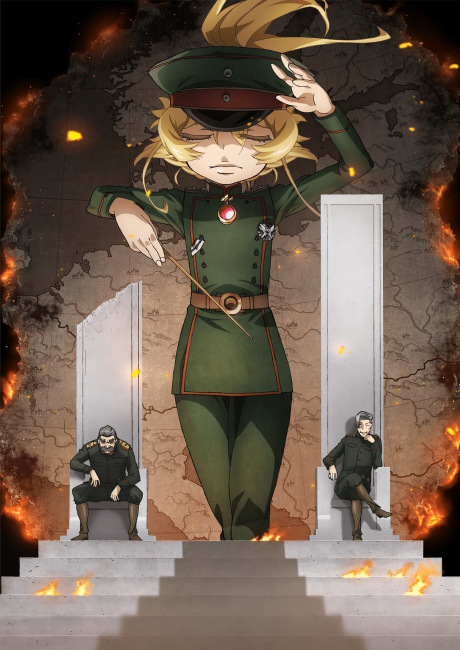
The “new world” of Episode 1 is not a second planet. It is the sky once Tanya is alone against Republican aerial mages who still think numbers and pride will carry them. She demands a stand-down. They refuse. What follows is the combat statement the series needs: one Imperial mage turning a dogfight into a demonstration.
NuT sells the shift through motion and scale — small silhouette, big firepower, readable panic on the receiving end. The Rhine stops being a generic war backdrop and becomes the place a legend is manufactured in real time.
Viktoriya’s presence earlier matters here because the unit is not abstract. You have already seen how Tanya’s people experience her: competent, frightening, oddly protective when performance holds. Solo Tanya is the same brain without the chorus.
First Discovery
The first discovery is not a new spell name — it is reputation. Republican troopers start branding Tanya the Devil of the Rhine. In Parisee, leadership has to discuss a child-shaped problem they cannot file under normal losses. Fear becomes intelligence. Nickname becomes propaganda. Tanya did not ask for the title; the battlefield wrote it for her.
Back on the Imperial side, Lieutenant Colonel Rerugen’s concern cuts the other direction: he sees a monster in a girl’s shape and worries about what the Rhine assignment means. Episode 1 is careful to show both mirrors. Enemies need a devil. Allies need a word for unease. Tanya keeps working either way.
Then the quiet knife: Viktoriya learns the insubordinate mages Tanya sent rear-ward died when the enemy shelled their position — something Tanya had anticipated. The “harsh” transfer reads differently after the fact. Survival math, not random cruelty. Whether you find that admirable or sick is the show testing you.
Important Encounter
The important encounter is Tanya versus the idea of a fair fight. Episode 1’s climax is not a mentor hug. It is annihilation after a refused surrender, followed by the political aftershocks of a nickname. If you came for soft reincarnation comfort, note this: the premiere makes you meet the finished product of that reincarnation before it explains the salaryman and Being X setup in depth.
That unfinished question — how does a child become this — is the hook into Episode 2. This review will not spoil the prologue’s full origin dump. Only that Episode 1’s job is to make Tanya’s legend feel earned and uncomfortable.
Story Analysis
As a Saga of Tanya the Evil Episode 1 review take: the premiere succeeds because it protects the thesis. Antihero fantasy without demonstrated competence is just attitude. NuT and the script spend the hour (well, the episode) proving Tanya’s results before asking you to care about her soul.
Pacing is front-loaded with war texture, then spikes into the solo engagement and the propaganda fallout. Some viewers call the cold open confusing. It is intentional. Starting at the Rhine makes the later origin feel like an explanation, not a tutorial.
Emotion comes from mismatch. A cherubic voice delivering threat assessment. A subordinate realizing the “cruel” order was predictive. Staff officers whispering “monster” while the Empire still needs the results. That cocktail is darker than most Winter 2017 isekai pilots dared.
World-building is efficient: Empire vs Republic, aerial mage doctrine, attrition fronts, reputation as a weapon. You leave literate enough to follow Season 1 without a wiki homework session.
The real hook is control. Tanya wants a safe career path and keeps getting shoved into the meat of the war. Episode 1 shows how she seizes control anyway — through discipline, firepower, and a refusal to romanticize dying for someone else’s speech. Being X’s spiritual pressure is the franchise’s longer antagonist; Episode 1’s immediate antagonist is simply a sky full of people who will not surrender to a child.
Character Analysis
Tanya Degurechaff — devil by results
First impression: tiny, precise, ruthlessly professional. Motivation in Episode 1 is not “save the world.” It is win the engagement, enforce orders, and keep her career (and skin) intact. That makes later philosophical conflict land. Full guide: Tanya Degurechaff explained — powers & story role.
Viktoriya Serebryakov — human window
Viktoriya is the premiere’s emotional translator. Through her, you see how Tanya’s unit experiences leadership that looks like care until it looks like prophecy. She is not a joke sidekick; she is the cost-and-loyalty meter.
Rerugen — staff unease
Rerugen’s “monster in a girl’s form” read is Episode 1’s adult counterweight. The Empire can celebrate results and still fear the tool producing them. That tension is Season 1 fuel.
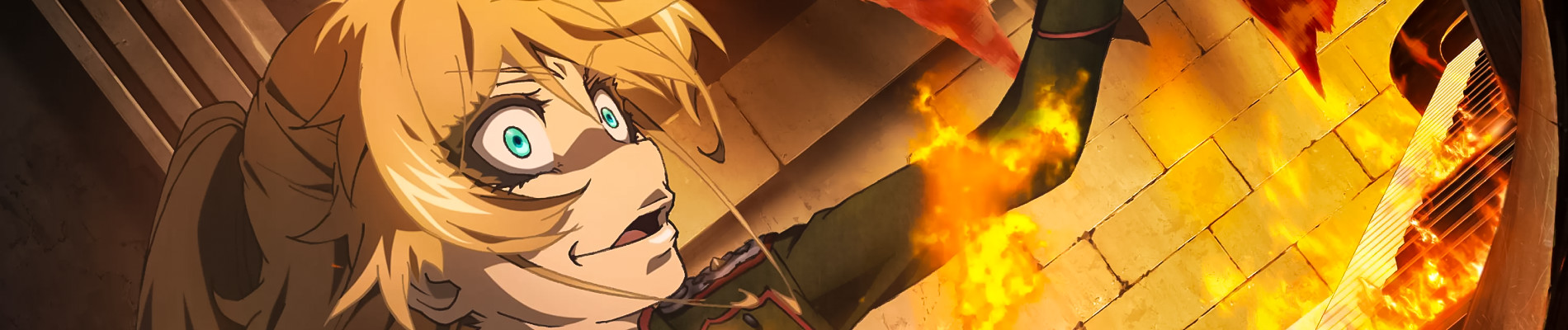
World Building
Episode 1’s world rules are clean enough for searches like “what are aerial mages in Tanya the Evil” without a lore dump. Mages fly and fight as formal military units. Fronts have names and attrition. Nicknames travel faster than after-action reports. The Rhine introduces a nastier idea: reputation can become doctrine’s unofficial sibling — both sides start planning around the Devil once the name sticks.
It is worth stressing how grounded the premise feels before divine conflict takes more stage time. A computation jewel is not a video-game HUD for vibes; it is kit inside an army. Ranks decide who gives orders. Insubordination has body counts. The series can later get theological and political because this first episode gives its magic a paycheck and a trench.
Enemy capital chatter and Imperial HQ concern sketch a continent at war without a map lecture. Episode 1 wisely does not pause for a full Being X orientation. It only gives the audience the feeling that this child officer is not a normal prodigy story — something under the uniform does not fit.
Animation Review
Studio NuT opens Tanya with aerial clarity: readable mage dogfights, heavy magical impacts, and a solo sequence that sells scale without turning into pure noise. It is not nonstop sakuga for twenty-four minutes — and it should not be. The premiere saves visual violence for the turn that creates the Devil nickname. Character acting on Tanya’s face and posture does as much work as the explosions trailers promised.
The color and staging deserve credit too. The Rhine feels dirty and operational; the sky fights feel like work with a body count. The camera repeatedly reminds you how small Tanya’s silhouette is under huge magical output. When enemies panic, the animation does not need a speech about power levels. Angles and aftermath do the talking.
Music and Voice Acting
Aoi Yūki’s Tanya is the premiere’s casting flex — sweetness as camouflage for threat. Viktoriya’s reactions sell the unit’s nervous loyalty. Background scoring supports war pressure without drowning the dry command comedy. The season’s weekly OP/ED handshake settles after the pilot stakes are set; Episode 1’s job is to make you need that weekly return.
Voice work is also why the “cute war criminal” meme exists. Without Yūki, Tanya risks reading as flat cruelty. With her, every polite line can cut both ways.
Hidden Details
Rewatchers can track how often Tanya frames decisions as policy rather than emotion — the script trains you to hear management-speak under gunfire. The insubordination subplot is a stealth thesis for the whole show: soft leadership kills. The Gate… wait, wrong franchise — here the “rules can break” warning is simpler: surrender refused becomes annihilation, and propaganda fills the vacuum.
Watch body language when officers discuss Tanya. People who need her results still flinch at her methods. That visual unease makes later Being X conflict feel like an extension of a human problem already online: what do you do with a weapon that works too well?
Another small strength: Viktoriya’s late realization about the rear deaths is not only a Tanya flex. It is a moral Rorschach. Some viewers will nod at the prediction. Others will feel sick. Episode 1 wants both reactions in the room.
Best Moments
Tanya enforcing discipline early. Cold. Clear. Character.
The 403rd wipe turning reinforce into crisis. Instant stakes upgrade.
Solo Rhine engagement after refused stand-down. The image that makes Episode 1 travel.
“Devil of the Rhine” landing as enemy nickname. Propaganda as character writing.
Viktoriya learning why the rear transfer mattered. The quiet knife after the fireworks.
Rerugen’s monster concern. Empire unease in one line of adult dread.
Pros and Cons
Pros: strong antihero baseline, clear military-mage world rules, excellent Devil nickname turn, Aoi Yūki casting win, beginner-friendly tone sample for Tanya.
Cons: cold open withholds full salaryman / Being X origin until later; child-soldier imagery will bounce some viewers; Episode 1 is a reputation cliff more than a closed emotional arc.
It is also fair to say side soldiers are sketched quickly. The episode needs you to grasp Tanya’s method rather than memorize every name, so a few deaths register as thesis more than fully developed loss. That is a pilot trade-off, not a deal-breaker, and Tanya plus Viktoriya carry enough texture to make the Rhine hurt.
Final Verdict
Saga of Tanya the Evil Episode 1 is a hard, stylish on-ramp. It answers “is Tanya worth watching?” with a conditional yes: watch if you can handle a military premiere that withholds soft origin comfort and leads with results. Kagex score: 8.5 / 10.
- Story: 8.6 / 10
- Characters: 8.5 / 10
- Animation: 8.4 / 10
- Music: 8.2 / 10
- Enjoyment: 8.6 / 10
- Overall: 8.5 / 10
Recommendation: start here on Crunchyroll. If the Devil nickname sequence hooks you, continue Season 1. Read the Tanya character guide when the voice sticks. Season 2 aired Summer 2026 — finish Season 1 first.
What to Expect Next
Episode 1 ends on legend and unease. Episode 2 has to answer how Tanya became this person — the salaryman death, Being X, and the second-life bargain the franchise is famous for — without this page spoiling the prologue’s turns. If you care about Tanya and Viktoriya after the Rhine, keep watching.
Expect explanation rather than a soft reset. The premiere has spent too much effort making the Devil feel real to wave the mystery away. That is the promise of the next chapter: not simply more dogfights, but the origin under the uniform.
FAQ — Saga of Tanya the Evil Episode 1
Is Saga of Tanya the Evil Episode 1 worth watching?
Yes. It is the correct starting point and a complete tone sample: Rhine war, Tanya’s methods, high aerial production value.
What is Episode 1 called?
“The Devil of the Rhine” (Rain no Akuma).
Do I need the light novels first?
No. The anime premiere explains the front and Tanya’s combat role clearly.
Where can I watch Tanya Episode 1?
Crunchyroll is the common legal stream outside restricted regions.
Is Episode 1 action-heavy?
Yes — aerial mage combat and a major solo engagement, with dark command comedy underneath.
Who is Tanya Degurechaff in Episode 1?
An Imperial aerial mage lieutenant already terrifying on the Rhine — full profile: Tanya explained.
When do we see the salaryman and Being X?
Episode 1 cold-opens on the finished officer. Origin context is the next episode’s job — go in clean if you can.
Is Tanya good for beginners?
Yes, as a tone check. Know the show is colder and more military than soft isekai comfort.
Is there Season 2?
Season 2 aired Summer 2026. Watch Season 1 first; this Episode 1 page stays out of Season 2 spoilers.
Keep exploring
- Saga of Tanya the Evil — anime hub
- Tanya Degurechaff explained
- Browse seasons & episodes
- Episode 2 review — coming soon
- Season 1 review — coming soon
Your turn
Did Episode 1’s Devil nickname hit harder than the early discipline scenes? Are you team “start for Tanya’s brain” or “start for the aerial fights”? What score would you give Saga of Tanya the Evil Episode 1 — and are you continuing to Episode 2 tonight?