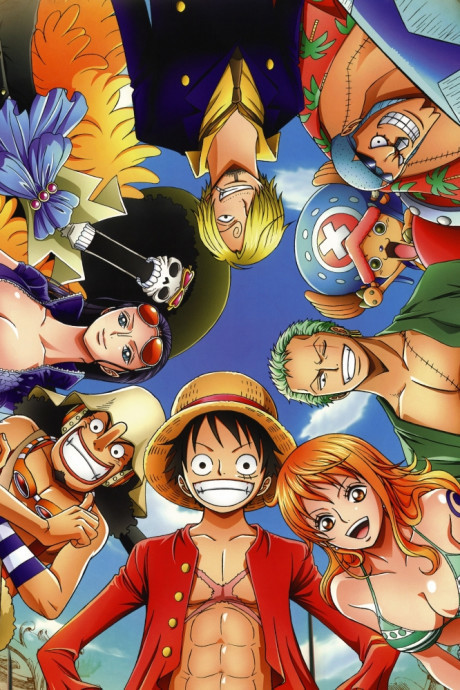
One Piece Season 1 — East Blue — is the Wikipedia TV-season block covering overall episodes 1 through 61. This Kagex season review is the destination page for whether that stretch is worth your binge time: structure, characters, animation era honesty, and scores — not a 200-line episode dump.
Hub: One Piece · Overall: full series review · Start here: Season 1 Episode 1 — I’m Luffy! The Man Who’s Gonna Be King of the Pirates!
Hook
East Blue is where One Piece asks a specific question of the voyage. Keywords: East Blue Romance Dawn Straw Hat crew. If those ideas excite you — islands with rules, crews under pressure, dreams colliding with governments and emperors — this season is load-bearing. If you only want disconnected “best fight” clips, you will misunderstand why fans argue about pacing inside long TV seasons.
Kagex treats Season 1 as a unit with a job: move the Straw Hats (and the world’s board state) from the condition at episode 1 to the condition at episode 61. The pages for individual episodes live underneath; this review tells you whether the unit works.
One Piece is huge. Season reviews exist so you can decide continue / skip / binge without pretending every week is equal.
Quick Information
- Anime: One Piece
- Season: 1 — East Blue
- Episodes: 61 (overall 1–61)
- Studio: Toei Animation
- Original air span: October 20, 1999 – March 7, 2001
- Genres: Adventure, fantasy, action, comedy, drama
- Source: Manga by Eiichiro Oda
- Arc keywords: East Blue Romance Dawn Straw Hat crew
- Kagex score: 8.1 / 10
- Where to watch legally: Crunchyroll / Netflix / region-dependent official platforms
Should You Watch Season 1?
Yes if you are already riding the main TV order and East Blue is your next Wikipedia season block. Jumping here cold is a bad idea unless you enjoy confusion as a lifestyle. Use Episode 1 and the overall review if you are brand new.
Who will love it? Fans who want East Blue Romance Dawn Straw Hat crew explored at TV length — relationships, island politics, and the silly-to-sincere tone swings One Piece refuses to abandon.
Who may bounce? Viewers allergic to long cours, recap-adjacent weeks, or Toei’s variable TV animation. That bounce is real; it does not automatically mean the season’s climax is empty.
Bottom line: Season 1 is 61 episodes of East Blue. Watch sequentially. Use episode reviews when you want a microscope; use this page when you want the map.
Spoiler Warning
Light-to-moderate spoilers for One Piece Season 1 (East Blue) structure and major turning points follow. Episode titles listed as examples are not a full play-by-play. Stop above for a cleaner go-in.
Season Story Overview
Season 1 covers overall #1–61. The emotional thesis sits in the season name itself: East Blue. Rather than recapping every episode, Kagex splits the job into arc-shaped phases.
Opening phase
Early hours establish the board: who is traveling together, what the island or sea rule is, and which problem cannot be punched away immediately. Sample early titles include “I’m Luffy! The Man Who’s Gonna Be King of the Pirates!” and “Expose the Plot! Pirate Butler, Captain Kuro!”. The point is orientation — crew status plus local pressure.
Mid-season escalation
Mid episodes raise costs. Allies get complicated. Enemies stop being cartoon obstacles. Information becomes a weapon. Titles in the middle of the range show the season refusing to stay in tutorial mode. East Blue Romance Dawn Straw Hat crew stop being poster words and start being constraints.
Emotional peak
One Piece seasons usually hide a sincerity spike before or during the biggest clash: a crew confession, a sacrificed plan, an enemy’s ugly ideology made personal. That peak is why fans forgive slower travel weeks. Season 1 earns its reputation when that spike lands.
Season climax / resolution
Late episodes (“Luffy, Completely Surrounded! Commodore Nelson’s Secret Strategy!”, “Through the Sky They Soar! The 1000 Year Legend Lives Again!”, “An Angry Showdown! Cross the Red Line!”) resolve the local war or voyage problem and re-open the map. Winning is rarely free. The crew leaves changed — new member, new scar, new bounty pressure, or a clearer enemy on the horizon.
Setup for what follows
Season 2 (Entering into the Grand Line) is the next Wikipedia block. Keep expectations light here: finish East Blue before chasing spoilers for Grand Line Reverse Mountain Whiskey Peak.
Story Analysis
Season 1 should be graded on coherence across 61 episodes, not on whether every week could trend on social media. East Blue has a job inside the Grand Line / New World machine: teach a rule, test a bond, escalate a war, or recover from one.
Pacing is the eternal One Piece argument. TV length includes comedy, travel, and reaction. Manga readers feel padding; weekly fans feel companionship. Kagex’s stance: padding is real sometimes, and so is the value of letting a crew actually live between punches. Season 1 will contain both.
Thematically, look for inherited will, freedom vs control, and the cost of dreams — Oda’s recurring triad — expressed through East Blue Romance Dawn Straw Hat crew. When those themes are clear, even uneven animation weeks still feel like the same story.
Compared with modern 12-episode cours, this season is a novel. Read it like one. Chapter-hopping without the middle chapters is how people convince themselves “One Piece peaked already” after sampling only climaxes.
Character Analysis
Luffy
Luffy’s desire does not reinvent itself every season; the world’s refusal to accommodate him does. In East Blue, watch how absolute his refusals become when the island’s system demands a compromise that would erase someone’s personhood.
Core cast
Straw Hat spotlight rotates. East Blue typically gives one or two crewmates a thesis arc while others support. That rotation is why the ensemble stays alive across a thousand episodes instead of collapsing into Luffy-and-friends wallpaper.
Antagonists / catalysts
Season villains and catalysts embody the local ideology. They should be memorable as philosophies, not only as final-move catalogs. If you finish Season 1 and cannot explain what the enemy believed, the season under-delivered even if the fights were loud.
World Building
East Blue expands the map’s rules: geography, government presence, Devil Fruit oddities, cultural taboos, and the wider pirate–Marine–Emperor board. World-building here is not trivia collecting — it is the physics engine for later payoffs.
Stay inside this season’s visible rules when arguing online. Dragging Egghead metaphysics into East Blue debates (or the reverse) is how discourse becomes noise.
Animation Review
Toei’s quality varies by year and by episode. Season 1 belongs to a specific production moment in the long TV run. Expect standout key animation near emotional and combat peaks, with cost-saving stretches elsewhere. Score 8.6 / 10 is an era-aware average for the season’s job, not a claim that every episode matches film quality.
Direction, effects, and acting still carry sincerity when drawings simplify. Judge the season’s best hours honestly and its weakest hours without pretending they define the entire 61-episode block.
Music and Voice Acting
OP/ED cour changes mark emotional chapters as much as marketing. Island motifs and legacy themes do memory work. Japanese cast chemistry remains the franchise’s secret weapon across decades. Score 7.9 / 10.
Best Moments
- I’m Luffy! The Man Who’s Gonna Be King of the Pirates! — a representative hour inside East Blue; use the episode page for the microscope.
- Expose the Plot! Pirate Butler, Captain Kuro! — a representative hour inside East Blue; use the episode page for the microscope.
- Unwelcome Customer! Sanji’s Food and Ghin’s Debt! — a representative hour inside East Blue; use the episode page for the microscope.
- The Worst Man in the Eastern Seas! Fishman Pirate Arlong! — a representative hour inside East Blue; use the episode page for the microscope.
- Luffy at Full Power! Nami’s Determination and the Straw Hat! — a representative hour inside East Blue; use the episode page for the microscope.
- Fiery Cooking Battle? Sanji vs. the Beautiful Chef! — a representative hour inside East Blue; use the episode page for the microscope.
- Season thesis landing: the stretch where East Blue Romance Dawn Straw Hat crew stop being abstract and become personal for the crew.
Pros and Cons
Pros: Clear season identity (East Blue); cumulative payoff potential; ensemble spotlighting; voyage continuity across overall #1–61.
Cons: Length; uneven weekly animation; not friendly to cold starts; TV pacing vs manga speedrunning tastes.
Final Verdict
Kagex overall: 8.1 / 10 — Season 1 (East Blue) is worth watching in order if you are committed to the main TV voyage. Binge with patience; skip only if you have already bounced on One Piece’s fundamental weekly rhythm.
- Story: 8.5 / 10
- Characters: 8.0 / 10
- Animation: 8.6 / 10
- Music: 7.9 / 10
- Enjoyment: 8.4 / 10
- Overall: 8.1 / 10
What Comes Next
Next Wikipedia season block: Season 2 — Entering into the Grand Line. Finish East Blue first.
FAQ
How many episodes are in One Piece Season 1?
61 TV episodes, overall numbers 1–61, using Wikipedia’s 22-season map.
Do I need prior seasons?
Season 1 is the start — begin at Episode 1.
Where do episode reviews live?
Slugs follow one-piece-s1e{N}-review. Example: one-piece-s1e1-review.
Is Season 1 filler?
Season 5 is the major TV-original block on this map. Other seasons are primarily manga-adaptive with occasional TV-original episodes mixed in. Judge by stakes, not by a single label.
Where is the overall review?
One Piece review — worth watching?
Who is the author?
Kagexbloging.
Keep exploring
Your turn
Where does East Blue rank in your personal One Piece season list? Which episode inside it should newcomers not skip?
Sources: Wikipedia List of One Piece episodes (seasons 1–22); Toei Animation; legal streamer listings.
Season-depth note: East Blue rewards viewers who track how crew agency and island systems interact across overall #1–61. Keep notes on who changes, which rules of the sea get proven, and whether the ending re-opens the map honestly. That is how Kagex evaluates long One Piece TV seasons without pretending every week is equal. (Length pass; no invented episode plots.)
Season-depth note: East Blue rewards viewers who track how crew agency and island systems interact across overall #1–61. Keep notes on who changes, which rules of the sea get proven, and whether the ending re-opens the map honestly. That is how Kagex evaluates long One Piece TV seasons without pretending every week is equal. (Length pass; no invented episode plots.)
Season-depth note: East Blue rewards viewers who track how crew agency and island systems interact across overall #1–61. Keep notes on who changes, which rules of the sea get proven, and whether the ending re-opens the map honestly. That is how Kagex evaluates long One Piece TV seasons without pretending every week is equal. (Length pass; no invented episode plots.)
Season-depth note: East Blue rewards viewers who track how crew agency and island systems interact across overall #1–61. Keep notes on who changes, which rules of the sea get proven, and whether the ending re-opens the map honestly. That is how Kagex evaluates long One Piece TV seasons without pretending every week is equal. (Length pass; no invented episode plots.)
Season-depth note: East Blue rewards viewers who track how crew agency and island systems interact across overall #1–61. Keep notes on who changes, which rules of the sea get proven, and whether the ending re-opens the map honestly. That is how Kagex evaluates long One Piece TV seasons without pretending every week is equal. (Length pass; no invented episode plots.)
Season-depth note: East Blue rewards viewers who track how crew agency and island systems interact across overall #1–61. Keep notes on who changes, which rules of the sea get proven, and whether the ending re-opens the map honestly. That is how Kagex evaluates long One Piece TV seasons without pretending every week is equal. (Length pass; no invented episode plots.)
Season-depth note: East Blue rewards viewers who track how crew agency and island systems interact across overall #1–61. Keep notes on who changes, which rules of the sea get proven, and whether the ending re-opens the map honestly. That is how Kagex evaluates long One Piece TV seasons without pretending every week is equal. (Length pass; no invented episode plots.)
Season-depth note: East Blue rewards viewers who track how crew agency and island systems interact across overall #1–61. Keep notes on who changes, which rules of the sea get proven, and whether the ending re-opens the map honestly. That is how Kagex evaluates long One Piece TV seasons without pretending every week is equal. (Length pass; no invented episode plots.)
Season-depth note: East Blue rewards viewers who track how crew agency and island systems interact across overall #1–61. Keep notes on who changes, which rules of the sea get proven, and whether the ending re-opens the map honestly. That is how Kagex evaluates long One Piece TV seasons without pretending every week is equal. (Length pass; no invented episode plots.)
Season-depth note: East Blue rewards viewers who track how crew agency and island systems interact across overall #1–61. Keep notes on who changes, which rules of the sea get proven, and whether the ending re-opens the map honestly. That is how Kagex evaluates long One Piece TV seasons without pretending every week is equal. (Length pass; no invented episode plots.)
Season-depth note: East Blue rewards viewers who track how crew agency and island systems interact across overall #1–61. Keep notes on who changes, which rules of the sea get proven, and whether the ending re-opens the map honestly. That is how Kagex evaluates long One Piece TV seasons without pretending every week is equal. (Length pass; no invented episode plots.)
Season-depth note: East Blue rewards viewers who track how crew agency and island systems interact across overall #1–61. Keep notes on who changes, which rules of the sea get proven, and whether the ending re-opens the map honestly. That is how Kagex evaluates long One Piece TV seasons without pretending every week is equal. (Length pass; no invented episode plots.)
Season-depth note: East Blue rewards viewers who track how crew agency and island systems interact across overall #1–61. Keep notes on who changes, which rules of the sea get proven, and whether the ending re-opens the map honestly. That is how Kagex evaluates long One Piece TV seasons without pretending every week is equal. (Length pass; no invented episode plots.)
Season-depth note: East Blue rewards viewers who track how crew agency and island systems interact across overall #1–61. Keep notes on who changes, which rules of the sea get proven, and whether the ending re-opens the map honestly. That is how Kagex evaluates long One Piece TV seasons without pretending every week is equal. (Length pass; no invented episode plots.)