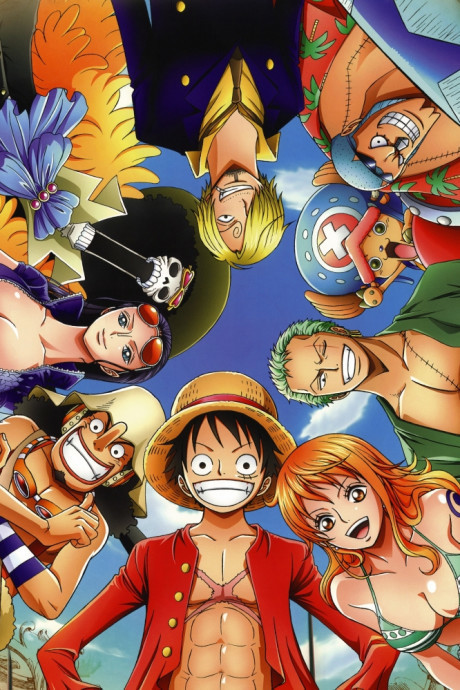
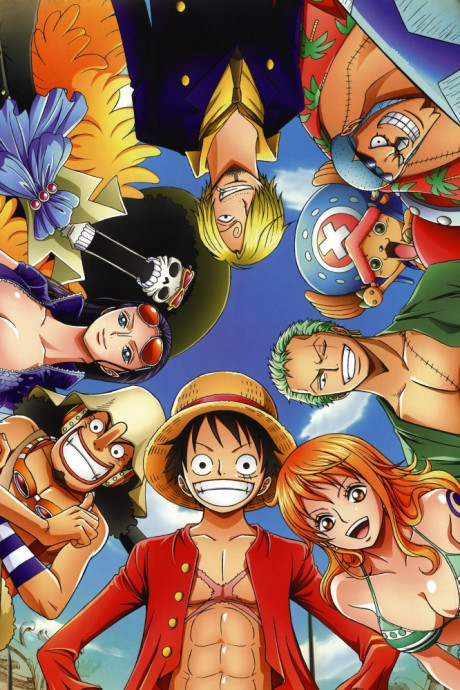
Episode 2 handed Zoro his swords back and dared Shells Town’s rotten command chain to do something about it. Episode 3 is the bill coming due — Captain Morgan falls, Coby gets his badge, and a stranger nobody was watching turns out to be the most important new face on this coastline. This is the full One Piece Season 1 Episode 3 recap and review: Monkey D. Luffy versus institutional rot, and the mysterious pretty girl who is about to reroute the whole story.
Hook
Every good crew story needs a moment where the audience stops asking “will they fight?” and starts asking “how bad will it get?” Episode 3 answers that immediately: Morgan is not a boss fight with rules, he is a tyrant with an axe and a hostage plan, and Helmeppo is dumb enough to actually use Coby as a shield. One Piece rarely lets its early antagonists feel like padding, and this episode is the proof — the fight has real stakes because the show already spent two episodes making you care who gets hurt.
Then, almost as an afterthought to Toei’s own pacing, the episode drops a second plot thread into the same runtime: a girl nobody in Shells Town seems to notice, moving through the Marine base like she owns it, hunting for something that has nothing to do with Luffy’s fight. That is not filler. That is One Piece quietly seeding the East Blue’s next several episodes while your attention is on fists and axes.
So here is the question this page answers: does Episode 3 close the Shells Town arc with the payoff Episode 2 promised, and is the “mysterious pretty girl” tease worth caring about before you know her name? Yes to both — and the second answer matters a lot more than it looks like it should on a first watch.
Quick Information
- Anime: One Piece
- Season / Episode: Season 1 (East Blue on-ramp), Episode 3
- English episode title: Morgan vs. Luffy! Who’s the Mysterious Pretty Girl?
- Japanese episode title: モーガンVSルフィ!謎の美少女は誰? (Mōgan tai Rufi! Nazo no Bishōjo wa Dare?)
- Runtime: about 24 minutes
- Studio: Toei Animation
- Genres: Action, Adventure, Comedy, Fantasy
- Original air date: November 24, 1999
- Kagex score: 8.5 / 10
- Where to watch legally: Crunchyroll; Netflix (availability can vary by region)
- Key character: Monkey D. Luffy
Should You Watch It?
If Episode 2 sold you on Zoro’s honor, Episode 3 is the payoff you were promised — not a stall, not a second cliffhanger, an actual ending to the Shells Town conflict. You get the Morgan fight, the Coby resolution, and Zoro’s crew membership made official in the same 24 minutes.
Is it worth watching? Yes, unambiguously. This is the episode that turns “Luffy met a swordsman” into “Luffy has a crew.” Skipping it means skipping the actual formation of the Straw Hats as a two-person team.
Is it slow? No — this is the fastest-paced episode of the three so far. Fight, resolution, comedic gut-punch with Coby, and a new mystery character all land inside one runtime.
Is it beginner friendly? Completely, as long as you watched Episodes 1 and 2. No new lore homework required. It closes a loop cleanly, which makes it a satisfying stopping point if you need one — though you probably won’t want to stop.
Who will enjoy it? Anyone invested in Shells Town’s moral stakes, underdog beatdowns of corrupt authority, and the small thrill of watching a crew officially become a crew. Who might bounce: viewers allergic to 1999 TV animation limits during the fight choreography — understandable, but the writing carries it.
Bottom line: watch it. Episode 3 is where One Piece stops teasing its first crew and actually delivers one, while quietly introducing the person who is about to expand that crew even further.
Spoiler Warning
Spoilers for Season 1 Episode 3 follow. Stop above for a clean first watch. This recap stays inside Episode 3’s own board — no details from later Nami or Buggy arc episodes appear below beyond what this episode itself shows.
Story Recap
Ordinary Life (a base about to break)
Shells Town wakes up already broken. Morgan’s rule has been exposed as a lie in front of his own men — Helmeppo’s execution order for Zoro, after promising his life for a deal that was never real, has stripped away any pretense of legitimate command. “Ordinary” here is a base one spark away from open revolt, and Luffy is that spark, sword-shopping in the middle of a coup he did not plan to start.
Luffy hands Zoro his three swords back with zero ceremony. There is no oath, no speech — just a captain returning a weapon to the man he has already decided belongs on his crew. That transactional simplicity is very deliberately un-heroic, and it is exactly why the moment works: Luffy’s loyalty is a decision, not a performance.
Unexpected Incident (Morgan draws first blood)
Morgan does not wait for a fair fight. He moves on Luffy directly, throwing his full weight and rank behind an attack meant to end things before Zoro can even get positioned. Every blow misses. Luffy’s rubber body turns Morgan’s authority-fueled aggression into a non-event, and that failure alone starts unraveling the fear that has held Shells Town’s Marines in line for years.
Helmeppo, watching his father’s authority evaporate in real time, panics into the worst possible move: he grabs Coby and holds a gun to his head, threatening to kill him unless Luffy stands down. It is a naked hostage play from someone who has never had to actually earn obedience before — and it exposes exactly how thin his power always was.
New World (Coby’s line in the sand)
Coby’s answer to a gun pointed at his own head is the episode’s real turning point: he refuses to let Luffy’s dream stop for his sake, declaring he would rather die than watch Luffy back down. It is a small, unarmed civilian’s dream colliding directly with a Marine captain’s son holding a weapon — and Coby’s dream wins the moral argument outright, even before anyone throws another punch.
That declaration reframes everything that follows. Luffy is no longer just fighting for himself or even for Zoro’s freedom — he is fighting because a kid who wants to be a Marine just proved he understands justice better than the Marine currently pointing a gun at him. Shells Town’s “new world” is the one where courage, not rank, decides who gets protected.
First Discovery (the fight breaks open)
Luffy turns toward Helmeppo to end the hostage situation, using his stretched Gomu Gomu no Pistol to send him flying clear of Coby. In the same beat, Morgan sees his opening and swings his axe-arm at Luffy’s exposed head from behind — the kind of finishing blow a corrupt captain would use to end things quietly. Zoro is there first, cutting Morgan down before the axe ever lands.
Morgan collapses, beaten. What happens next is the episode’s cleanest piece of writing: the Marines under his command do not mourn him. They throw their weapons into the air and cheer. Years of fear evaporate in a single visual beat — this was never loyalty, it was terror, and terror has an expiration date once the source of it hits the ground.
Important Encounter (Coby’s Marines, and a girl no one was watching)
With Morgan down, Luffy, Zoro, and Coby share a quiet meal at the town restaurant with Rika and her mother — a small civilian moment that lets the arc breathe before its actual goodbye. When Marine officers arrive to formally send the two pirates on their way, the question of Coby’s status comes up directly. Luffy, without malice, mentions Coby’s history serving under the pirate Alvida — information Coby never wanted spoken aloud, since it threatens the one dream he has left.
Furious and humiliated, Coby throws a punch at Luffy. Luffy, in the show’s signature blend of comedy and code, does not go easy on him back — he wants Coby to understand exactly how dangerous the world he is choosing actually is, using his fists as the lesson. The Marines, seeing Coby was never actually sailing with the pirates, accept him into their ranks. He gets his dream after all, on his own terms, standing separately from the crew that helped him find the courage to want it.
Meanwhile, inside the same Marine base, a girl the show has been quietly cutting to throughout the episode is searching for something entirely unrelated to Morgan’s downfall: a map of the Grand Line. She finds where it was kept — only to discover the pirate Buggy already stole it out from under her. Without missing a beat, she sets sail after him. She has not said ten words all episode. She does not need to. Everything about how she moves marks her as someone who takes what she needs and does not wait for permission.
Story Analysis
Episode 3 works because it resolves an arc without padding it out for extra runtime. Morgan’s fall, Coby’s enlistment, and Zoro’s crew membership all land in one episode, and none of them feel rushed — because Episodes 1 and 2 already did the emotional groundwork. This is efficient serialized writing, not corner-cutting.
Pacing is the episode’s biggest strength. Fight, hostage crisis, resolution, comedic gut-check, and a new character tease all fit into 24 minutes without any single beat feeling compressed. That density is a good sign for how the East Blue saga plans to move.
Emotional impact comes almost entirely from Coby. His hostage-scene declaration is the moral peak of the episode, ahead of the actual fight-ending blow. The show trusts a civilian’s courage to matter as much as a captain’s punch, which is a smart choice for establishing what One Piece actually values.
Comedy returns hard in the Coby-punches-Luffy scene, and it is doing more work than a slapstick beat should. Luffy is teaching a lesson the only way his character knows how — bluntly, physically, without a lecture attached. It reads as affection wearing a bruise-shaped disguise.
Structure deserves specific credit: cutting between the Morgan resolution and Nami’s silent infiltration is the first time the show demonstrates it can run two unconnected plotlines in the same episode without either one feeling like an interruption. That is a skill the East Blue arc is going to lean on constantly.
Character Analysis
Monkey D. Luffy — a captain who teaches with his fists
Episode 3 shows two sides of Luffy’s leadership in one episode: merciless toward Helmeppo’s cruelty, and blunt-but-caring toward Coby’s naivety. He does not coddle people he respects. He corrects them, hard, and moves on. Guide: Monkey D. Luffy explained.
Roronoa Zoro — the save that makes it official
Zoro’s timed strike against Morgan’s axe is more than a save — it is his audition result. He does not announce loyalty; he simply shows up exactly when needed and lets the timing speak for him. From this point, he is crew, full stop.
Coby — courage without a devil fruit
Coby’s arc closes here on his own terms: not by becoming stronger, but by proving he can hold a line even facing a gun. His enlistment is earned, not gifted, and it sets him up as a Marine-side thread the story will keep circling back to.
Nami — introduced by action, not dialogue
The “mysterious pretty girl” of the title barely speaks, and that is the entire point of her introduction. She reads as a thief working her own agenda, unbothered by the chaos Luffy causes two rooms over, and gone the moment her lead runs cold. One Piece is telling you who she is through behavior alone: resourceful, self-directed, and already a step ahead of everyone else in Shells Town.
World Building
Episode 3 teaches an important East Blue rule: institutional fear collapses instantly once its source is removed. Morgan’s Marines were never following him out of respect, and the show makes that legible in a single visual gag — weapons thrown skyward in celebration, not mourning. That is a sharper political point than a 1999 kids’ adventure show strictly needed to make, and it sets a pattern for how One Piece treats corrupt authority throughout the East Blue.
The Grand Line map subplot is the episode’s quietest but most important world-building beat. It confirms that the Grand Line is a real, sought-after destination that requires actual navigational information to reach — not just a rumor Luffy is chasing on faith. It also introduces Buggy by reputation before he ever appears on screen, which is efficient franchise-building most modern shows would kill for.
Shells Town’s send-off scene also reinforces a theme the show will return to constantly: pirates and Marines are not always simple enemies. Coby crossing to the Marine side after literally traveling with pirates, saluted respectfully by the very officers he is joining, shows the East Blue’s moral lines are drawn by conduct, not uniform.
Animation Review
Toei’s 1999-era animation shows its age most clearly during the Morgan fight — impact frames are simple and the choreography leans on staging rather than fluid motion. That said, key beats land with real clarity: Morgan’s axe swing toward Luffy’s exposed back, Zoro’s intercepting strike, and the collective disarmament of the Marines all read instantly, which is what matters most for a TV budget of this era.
Character acting outperforms the action sequences. Coby’s face during the hostage scene, Helmeppo’s cowardice curdling into panic, and the wordless confidence in Nami’s introduction all do heavy lifting without needing elaborate animation to sell the emotion. This is foundational shonen TV animation, not a movie pilot, and the episode is honest about that limitation rather than trying to disguise it.
Music and Voice Acting
The score leans into triumphant brass as Morgan falls and the Marines celebrate — a clean, uncomplicated cue that matches the release of tension the scene needs. Kazuya Nakai’s Zoro stays quietly assured throughout, letting the axe-block moment speak through timing rather than a dramatic vocal beat, which fits his established character.
Coby’s voice work carries the episode’s emotional core — his declaration under threat and his later fury at Luffy both land with real conviction for a character who could easily have stayed a comic-relief sidekick. The unnamed girl’s near-silence is its own kind of voice direction: she is given almost nothing to say, and the choice to let her body language do the talking is a small but confident production decision.
Hidden Details
Rewatchers should note that Nami never interacts with Luffy, Zoro, or Coby at all this episode — the show is deliberately keeping the East Blue’s two biggest new threads (crew formation and the Grand Line map hunt) on separate tracks until the story is ready to merge them. That patience is unusual for a kids’ adventure pilot arc and pays off across the rest of Season 1.
Also worth catching: Coby is never shown actually fighting alongside Luffy and Zoro during the Morgan clash. That absence is what allows the Marines to accept him with a clean conscience — he chose courage without becoming a combatant, which is exactly the distinction the script needs for his enlistment to make institutional sense.
Buggy’s name surfaces here purely through a stolen note, well before his actual appearance. It is a small piece of long-game plotting that rewards viewers paying attention to background texture rather than just foreground fights.
Best Moments
Coby’s hostage-scene declaration. A civilian’s courage outshines a captain’s punch.
Zoro’s timed block on Morgan’s axe. Silent, decisive, and it makes him crew for real.
The Marines throwing their weapons into the air. Years of fear ending in one visual gag.
Luffy “teaching” Coby with his fists. Comedy doing the work of a loyalty speech.
Nami finding Buggy’s note. A whole new plotline seeded in five wordless seconds.
Pros and Cons
Pros: clean arc resolution, Coby’s strongest character beat yet, Zoro’s crew status made concrete, efficient dual-plotline structure, confident Nami tease.
Cons: 1999 fight choreography is simple by modern standards; Morgan and Helmeppo exit without much final characterization beyond their defeat; the Nami thread will feel thin until later episodes pay it off.
Final Verdict
Season 1 Episode 3 closes the Shells Town arc with exactly the payoff two episodes of setup earned, while quietly opening the door to the East Blue’s next major thread. It is tighter and faster than Episode 2, and its emotional peak belongs to a civilian with no powers at all. Kagex score: 8.5 / 10.
- Story: 8.6 / 10
- Characters: 8.7 / 10
- Animation: 7.7 / 10
- Music: 8.0 / 10
- Enjoyment: 8.7 / 10
- Overall: 8.5 / 10
Recommendation: watch it right after Episode 2 — this is the payoff, not a bridge. Coby’s send-off alone justifies the East Blue’s slower opening pace.
What to Expect Next
Shells Town is done. Luffy and Zoro sail on as a real two-person crew, and the girl who slipped through Morgan’s base with a stolen map lead is already gone after Buggy. No heavy spoilers here — just know East Blue’s next stretch is about to connect these two threads, and the crew is about to get more complicated before it gets bigger.
FAQ
Is One Piece Episode 3 worth watching?
Yes. It resolves the Shells Town arc cleanly and gives Coby his best moment in the series so far.
Does Zoro officially join Luffy’s crew in this episode?
Effectively yes — his timed save on Morgan’s axe strike confirms the partnership Episode 2 set up.
What happens to Captain Morgan and Helmeppo?
Morgan is defeated by Luffy and Zoro; his Marines abandon their fear-based loyalty the moment he falls.
Does Coby become a Marine?
Yes. Despite his pirate-ship past being exposed, the officers recognize he never fought alongside pirates and accept him.
Who is the mysterious pretty girl in the title?
She is introduced without dialogue, searching the Marine base for a Grand Line map — a tease for a character who becomes central soon after.
Is Episode 3 action-heavy?
Yes, more than Episode 2 — it delivers a full fight resolution rather than rising tension alone.
Should beginners watch in order?
Yes. Do not skip ahead to later famous arcs; this episode’s payoffs depend on Episodes 1 and 2.
Where can I watch it legally?
Crunchyroll and Netflix in many regions.
Keep exploring
- Episode 2 review
- One Piece — anime hub
- Monkey D. Luffy explained
- Browse seasons & episodes
- Season 1 review — coming soon
- Episode 4 review — coming soon
Your turn
Did Coby’s hostage-scene courage hit harder than the Morgan fight itself? Were you already curious about the silent girl in the Marine base before you knew her name? What score would you give One Piece Episode 3?