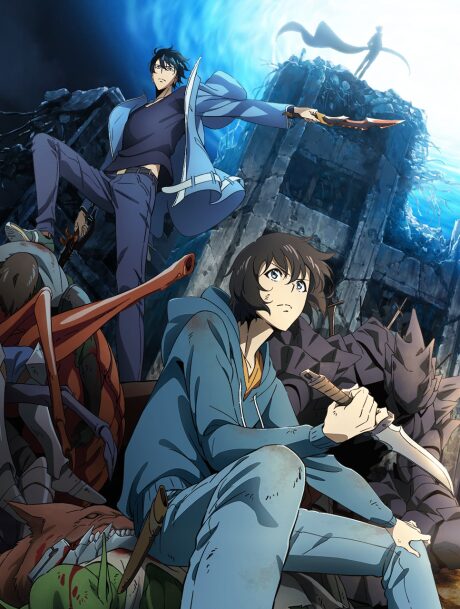
Episode 2 ended with a forced yes. Episode 3 shows you what that yes actually costs — and what it pays. Solo Leveling Season 1 Episode 3 — “It’s Like a Game” — is where Sung Jinwoo wakes up to a body that answers to a System, gets tested and dismissed by the Hunter Association, then discovers that skipping homework in this new game means getting chased across a desert that should not exist. Stay for the penalty quest. Stay for the loot box. Stay if you want to know whether Solo Leveling’s power fantasy actually earns its first real level-up.
Hook
Most power-system stories treat the tutorial like a formality — press a button, read a popup, move on. Episode 3 refuses that shortcut. Jinwoo spends three full days unconscious after the temple, and when he wakes up, nobody around him treats it like a miracle. The Hunter Association tests him for a second awakening, gets an underwhelming number, and moves on with barely a shrug.
That is the episode’s smartest choice: the System is real, but the world does not know it yet, and even Jinwoo does not fully understand what he has. “It’s Like a Game” is a title with teeth. Games have rules, quests, and consequences for ignoring them — and Episode 3 makes sure you feel the consequences before it lets you enjoy the rewards.
The question this page answers is simple: after a premiere built on dread, does Solo Leveling’s first proper “System episode” feel like a fun game, a punishing one, or both at once?
Quick Information
- Anime: Solo Leveling (Ore dake Level Up na Ken)
- Season / Episode: Season 1, Episode 3
- English episode title: It’s Like a Game
- Runtime: about 24 minutes
- Studio: A-1 Pictures
- Genres: Action, Adventure, Fantasy, System progression
- Original air date: January 21, 2024
- Kagex score: 8.6 / 10
- Where to watch legally: Crunchyroll (check your region)
- Characters to know: Sung Jinwoo, Hunter Association examiners Woo Jinchul and Kang Taeshik

Should You Watch It?
Is Solo Leveling Episode 3 worth watching? Yes — this is the episode where the System stops being a near-death interface and becomes a daily mechanic Jinwoo has to actually manage. If Episodes 1–2 sold you on the horror, Episode 3 sells you on the game.
Is it slow? Not really, though it shifts gears hard. The hospital and examination scenes are quieter and more procedural; the penalty-quest desert chase is a full tonal swing into panic. If you wanted nonstop dungeon combat, the first half will feel like table-setting. That table-setting is the point — it shows you exactly how little anyone else believes in Jinwoo before the System proves them wrong.
Who will enjoy it? Fans of System/status-window stories who actually want the mechanics to matter, underdog arcs where the world keeps underestimating the lead, and viewers who like watching a character learn by getting punished for cutting corners.
Who might bounce? Viewers hoping for wall-to-wall spectacle immediately after the temple. Episode 3 is calmer for its first half and only escalates once the penalty quest triggers — a deliberate pacing choice, not a lull.
Bottom line: watch it. Episode 3 is where Solo Leveling stops being “the guy who survived something awful” and starts being “the guy learning to use what happened to him.” The instance dungeon cliffhanger at the end is a genuine hook into Episode 4.
Spoiler Warning
Spoilers for Solo Leveling Season 1 Episode 3 follow. Stop above for a clean first watch. This recap stays inside Episode 3 — no later arc spoilers.
Story Recap — Solo Leveling Episode 3
Ordinary Life (three days gone)
Jinwoo wakes up in a hospital bed with no memory of how he got there — three full days have passed since the double dungeon. The temple, the altar, the Player offer under a kill timer: all of it happened, and his body is the only proof, still recovering from wounds that should have been fatal. There is no triumphant music here, just quiet disorientation and a body that feels slightly wrong in ways he cannot yet explain.
That confusion is the episode’s honest starting point. Nobody hands Jinwoo a manual. He has to piece together what changed by paying attention to his own condition — which is exactly the skill Episode 1 and 2 already proved he has.
Unexpected Incident (the Association shrugs)
Word of Jinwoo’s survival reaches the Hunter Association, and examiners Woo Jinchul and Kang Taeshik bring him in to test for a possible second awakening — the official process for a hunter whose power level might have changed. The test reads Jinwoo’s mana at roughly 10, a number so unremarkable it barely registers as a story. As far as the Association is concerned, nothing meaningful happened. Jinwoo walks out labeled exactly as weak as before.
The irony lands hard: the audience has already seen the Player status screen the examiners cannot detect. Solo Leveling’s System runs on a layer institutions cannot measure, and Episode 3 uses that gap to make Jinwoo’s isolation feel structural, not just emotional. Even official science does not believe in him yet.
New World (the System does not accept excuses)
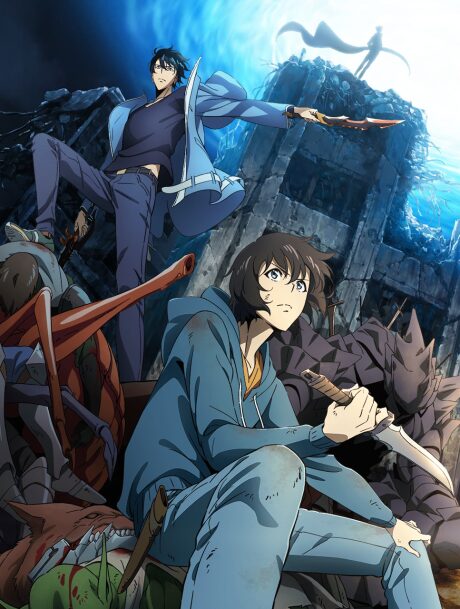
Back on his own, Jinwoo starts noticing the System properly — daily quest windows, stat screens, the whole interface Episode 2’s Player offer promised. The first real assignment is almost funny in how mundane it sounds: a daily Strength training quest, sit-ups, push-ups, running, nothing an action hero would brag about. Jinwoo skips it.
That skip is the episode’s hardest lesson. The System responds with a penalty quest, and Jinwoo is yanked into a punishing desert environment and chased by something built to make failure feel physically real. There is no dialogue box explaining mercy. The game he thought he could opt out of turns out to have teeth the moment he tests the rules.
First Discovery (completing the quests, earning the rewards)
Having survived the penalty chase, Jinwoo does not make the same mistake twice. He commits to the daily training properly, and the System starts paying out: stat rewards for consistency, and eventually a loot box drop that turns out to contain something far more interesting than gym-class stats — a key to an instance dungeon, a private, System-generated space that plays by its own rules.
This is where “It’s Like a Game” stops being a warning and starts being a promise. Jinwoo is learning that discipline inside this new ruleset has a direct, tangible payoff — something his old life as an E-rank hunter never reliably offered him.
Important Encounter (family stakes, then the wolf)
Before diving into anything dangerous, Jinwoo visits his mother in the hospital — a quiet scene that grounds the entire System plotline in a very human reason to keep going. Whatever power he is gaining, the point of gaining it is still tied to people outside the game, not just personal survival.
Back home, Jinwoo assigns his earned stat points into Strength, making a deliberate build choice rather than treating the System as a passive slot machine. Then he uses the instance dungeon key at Hapjeong Station, stepping into a private dungeon that answers only to him. Waiting inside is a powerful wolf-type monster, and Episode 3 ends right as that confrontation begins — a cliffhanger built on preparation paying off, not on a rescue arriving just in time.
Story Analysis
As a Solo Leveling Episode 3 review take: the episode succeeds by treating the System like an actual game with actual rules, not a magic power-up switch. A-1 Pictures and the script spend real time proving that daily quests, penalties, and rewards all have logic behind them before letting Jinwoo touch anything as flashy as an instance dungeon.
Pacing is a controlled two-act structure: the quiet, dismissive hospital-and-Association stretch, then the System’s much louder response once Jinwoo tests its patience. Some viewers may call the first half a comedown after the temple. It is intentional — the show wants you to feel exactly how little the outside world has changed while everything about Jinwoo already has.
Emotion comes from the gap between what the audience knows and what everyone else believes. We have seen the Player status. The examiners have not. That dramatic irony makes Jinwoo’s quiet competence — training properly, visiting his mother, making a stat choice — read as character growth instead of just a stats montage.
Theme is discipline versus disbelief. The Hunter Association measures Jinwoo by old metrics and finds nothing. The System measures him by whether he shows up for the boring parts. Episode 3 sides clearly with the System’s definition of progress, and it earns that stance by showing the penalty for skipping it.
The title does quiet work here too. “It’s Like a Game” initially sounds reassuring — quests, stats, rewards, the comforting language of leveling up. By the end of the episode, it reads more like a warning label: games have consequences for ignoring the rules, and this one is willing to chase you through a desert to prove it.
Character Analysis
Sung Jinwoo — learning the rules the hard way
Episode 3’s Jinwoo is still recovering physically but sharper mentally than anyone around him gives him credit for. His first instinct after the penalty chase is not to complain about the System’s harshness — it is to adapt. That willingness to learn from a punishing lesson, rather than resent it, is exactly the trait that makes his eventual growth feel deserved instead of handed to him. Full guide: Sung Jinwoo explained — powers & story role.
Woo Jinchul and Kang Taeshik — official skepticism
The Hunter Association examiners are not written as villains; they are professionals reading an instrument that genuinely cannot detect what happened to Jinwoo. Their dismissal is realistic rather than cruel, which makes it more effective — it shows Jinwoo will have to prove himself through results the System hands him, not through institutional recognition he cannot yet earn.
Jinwoo’s mother — the reason underneath the game
The hospital visit is brief, but it recontextualizes everything the System offers. Jinwoo is not chasing power for its own sake. He has a sick mother and bills that do not care about hidden stat screens. Episode 3 uses that scene to keep the “it’s like a game” framing honest — the stakes underneath the game are entirely real.

World Building
Episode 3 fills in the System’s actual mechanics for the first time: daily quests, stat points, penalty quests, loot boxes, and instance dungeons all get introduced with clear cause-and-effect logic instead of a lore dump. That clarity matters — Solo Leveling’s appeal depends on the audience trusting that the game rules are consistent, and Episode 3 proves them out by showing both the reward path and the punishment path in the same episode.
The Hunter Association’s testing process also adds welcome texture to the wider setting. Second awakenings are apparently common enough to have an official protocol, which tells you hunters as a class expect to change over time — Jinwoo’s situation is unusual in degree, not in category, and that grounding keeps the System from feeling like an isolated miracle.
Instance dungeons are the episode’s biggest new concept: private, System-generated spaces distinct from the public Gates established in Episodes 1–2. That distinction sets up a personal training ground for Jinwoo that the rest of the Hunter world has no visibility into — a quiet but important structural advantage for someone the Association has already written off.
Animation Review
A-1 Pictures handles Episode 3’s tonal whiplash well. The hospital and examination scenes are shot with muted color and static framing, underlining how unremarkable the outside world finds Jinwoo’s survival. The penalty-quest desert chase flips that completely — wide open space, harsh light, and a genuine sense of exposure and speed that sells the panic of a punishment with no safety net.
The instance dungeon entrance at the very end is staged with a different visual register again: cleaner, more deliberate, almost clinical compared to the chaos before it. That contrast primes the audience for the wolf encounter without needing to show much of it yet.
Music and Voice Acting
Hiroyuki Sawano’s scoring keeps its big-stage identity even during Episode 3’s quieter stretches, using restraint during the hospital scenes and unleashing tension cues the moment the penalty quest begins. Voice work carries the episode’s two moods convincingly — Jinwoo’s exhausted politeness with the examiners, his mother’s scene played with real warmth, and a shift to raw physical panic once the desert chase starts. The vocal performance during the penalty quest sells consequence far better than a status-bar depletion animation ever could.
Hidden Details
Rewatch the examination scene and notice how procedural it is — nobody is surprised or alarmed by Jinwoo’s low reading, which tells you second awakenings this unremarkable happen often enough to be boring paperwork. That mundanity is exactly what makes the audience’s privileged knowledge of the Player status feel valuable.
The penalty quest is also a quiet piece of world-building: the System is willing to physically relocate Jinwoo into a punishing space rather than simply denying a reward. That is a much harsher enforcement mechanism than most game-adjacent stories bother to establish this early, and it recontextualizes every future “quest” as something with real teeth behind it.
Watch how deliberately Jinwoo assigns his stat points into Strength rather than spreading them thin. It is a small choice, but it signals a character who is already thinking strategically about a system most people would treat as a slot machine.
Best Moments
Waking up to silence. No fanfare, just a body trying to remember what happened to it.
The Association’s shrug. Dramatic irony done right — we know what they cannot measure.
Skipping the quest. The show’s cleanest “this is not a metaphor” warning.
The penalty chase. Consequence with teeth, staged for genuine tension.
The hospital visit. The quiet scene that makes the whole System arc matter.
The instance dungeon cliffhanger. Preparation meeting a real threat, right as the episode ends.
Pros and Cons
Pros: System mechanics introduced with real cause-and-effect logic, strong dramatic irony with the Hunter Association, effective family-stakes grounding, tense and well-staged penalty quest, satisfying instance dungeon cliffhanger.
Cons: the first half is deliberately low-energy; side characters like the examiners exist mainly to serve the plot rather than get deep portraiture; viewers wanting immediate dungeon combat will need to wait for the back half.
Final Verdict
Solo Leveling Episode 3 is the series’ clearest System tutorial, and it earns the label “tutorial” by making the rules matter immediately — reward for effort, punishment for shortcuts. It answers “should I keep watching?” with a confident yes: this is where the power fantasy starts building its foundation properly. Kagex score: 8.6 / 10.
- Story: 8.6 / 10
- Characters: 8.5 / 10
- Animation: 8.6 / 10
- Music: 8.4 / 10
- Enjoyment: 8.6 / 10
- Overall: 8.6 / 10
Recommendation: watch immediately after Episode 2 on Crunchyroll. If the penalty quest made you sit up straight, the instance dungeon cliffhanger will do the same.
What to Expect Next
Episode 3 ends mid-confrontation with a powerful wolf inside Jinwoo’s first instance dungeon. Expect the next episode to resolve that fight and show what Jinwoo’s Strength investment actually buys him in real combat — without this page spoiling how it goes. If the daily-quest structure and the penalty chase hooked you, the instance dungeon is where the System stops being homework and starts being a proving ground.
FAQ — Solo Leveling Episode 3
Is Solo Leveling Episode 3 worth watching?
Yes. It is the clearest System tutorial in the season, with real stakes for both following and ignoring the rules.
What is Solo Leveling Episode 3 called?
“It’s Like a Game.”
Do I need Episodes 1–2 first?
Yes. Episode 3 assumes you already know about the temple, the Player offer, and Jinwoo’s baseline as the weakest hunter.
Where can I watch Solo Leveling Episode 3?
Crunchyroll is the common legal stream outside restricted regions.
What happens if Jinwoo skips a daily quest?
The System triggers a penalty quest — in this episode, a forced chase through a punishing desert environment.
What is an instance dungeon?
A private, System-generated dungeon distinct from the public Gates seen in Episodes 1–2. Jinwoo enters his first one at Hapjeong Station this episode.
Does Jinwoo fight Igris in this episode?
No. The wolf encountered at the end of Episode 3 is a separate threat; Igris appears later in the story.
Who is Sung Jinwoo in Episode 3?
Still officially unremarkable to the Hunter Association, but quietly learning the System’s rules — full profile: Sung Jinwoo explained.
Why does the Hunter Association test Jinwoo?
To check for a possible second awakening after his survival of the double dungeon — a standard process for hunters whose power may have changed.
Keep exploring
- Episode 2 review
- Solo Leveling — anime hub
- Solo Leveling review — worth watching?
- Solo Leveling Season 1 review
- Browse seasons & episodes
- Solo Leveling characters
- Sung Jinwoo explained
- Episode 4 review — coming soon
Your turn
Did the penalty quest or the Hunter Association’s dismissal hit harder for you? Are you Team Strength build, or would you have spread those stat points differently? What score would you give Solo Leveling Episode 3 — and are you continuing to Episode 4 tonight?