Haikyuu!! Season 1 Episode 8 — “He Who Is Called ‘Ace’” — reviewed in full Kagex format. Hub: Haikyuu!!. Previous: Season 1 Episode 7 — Versus the Great King.
Hook
People search haikyuu episode 8 review when they want a straight answer: worth watching, what changes, and how it scores — without a random spoiler dump. “He Who Is Called ‘Ace’” is overall TV slot 8 (Karasuno Formation / Interhigh Qualifiers). “He Who Is Called ‘Ace’” keeps Karasuno’s climb honest — no miracle reset, just the next problem on the court. While practicing, Kageyama‘s shocked when a stranger runs into the gym and perfectly receives his serve. The stranger’s revealed to be Nishi…
Spoiler-free top half; deep recap after the warning. Character links go to live guides where they exist.
Quick Information
- Anime: Haikyuu!!
- Season / Episode: Season 1, Episode 8 (overall #8)
- English title: He Who Is Called ‘Ace’
- Arc: Karasuno Formation / Interhigh Qualifiers
- Runtime: ~24 minutes
- Studio: Production I.G
- Original air date: May 25, 2014
- Kagex score: 8.5 / 10
- Where to watch legally: Crunchyroll / Netflix (region-dependent)
- Characters: Shoyo Hinata, Tobio Kageyama, Daichi Sawamura, Koshi Sugawara
Should You Watch It?
Worth it? Yes if you are on the Haikyuu!! track in order. “He Who Is Called ‘Ace’” is load-bearing for Karasuno Formation / Interhigh Qualifiers, not clip fodder. Score 8.5/10 reflects this hour’s craft, team chemistry, and match pressure.
Beginner-friendly? Only after earlier episodes. Open Episode 1 first — the rivalry-to-teammates setup is the whole point.
Who bounces? Viewers who want zero practice, scouting, or bench talk. Haikyuu!! still spends minutes on receive form, setter ego, and why a free ball feels like a death sentence.
Bottom line: keep going if Karasuno’s noise already hooked you. Skip only if you already quit sports anime as a genre — this hour will not convert a hard no.
Spoiler Warning
Spoilers for Season 1 Episode 8 (“He Who Is Called ‘Ace’”) follow. Stop above for a clean first watch. No later-arc spoilers beyond this episode’s end.
Story Recap
Ordinary Life
While practicing, Kageyama‘s shocked when a stranger runs into the gym and perfectly receives his serve. The stranger’s revealed to be Nishinoya, Karasuno’s libero who had been away due to club activities suspension.
Kagex beat note: “He Who Is Called ‘Ace’” uses ordinary life inside Karasuno Formation / Interhigh Qualifiers. Hinata’s jump instinct and Kageyama’s control freak precision keep colliding with real rotation rules — this recap stays inside Season 1 Episode 8, no later-arc spoilers.
Unexpected Incident
After introductions, Nishinoya learns that Karasuno’s ace, Asahi, isn’t back and angrily storms out. Seeing how unhappy the upperclassmen are without the ace, Hinata and Kageyama go to him to try to convince him to return.
Kagex beat note: “He Who Is Called ‘Ace’” uses unexpected incident inside Karasuno Formation / Interhigh Qualifiers. Hinata’s jump instinct and Kageyama’s control freak precision keep colliding with real rotation rules — this recap stays inside Season 1 Episode 8, no later-arc spoilers.
Escalation
Meanwhile, Takeda continues to pursue Keishin Ukai as the next coach of Karasuno High. Ukai persistently refuses to help, but Takeda comes up with a plan that he believes will pull Ukai into the world of coaching.
Kagex beat note: “He Who Is Called ‘Ace’” uses escalation inside Karasuno Formation / Interhigh Qualifiers. Hinata’s jump instinct and Kageyama’s control freak precision keep colliding with real rotation rules — this recap stays inside Season 1 Episode 8, no later-arc spoilers.
First Discovery
While practicing, Kageyama‘s shocked when a stranger runs into the gym and perfectly receives his serve. The stranger’s revealed to be Nishinoya, Karasuno’s libero who had been away due to club activities suspension. After introductions, Nishinoya learns that Karasuno’s ace, Asahi, isn’t back and angrily storms out. Seeing how unhappy the upperclassmen are without the ace, Hinata and Kageyama go to him to try to convince him to return. Meanwhile, Takeda continues to pursue Keishin Ukai as the next coach of Karasuno High. Ukai persistently refuses to help, but Takeda comes up with a plan that he believes will pull Ukai into the world of coaching.
Kagex beat note: “He Who Is Called ‘Ace’” uses first discovery inside Karasuno Formation / Interhigh Qualifiers. Hinata’s jump instinct and Kageyama’s control freak precision keep colliding with real rotation rules — this recap stays inside Season 1 Episode 8, no later-arc spoilers.
Important Encounter
While practicing, Kageyama‘s shocked when a stranger runs into the gym and perfectly receives his serve. The stranger’s revealed to be Nishinoya, Karasuno’s libero who had been away due to club activities suspension. After introductions, Nishinoya learns that Karasuno’s ace, Asahi, isn’t back and angrily storms out. Seeing how unhappy the upperclassmen are without the ace, Hinata and Kageyama go to him to try to convince him to return. Meanwhile, Takeda continues to pursue Keishin Ukai as the next coach of Karasuno High. Ukai persistently refuses to help, but Takeda comes up with a plan that he believes will pull Ukai into the world of coaching.
Kagex beat note: “He Who Is Called ‘Ace’” uses important encounter inside Karasuno Formation / Interhigh Qualifiers. Hinata’s jump instinct and Kageyama’s control freak precision keep colliding with real rotation rules — this recap stays inside Season 1 Episode 8, no later-arc spoilers.
Story Analysis
Production I.G’s Season 1 Episode 8 board prioritizes readable faces when rallies stack camera cuts. “He Who Is Called ‘Ace’” (Karasuno Formation / Interhigh Qualifiers) assumes you already care why Hinata jumps before he thinks and why Kageyama’s tosses feel like orders — that friction is the series engine, not a mid-season lecture.
Kagex story score 8.5 for this hour only: While practicing, Kageyama‘s shocked when a stranger runs into the gym and perfectly receives his serve. The stranger’s revealed to be Nishinoya, Karasuno’s libero who had been away due to club activi… Compare binge pace vs weekly 2014–2020 drops — the episode was designed as a chapter, not a highlight clip.
Animation 8.9: serve tosses, block touches, and floor digs each get distinct timing. When the episode goes quiet (bench talk, bus rides, coach notes), composition still carries threat — scoreboard digits, jersey numbers, gym humidity.
Characters score 8.9: Karasuno never wins because one ace gets a power-up speech. Wins (and losses) come from who talks, who listens, and who adjusts mid-rally. Daichi’s calm, Suga’s reads, Noya’s chaos, Tanaka’s noise — role clarity is the craft.
“He Who Is Called ‘Ace’” works when the scoreboard is allowed to hurt. Haikyuu!! rarely softens a lost set for vibes — it uses the loss to force a conversation, a lineup tweak, or a pride check. That honesty is why the wins later feel expensive instead of gifted.
Pacing inside Episode 8 is chapter pacing: setup → pressure → adjustment → residue. If a rally montage lands, it is because the episode already told you who is panicking and who is reading the court. Kagex does not invent opponent secrets that air later; the analysis stays local to this hour.
Character Analysis
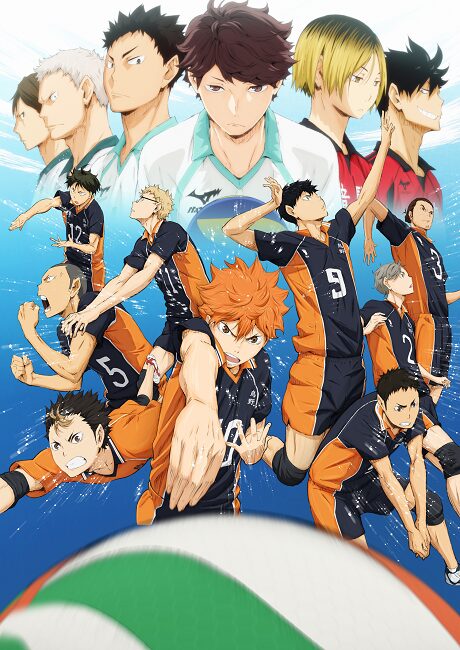
Hinata still leads with vertical chaos — even when a rival school’s ace steals the spotlight, the episode tests whether his jump instinct can plug into a real system. Kageyama remains the precision problem: tosses that demand trust, ego that demands growth.
Captain energy from Daichi, soft-spoken reads from Sugawara, and the supporting gym (Noya, Tanaka, Tsukishima, Yamaguchi, Asahi) only matter when their jobs are visible. Supporting cast this hour should feel like people with positions, not crowd noise. Kagex does not invent manga-only scenes to pad word count.
Rival-facing hours may spotlight Oikawa, Kenma, Kuroo, Ushijima, Bokuto, or Akaashi — when they appear, watch how Karasuno’s language changes. The show’s best character writing is competitive empathy: respecting an enemy’s craft without sanding off the fight.
World Building
Miyagi high-school volleyball — club hierarchies, Interhigh / Spring High paths, scout culture, and gym politics — advances in Season 1. “He Who Is Called ‘Ace’” adds Karasuno Formation / Interhigh Qualifiers rules: how practice translates to match day, what a libero changes about floor coverage, and why a left-handed ace or a freak quick is a system problem, not a highlight sticker.
This episode only: geography stays local to the schools and gyms on screen. No Nationals future-spoilers, no movie-only detours. The world is scoreboards, buses, and the next tough school on the bracket.
Animation
Production I.G on TV: elastic jumps, sweaty faces held long enough to read doubt, and court geometry that stays readable when six bodies collide at the net. Animation score 8.9 for this episode’s peak rallies vs dialogue coverage. Serve toss timing and block “touch” frames do more storytelling than any glowing aura ever could.
Music & Voice Acting
Score 8.8. SPYAIR’s “Imagination” opens the Karasuno rebuild — gym dust, vow energy, zero fake hype. Early EDs keep the aftertaste of junior-high sting. Japanese track is reference (Ayumu Murase, Kaito Ishikawa, and the wider Karasuno / rival casts). Crowd beds and squeak SFX are half the emotion — mute them and the sport flattens.
Hidden Details
- Watch jersey numbers and rotation order after timeouts — Haikyuu!! hides strategy in who is front-row.
- Eye-lines after a dig often telegraph the next toss choice better than dialogue.
- Episode title “He Who Is Called ‘Ace’” usually names the emotional receipt, not just the opponent.
- Bench reactions are plot: who flinches, who smiles, who takes notes.
- No manga chapter homework required for this page.
Best Moments
- While practicing, Kageyama‘s shocked when a stranger runs into the gym and perfectly receives his serve.
- The stranger’s revealed to be Nishinoya, Karasuno’s libero who had been away due to club activities suspension.
- After introductions, Nishinoya learns that Karasuno’s ace, Asahi, isn’t back and angrily storms out.
- Seeing how unhappy the upperclassmen are without the ace, Hinata and Kageyama go to him to try to convince him to return.
- Meanwhile, Takeda continues to pursue Keishin Ukai as the next coach of Karasuno High.
- Any mid-rally adjustment where Karasuno stops freestyling and starts reading — that is the franchise’s real power fantasy.
Pros & Cons
Pros: Specific to “He Who Is Called ‘Ace’”; Production I.G craft; team chemistry through-line for Hinata/Kageyama and the gym.
Cons: Requires sequential viewing; practice / scout hours can feel slow if you only want finals energy.
Final Verdict
Kagex overall: 8.5 / 10
- Story: 8.5
- Characters: 8.9
- Animation: 8.9
- Music: 8.8
- Enjoyment: 9.0
“He Who Is Called ‘Ace’” keeps Karasuno’s climb honest — no miracle reset, just the next problem on the court. While practicing, Kageyama‘s shocked when a stranger runs into the gym and perfectly receives his serve. The stranger’s revealed to be Nishi…
What to Expect Next
Next: Season 1 Episode 9 (“A Toss to the Ace”). Sequential viewers should continue — Haikyuu!! pays off patience with bracket pressure, not random filler resets.
FAQ
Do I need Season 1 Episode 8?
Yes in order. Skipping “He Who Is Called ‘Ace’” leaves gaps Karasuno Formation / Interhigh Qualifiers assumes filled.
English title?
“He Who Is Called ‘Ace’” (Fandom / streaming listings).
When did it air?
May 25, 2014 · Production I.G · ~24 min.
Is this filler?
No. Haikyuu!!’s slower hours are practice, travel, or scouting with payoffs — not padded clip shows.
Overall episode number?
8 of 85 TV episodes across four seasons.
Where to watch?
Crunchyroll / Netflix (region-dependent).
Character guides?
Facts & spoilers hub?
Keep exploring
- Haikyuu!! hub
- Season 1 review
- Overall review
- Previous: Season 1 Episode 7 — Versus the Great King
- Next: Season 1 Episode 9 — A Toss to the Ace
- Browse
Your turn
Did “He Who Is Called ‘Ace’” earn your continue button? Favorite rally, toss, or line?
Which Karasuno voice felt loudest this hour — Hinata, Kageyama, or the bench?
Sources: Haikyuu!! Wiki (Fandom) Episode Guide synopses; © Haruichi Furudate / SHUEISHA / Production I.G.
Production I.G’s Season 1 Episode 8 board prioritizes readable faces when rallies stack camera cuts. “He Who Is Called ‘Ace’” (Karasuno Formation / Interhigh Qualifiers) assumes you already care why Hinata jumps before he thinks and why Kageyama’s tosses feel like orders — that friction is the series engine, not a mid-season lecture.
Kagex story score 8.5 for this hour only: While practicing, Kageyama’s shocked when a stranger runs into the gym and perfectly receives his serve. The stranger’s revealed to be Nishinoya, Karasuno’s libero who had been away due to club activi… Compare binge pace vs weekly 2014–2020 drops — the episode was designed as a chapter, not a highlight clip.
Animation 8.9: serve tosses, block touches, and floor digs each get distinct timing. When the episode goes quiet (bench talk, bus rides, coach notes), composition still carries threat — scoreboard digits, jersey numbers, gym humidity.
Characters score 8.9: Karasuno never wins because one ace gets a power-up speech. Wins (and losses) come from who talks, who listens, and who adjusts mid-rally. Daichi’s calm, Suga’s reads, Noya’s chaos, Tanaka’s noise — role clarity is the craft.
Music 8.8 and enjoyment 9.0 track whether “He Who Is Called ‘Ace’” makes you lean forward on a third set. Haikyuu!! is not subtle about wanting you loud with the crowd; the question is whether this hour earns that volume without cheating the scoreboard.
World rules stay volleyball-real: rotation limits, libero swaps, timeout psychology, scout notebooks. Karasuno Formation / Interhigh Qualifiers only works if those constraints hurt. This page does not invent manga-only scenes to pad word count — it stays inside Season 1 Episode 8.
Rewatch angle: watch who looks at whom after a free ball. Haikyuu!! hides character turns in eye-lines more than monologues. “He Who Is Called ‘Ace’” rewards that habit without requiring Nationals spoilers.
Who this episode is for: viewers already on the Karasuno track who want a destination review — worth watching, what changes, honest scores — not a wiki dump. If you bounced on sports anime before, note that Production I.G sells emotion through system volleyball, not glowing auras.
Production I.G’s Season 1 Episode 8 board prioritizes readable faces when rallies stack camera cuts. “He Who Is Called ‘Ace’” (Karasuno Formation / Interhigh Qualifiers) assumes you already care why Hinata jumps before he thinks and why Kageyama’s tosses feel like orders — that friction is the series engine, not a mid-season lecture.