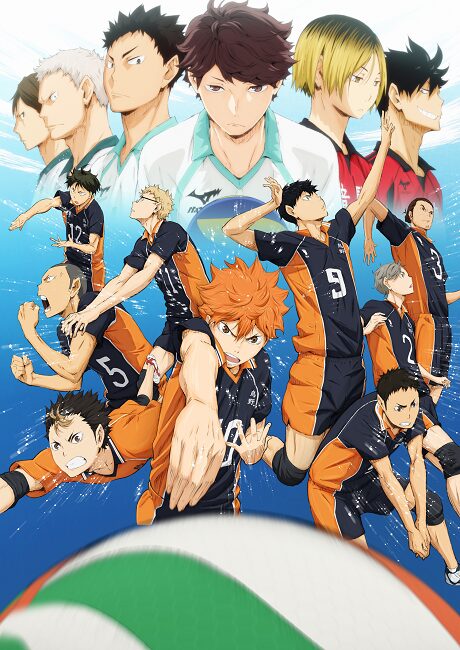
Every great sports rivalry needs a loss first. Haikyuu!! Season 1 Episode 1 — “The End and The Beginning” — opens with a defeat so total it should end a dream, then spends its last thirty seconds proving the dream is only getting started. This is the origin story for Shoyo Hinata, the boy who cannot stop jumping, and Tobio Kageyama, the setter everyone fears and nobody wants to play with. Stay for the tournament. Stay for the vow. Stay for the gym-door twist that turns a rivalry into a roster.
Hook
Picture a kid glued to a TV broadcast, watching a player half the size of everyone else fly above the net anyway. That is Shoyo Hinata’s entire origin in one image: the “Small Giant,” a short ace who somehow dominated a sport built for tall people. Hinata does not need a radiant power-up or a chosen-one prophecy. He needs a reason to believe height is not destiny, and television just handed him one.
Three years later, that belief gets tested in the cruelest way a sports anime can manage — a first tournament that is also a last tournament, because middle school does not give you a second try. Hinata’s Yukigaoka team is a ragtag, undersized group of friends who signed up on hope more than roster depth. Their opponent, Kitagawa Daiichi, brings an actual system: real blocking, real rotations, and a setter so good the other schools gave him a title instead of a name. “King of the Court” is not a nickname you earn by being nice.
What makes Episode 1 more than a standard underdog-loses-hard opener is the sting it leaves on purpose. Hinata does not get a miracle comeback. He gets humiliated, he gets furious, and he makes a promise that has nothing to do with talent and everything to do with stubbornness. Then the episode does something sharper than a rematch tease — it fast-forwards past the training montage everyone expects and drops Hinata straight into the room he has been dreading and dreaming about for years. The question this page answers: is a premiere built on a loss actually a strong way to start a 25-episode series, and does the final scene earn the goosebumps it is clearly going for?
Quick Information
- Anime: Haikyuu!! (Haikyū!!)
- Season / Episode: Season 1, Episode 1
- Japanese episode title: 終わりと始まり (“Owari to Hajimari” — “The End and The Beginning”)
- Runtime: about 24 minutes
- Studio: Production I.G
- Genres: Sports, Comedy, Drama, School Life
- Original air date: April 6, 2014
- Opening / ending themes: “Imagination” by SPYAIR (OP) · “Tenchi Gaeshi” by NICO Touches the Walls (ED)
- Kagex score: 9.1 / 10
- Where to watch legally: Crunchyroll (subtitled and English dub; availability can vary by region)
Should You Watch It?
Yes, and it barely asks anything of you first. Episode 1 is a complete short story: a kid with a dream, a tournament that crushes him, and a promise that survives the loss. You do not need to know volleyball rules going in — the episode explains rotations, positions, and why a “quick” attack is hard through the match itself, not through a lecture.
Is it worth watching? Absolutely. This is one of the strongest pilot episodes in modern sports anime because it is honest about failure before it sells you on hope. Hinata does not win. That is the point. The episode is selling you on his refusal to quit, and by the final shot, it has earned that sell.
Is it slow? No. The pacing moves from TV broadcast to tournament court to gym reveal without wasted scenes. If anything, it moves fast enough that the loss and the time-skip both land in a single 24-minute block, which is efficient premiere writing.
Is it beginner friendly? Very. Zero manga knowledge required. Even non-sports-anime fans will follow the stakes: small guy, mean rival, one match, one shot.
Who will enjoy it? Underdog-story fans, anyone who likes rivalry-to-teammates arcs, and viewers who want a sports anime that respects the sport instead of turning it into superpowers. If you have ever lost at something you loved and kept going anyway, this episode is speaking directly to you.
Who might bounce? Viewers allergic to sports anime in general, or anyone expecting Karasuno’s full roster and colors on day one — this episode is entirely junior high, and Karasuno only appears in its final scene.
Bottom line: watch it. “The End and The Beginning” is a near-perfect title for a premiere — it kills one dream and starts a better one in the same episode.
Spoiler Warning
Spoilers for Season 1 Episode 1 follow. Stop above if you want a clean first watch. Nothing beyond this episode’s own ending is discussed below.
Story Recap
Ordinary Life (a boy, a broadcast, a hero)
Before Hinata is a volleyball player, he is a kid on a couch. A televised match introduces him — and us — to the “Small Giant,” a player who should have been too short for competitive volleyball and instead became one of its most electric aces. That single broadcast rewires Hinata’s entire childhood. He does not dream about being tall. He dreams about jumping like someone who refuses to let height be the final word.
The episode does not linger here long, and it does not need to. One image — a small player soaring above the net — is the whole thesis of the series compressed into a few seconds. Everything Hinata does for the rest of his life traces back to that broadcast.
Unexpected Incident (the first tournament, the last chance)
Cut to junior high, present day. Hinata has recruited a scrappy, under-practiced team from Yukigaoka for the one tournament that will matter: it is the only volleyball tournament of their final year, meaning a loss is not a setback, it is the end. There is no callback arc, no next season for these teammates. The stakes are immediate because the format makes them immediate.
Their opponent could not be a worse draw for a first match: Kitagawa Daiichi, a program with real structure, real substitutions, and a setter who already has a reputation before the whistle blows.
New World (meeting the King of the Court)
Tobio Kageyama is introduced less like a classmate and more like a weather event. “King of the Court” is the kind of nickname that should belong to a beloved star, and instead it belongs to a setter whose teammates look relieved when the match ends. He is precise, controlling, and visibly furious every time someone fails to be as sharp as he is.
Hinata gets his flashes of brilliance here — raw jumping power, instinctive timing, the kind of athleticism that makes Kitagawa Daiichi’s bench sit up. But flashes are not a system, and Yukigaoka does not have one. Kageyama’s team wins comfortably, 3-0.
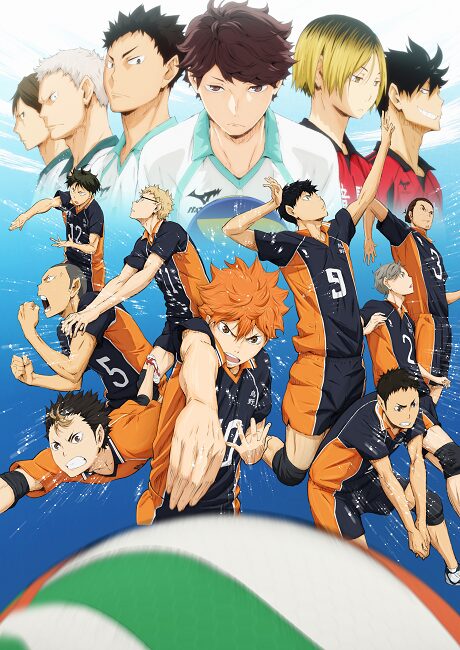
First Discovery (the vow)
The loss is not softened for drama. Hinata cries, screams a challenge across the net at Kageyama, and vows — loudly, publicly, a little embarrassingly — that he will defeat the King of the Court someday. It is not a calm, dignified promise. It is a middle schooler refusing to accept that this is how his story ends, and that rawness is exactly why it works. Kageyama barely reacts. He has heard promises like this before and none of them mattered.
Important Encounter (the gym door)
Time skips forward. Hinata has trained obsessively, and the episode trusts you to fill in the montage rather than show it — a confident choice for a pilot. He enrolls at Karasuno High specifically because it is the school of his hero, the Small Giant, and walks into the gym ready to claim a spot on the team that will finally let him fly.
Then the door reveals who is already standing in that gym: Tobio Kageyama, in a Karasuno uniform. The rival Hinata swore to defeat is now, apparently, his teammate. The episode ends on that reveal without a single line of dialogue needed to make it land.
Story Analysis
“The End and The Beginning” earns its title structurally, not just poetically. The episode is built as two complete arcs stitched together: a junior high tragedy and a high school setup, connected by one promise that refuses to expire. That structure lets the show do something a lot of sports pilots avoid — it opens on a loss instead of a win, and trusts that the loss will be more compelling than an easy victory.
Pacing is tight without feeling rushed. The broadcast is seconds. The tournament match is the bulk of the runtime. The training-to-Karasuno jump is compressed into a handful of shots. Nothing wastes your time, and the compression works because the emotional beats — inspiration, humiliation, vow, arrival — are placed exactly where they need to be.
Emotional impact comes from specificity. Hinata is not sad in a generic way. He is furious at a scoreboard, embarrassed in front of an audience, and stubborn in the exact way real competitive kids are stubborn. The show does not need a tragic backstory to make you care — it needs one bad afternoon and an unwillingness to let that afternoon be the whole story.
Rivalry framing is the episode’s smartest trick. By making Kageyama the villain of the tournament before revealing him as the future teammate, the show sets up conflict that has nowhere to hide. These two will have to share a court, and neither one is going to forget how they met.
Theme is stated almost bluntly by the broadcast at the top: size does not have to be destiny. Everything that follows — the loss, the vow, the gym door — is Hinata testing whether that idea can survive contact with reality. Episode 1 does not answer the question yet. It just makes sure you desperately want to see it answered.
Character Analysis
Shoyo Hinata — the jump before the plan
Hinata’s first impression is pure momentum: short, loud, relentlessly optimistic, and physically gifted in a way that has no context yet. He does not have technique. He has a vertical leap, a broadcast memory, and a refusal to accept a 3-0 loss as a final verdict. That combination — talent without structure — is exactly what makes him compelling to watch grow. He is not the strongest player in the gym. He is the one who will not stop trying to become that player.
Tobio Kageyama — the King with no court
Kageyama’s introduction is a warning wrapped in a compliment. “King of the Court” sounds like praise until you notice his own teammates flinch around him. He is dominant, demanding, and clearly isolating himself through the exact intensity that makes him good. Episode 1 does not soften him for sympathy. It lets his skill and his coldness sit side by side, which is why his sudden reappearance as a Karasuno teammate feels less like a twist and more like a countdown to a very uncomfortable practice.
World Building
Episode 1 quietly teaches you the format of Japanese school volleyball without ever pausing the plot to explain it. Junior high tournaments are single-elimination and final for graduating players — there is no next year to fall back on, which is why a single loss can end a dream, not just a season. That structural detail is doing more emotional labor than any dialogue could.
The episode also establishes the “legend” mechanic the series will keep using: a player’s reputation (the Small Giant, the King of the Court) precedes them into every gym, shaping how opponents and teammates react before a single serve happens. Nicknames are not flavor text here — they are pressure.
Karasuno itself is introduced only through its gym doorway and its most infamous new arrival, which is a deliberately small first look. The show is telling you that the school’s identity will be built match by match, not explained in a welcome speech.
Animation Review
Production I.G stages the Kitagawa Daiichi match with real spatial logic — you can track rotations, follow the ball’s arc, and understand why a block succeeds or fails. That clarity matters more than flash in a sports pilot, because a viewer who cannot follow the ball will not care about the score. Hinata’s jumps are drawn with a specific, almost startling verticality that sells his gift without needing a slow-motion cutaway to explain it.
Character acting carries the emotional half of the episode. Hinata’s post-loss breakdown and Kageyama’s controlled frustration are communicated through posture and face timing more than dramatic effects work. The final gym-door reveal is a simple, confident shot — no music sting needed, just recognition on two faces.
Music and Voice Acting
“Imagination” by SPYAIR opens the season with exactly the kind of forward-leaning energy a sports anime needs, and “Tenchi Gaeshi” by NICO Touches the Walls closes on a calmer, more reflective note that suits a premiere about loss and resolve rather than triumph. Neither track oversells the episode’s tone; both match it.
Voice work is doing quiet heavy lifting here. Ayumu Murase gives Hinata a voice that cracks at exactly the right moment during the loss without tipping into melodrama, and Kaito Ishikawa plays Kageyama’s intensity as controlled pressure rather than cartoon villainy — you can hear why teammates avoid him and why he still commands the court. English dub viewers get Bryson Baugus and Scott Gibbs in the same roles, and the chemistry of “rival energy that has not yet become teammate energy” comes through in both versions.
Hidden Details
The broadcast that inspires Hinata is not a throwaway detail — the Small Giant is tied to Karasuno itself, which is exactly why Hinata chooses that specific school over any other option. The episode never spells this out loudly; it trusts you to notice that his hero and his enrollment choice are the same decision.
Watch how differently Hinata and Kageyama react to the same scoreboard. Hinata’s fury is loud and outward — a scream across the net. Kageyama’s intensity is inward and controlling, aimed at his own teammates rather than the opponent. That contrast is the entire future partnership in miniature: one player who leads with heart, one who leads with demands.
Also notice that Kageyama never actually gets a rival introduction of his own on-screen — we meet him entirely through how his team fears him and how thoroughly he beats Yukigaoka. The episode is letting his reputation do the character work before he says more than a few lines, which makes the “King” nickname feel earned rather than assigned.
The final shot is edited to withhold Kageyama’s face until the exact right beat. That timing choice — door opens, Hinata’s excitement, then the reveal — is a small piece of directing craft that turns a simple hallway shot into the episode’s biggest gut-punch.
Best Moments
The Small Giant broadcast. One image sets up an entire series’ worldview in seconds.
Hinata’s jump against Kitagawa Daiichi. A flash of what he could be, even inside a loss.
The scream across the net. Raw, unpolished, completely convincing.
The gym door reveal. No dialogue needed — just recognition and dread.
Pros and Cons
Pros: confident premiere structure, an underdog loss that actually stings, a rivalry hook with real teeth, efficient world-building through format rather than exposition, an ending shot that earns its goosebumps.
Cons: the training-to-Karasuno jump is intentionally light on detail, so viewers wanting a full growth montage will have to wait; Karasuno’s wider roster is not introduced yet.
Final Verdict
Season 1 Episode 1 is one of the cleanest premieres in sports anime because it is brave enough to open on a loss and trust the audience to stay for the promise underneath it. Hinata and Kageyama do not need a dozen episodes to become a compelling pairing — the tournament and the gym door do it in twenty-four minutes. For Kagex Blog, that is a 9.1: sharp structure, real stakes, and a rivalry that already feels inevitable.
- Story: 9.0 / 10
- Characters: 9.3 / 10
- Animation: 8.8 / 10
- Music: 8.8 / 10
- Enjoyment: 9.2 / 10
- Overall: 9.1 / 10
Recommendation: start here without hesitation. If the gym door reveal made your stomach drop, you already know you are continuing to Episode 2.
What to Expect Next
Episode 1 ends with a rivalry walking into the same gym, not a resolved partnership. Expect the next episode to deal with the immediate, obvious problem: can two players who despise each other’s style share a court, let alone a team? No further spoilers here — just know that the promise Hinata made at the net is about to get a lot more complicated to keep.
FAQ
Is Haikyuu Episode 1 worth watching?
Yes. It is a complete, self-contained story about a loss and a vow, and it sets up the entire series’ central rivalry in one sitting.
What is the Japanese episode title?
終わりと始まり (“Owari to Hajimari”), meaning “The End and The Beginning.”
Do Hinata and Kageyama win their first match together?
No — they are not teammates yet in Episode 1. They meet as opponents, and Hinata loses. The teammate twist is the episode’s final scene.
Is this anime beginner friendly?
Very. No volleyball knowledge or manga background required. The episode teaches the sport’s stakes through the match itself.
Is Episode 1 action-heavy?
It is match-heavy rather than action-heavy — expect real volleyball, not exaggerated powers, but the tension plays like a fight.
Who is the “Small Giant”?
A short, legendary player Hinata watches on TV as a child; he is the reason Hinata refuses to believe height limits his potential, and the reason he later chooses Karasuno.
Why is Kageyama called the “King of the Court”?
It is a nickname earned through dominant, demanding setting that intimidates his own teammates as much as his opponents.
Where can I watch it legally?
Crunchyroll carries Haikyuu!! with subtitles and English dub; check your regional catalog.
Do I need to watch in a specific order?
Start at Season 1 Episode 1 — do not skip to later seasons or the movies, since the climb is the point.
Keep exploring
- Haikyuu — anime hub
- Browse seasons & episodes
- Haikyuu characters & powers
- Haikyuu Season 1 review — coming soon
- Haikyuu full series review — coming soon
- Episode 2 review — coming soon
Your turn
Did the gym door reveal get you as much as it got Hinata? Are you Team Hinata’s heart or Team Kageyama’s precision? What score would you give “The End and The Beginning,” and are you continuing straight into Episode 2?