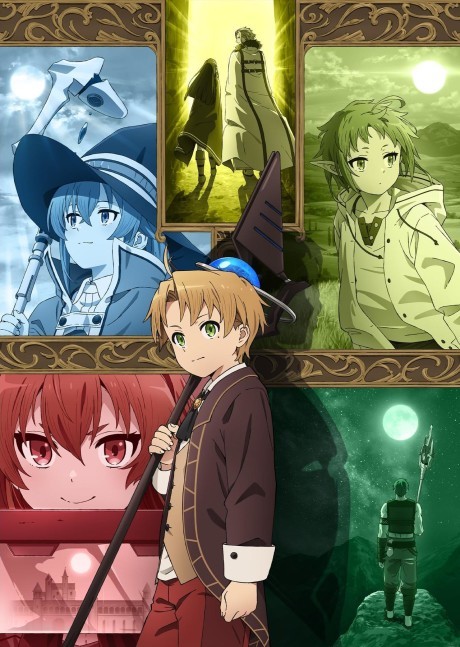
Mushoku Tensei begins with a question most isekai pilots dodge: what if a second life is not a reward, but a chance to face the person you refused to become? “Jobless Reincarnation” is gorgeous, funny in places, and deliberately uncomfortable in others. Read on for the spoiler-light verdict and the full Episode 1 breakdown.
Hook
A thirty-four-year-old shut-in dies after pulling a stranger from the path of a truck. Then he opens his eyes as a baby in a world of swords, magic, and parents who have no idea that their infant is carrying an adult’s memories. That premise can sound like standard isekai elevator pitch material. Studio Bind’s first episode makes it feel less disposable than that.
“Jobless Reincarnation” does not pretend its protagonist was secretly admirable before the truck arrived. It starts with someone who wasted years hiding from life, and it lets that history remain awkwardly present after rebirth. The fantasy world is beautiful enough to invite escape, but the episode’s sharper idea is that escape does not automatically fix the person doing it.
This Mushoku Tensei Episode 1 Review is for viewers deciding whether the hype is earned, and for viewers who finished the premiere wondering why it feels so different from a normal reincarnation setup. The short answer: craft, commitment, and a protagonist the show asks you to watch carefully rather than instantly worship.
Quick Information
- Anime: Mushoku Tensei: Jobless Reincarnation
- Season / Episode: Season 1, Episode 1
- Japanese episode title: 無職転生 (“Jobless Reincarnation”)
- Runtime: about 24 minutes
- Studio: Studio Bind
- Genres: Fantasy, Drama, Isekai, Adventure
- Original air date: January 11, 2021
- Kagex score: 8.9 / 10
- Where to watch legally: Crunchyroll (availability varies by region)

Should You Watch It?
Is Mushoku Tensei worth watching? For viewers who want a fantasy series with unusually rich atmosphere, patient character observation, and animation that makes its world feel inhabited, yes. Episode 1 is a serious statement of intent from Studio Bind. Even routine scenes of a baby learning to focus magical energy have texture, light, and a sense that the camera is looking at a place rather than a checklist of genre landmarks.
But this is not an unqualified recommendation for everybody. The central character begins as an adult man reincarnated into a child’s body, and the show includes sexualized, pervy humor and behavior that plenty of viewers will find unpleasant. Episode 1 establishes that friction early. It is not a detail to ignore because the backgrounds are pretty. If content involving that premise will ruin the experience for you, do not force yourself through it because people call the series influential.
For the right viewer, the appeal is not instant wish-fulfillment. It is watching Rudeus Greyrat receive a life with parents, lessons, and choices, then seeing whether he can become less cowardly and selfish than he was before. The premiere is measured rather than action-heavy. It has magic, danger at the edges, and a great tutor entrance, but its real hook is a child deciding he will not merely waste another life.
Bottom line: watch the first episode if character-driven fantasy and slow-burn world-building sound good, with the content warning in mind. If the protagonist’s early behavior is already a firm deal-breaker, that is a valid reason to skip.
Spoiler Warning
Spoilers for Season 1 Episode 1 follow. Stop here for a clean first watch. The rest covers the episode’s full setup, its magic discoveries, and the arrival of Rudeus’s first teacher, without spoiling later episodes or seasons.
Story Recap
Ordinary Life: a 34-year-old NEET at the end of the road
The opening does not soften who the unnamed man was. He is a thirty-four-year-old NEET, isolated in his room and pushed out after years of refusing to engage with the world. The framing is humiliating on purpose. He is not a misunderstood office worker with one bad day; he has made a long habit of retreating from every responsibility that frightened him.
Still, the episode leaves room for a small, human reflex. When he sees teenagers in danger, he moves. It is not presented as a grand redemption speech. It is one instinctive act, made by someone who has not spent much of his life acting for anyone else. That modesty gives the moment weight. He does not earn sainthood; he makes one choice that costs him everything.
Unexpected Incident: the truck and a second beginning
The truck impact is abrupt, but the scene is not treated as a punchline or a videogame reset. As his life ends, the man recognizes the ugly shape of it. He has regrets, not because the world failed to hand him greatness, but because he stopped trying to live in it. The emotional thesis of the premiere lands in that gap: another world cannot erase the past, yet it can offer another chance to respond differently.
There is no lengthy divine orientation room or menu explanation. The transition moves from dying thoughts to sensation: warmth, muffled voices, and the alarming realization that he has been born again. That choice keeps the reincarnation premise grounded in experience instead of lore mechanics.
New World: baby Rudeus, Paul, and Zenith
He is reborn as Rudeus Greyrat, a baby in the home of Paul and Zenith. The first stretch is funny because the point of view is so strange: an adult consciousness trapped behind an infant’s weak body, trying to interpret loving parents without letting on that he understands far more than he should. Yet the warmth is not just comic decoration.
Paul and Zenith give the episode its emotional counterweight. They are not distant royalty or a convenient orphanage. They hold their son, worry over him, and build a household that immediately feels more secure than the life Rudeus left behind. The show makes the new family feel tangible through ordinary details: a modest home, changing seasons, meals, and the rhythm of a child growing.
Rudeus notices the difference. For all his flawed thoughts, he understands that he has been given affection without having to perform for it. The episode does not declare him fixed. It simply gives him something he did not have before: a reason to try.

First Discovery: books, incantations, and a water ball
Rudeus finds a magic book and treats it like evidence that the new world has rules he can learn. This is where the episode’s curiosity becomes contagious. He practices incantations in secret, studies the diagrams, and turns his bedroom into a tiny laboratory. The magic is not explained through a narrator listing ranks for five minutes; it becomes physical through breath, concentration, gesture, and a small sphere of water.
That first water ball is a deceptively perfect image for the pilot. It is not a kingdom-shaking spell. It is proof that effort can create a result. For someone who spent his former life avoiding hard starts, a child quietly making magic work is more important than a flashy victory. The rain he accidentally summons pushes the moment into comedy, but the pride underneath is sincere.
Important Encounter: Roxy Migurdia arrives
Paul recognizes that his son needs more than a book and arranges a tutor: Roxy Migurdia, a young magician who arrives with an impressive entrance and the confidence of someone used to handling difficult students. Rudeus’s reaction to her mixes genuine excitement with the same immature, uncomfortable impulses the episode has not hidden. It is a reminder that reincarnation has not magically made him decent.
Roxy’s entrance works because she is not introduced as an achievement for Rudeus to collect. In Episode 1, she is a skilled professional assessing a strange prodigy. Her calm response to his ability and her insistence on proper teaching set up the next step of his growth. The final feeling is possibility: a child who has discovered magic now has someone capable of showing him what learning it actually means.
Story Analysis
The strongest move in “Jobless Reincarnation” is its patience. A lesser premiere might rush from truck accident to a teenage hero with a sword because it is scared viewers will leave before the action. This episode spends time on infancy, domestic life, and a water spell. That is not empty delay. It is the show making a case that a new life should feel lived before it becomes an adventure.
The structure also understands contrast. The old life is cramped, ugly, and static; the new one is open, bright, and full of weather. The contrast could be manipulative if the former world were only punishment and the fantasy world only reward. Instead, the episode keeps the old self inside the new body. Rudeus remembers his shame, carries his bad habits, and occasionally reacts with the exact lack of maturity that makes him hard to embrace. The story’s promise is not that he is already better. It is that improvement might be possible if he uses this chance.
That is also where the episode earns its emotional pull without excusing its protagonist. Rudeus’s private narration can be funny, observant, and deeply off-putting in the same minute. The show asks for attention, not blind approval. Viewers should be able to say that a scene is uncomfortable while also recognizing the writing is establishing a problem rather than simply giving a hero a free pass. Whether that balance works for you will depend on your tolerance for the material; Episode 1 is honest enough to let you decide early.
Pacing is gentle but purposeful. Each leap forward in childhood answers a question: can he move, can he speak, can he use magic, can he accept guidance? The end does not manufacture a boss fight. It opens a door. For a twenty-four-minute pilot, that is confident storytelling, and it explains why the premiere feels like the start of a life rather than the start of a quest log.
Character Analysis
Rudeus Greyrat
Rudeus is compelling precisely because he is not easy to champion. He is intelligent, curious, and unusually aware of how badly he handled his first life. He is also immature in ways that are not cute, particularly around women and girls. Episode 1 does not make a complete moral case for him; it gives us the starting line. His most promising trait is not talent. It is the moment he decides that, this time, he wants to make an effort.
The adult memory angle gives his childish achievements a double edge. Learning to read or casting a spell is impressive, but he has an unfair head start. The episode avoids turning that into pure superiority by showing how physically helpless and emotionally stunted he still is. He is a gifted child, but he is also someone relearning how to be part of a family.
Paul and Zenith Greyrat
Paul and Zenith do crucial work with limited screen time. They are the reason the rebirth has emotional stakes beyond magical opportunity. Their affection is practical rather than saintly: they feed Rudeus, worry about his development, and make decisions about his education. Paul’s choice to bring in Roxy shows a parent seeing potential and trying to guide it, not merely applauding a prodigy.
Zenith’s warmth gives the early home scenes a softness the premise needs. The episode never asks us to forget Rudeus’s past, but it lets us feel why he does not want to waste this family’s care.
Roxy Migurdia
Roxy arrives late, yet she changes the energy immediately. Her visual design and staff announce fantasy adventure, while her professional manner grounds the scene. She sees an unusually capable student, not a chosen one to flatter. That is a useful first impression: her role in this episode is teacher, boundary, and doorway to a larger world.

World Building
Episode 1 keeps its world-building close to home, which is exactly right. We see a village household, a family’s social expectations, a book of spellcasting, and a practical reason a parent might hire a mage. There are no maps pinned to the screen or history lectures about empires yet. Instead, the world feels credible because magic has a place in daily life. A child can read about it, a tutor can teach it, and a rain spell can make a mess inside the house.
The incantation system gives magic texture. Words, focus, and intention matter. Even before the series explains more, the act of casting looks learned rather than randomly granted. Studio Bind reinforces that with tactile effects: water has weight, light has warmth, and interiors respond to weather. That sensory attention makes the fantasy setting feel less like a menu backdrop.
The episode also suggests a wider society without opening every box. Roxy’s arrival, Paul’s concern for his son’s training, and the language of magic all imply systems beyond this home. The pilot knows that mystery works better when it grows from a specific room and a specific family. It gives you enough to believe in the world, then saves the map for later.
Animation Review
Studio Bind’s animation is the clearest reason the premiere immediately stands apart. The production treats small things as worth animating: wind moving through grass, changing daylight in the house, the awkward physicality of a baby learning to control his body, and the little pause before magic takes shape. None of that is flashy for its own sake. It tells you this world will be observed, not merely visited between plot points.
The color work is especially strong. The old life is oppressive and drained; the new home has soft golds, greens, and blue skies that make ordinary safety feel precious. Character acting stays readable even when Rudeus is an infant with limited expressions, because the direction uses framing and motion to sell his interior reaction. The magic effects are vivid without turning the scene into a light show.
This is not a premiere built around one viral fight cut. Its visual triumph is consistency of atmosphere. Every sequence looks considered, from a book page to a rainy accident. For a story about noticing opportunities you once ignored, that attention to the small stuff is a perfect match.
Music and Voice Acting
The score understands when to stay out of the way. Early scenes use unease and silence to make the former life feel small, while the rebirth and home material opens into warmer fantasy colors without forcing sentiment. The music does not tell you that every spell is legendary. It gives the scenes room to feel like discoveries.
Yumi Uchiyama’s performance as Rudeus carries a difficult job: she has to sell a child’s outward voice while the character’s internal perspective is older, defensive, and sometimes embarrassing. The contrast makes his sincere moments land. Konomi Kohara gives Roxy an assured, lively presence on arrival, and the parental performances make Paul and Zenith feel like people rather than prologue furniture.
The episode’s sound design deserves credit too. The water spell, rainfall, and home ambience create a world you can almost touch. It is a quiet department win, but it contributes heavily to the show’s immersive first impression.
Hidden Details
The episode repeatedly links growth to attention. Rudeus does not gain magic because a god declares him special on-screen. He looks at a book, copies what he sees, practices alone, and notices what changes. That is a simple pattern, but it is a meaningful contrast with the life we glimpsed before. Where the older man withdrew from challenge, young Rudeus leans toward it.
Pay attention, too, to how the household reacts to his strange ability. The adults are impressed but not instantly transformed into a cheering squad. Paul’s answer is education, which is a grounded response. Roxy’s arrival reinforces that talent needs instruction. The show is quietly saying that potential is not the same thing as maturity.
The rain scene is another small clue to the episode’s values. It is funny because a child loses control, but it also shows consequences. Magic is beautiful, useful, and capable of disrupting a room. That physical logic makes the later promise of a wider fantasy world more believable. Nothing here requires future knowledge; it is all visible in how carefully the premiere lets actions leave traces.
Best Moments
The decision to move. The opening refuses a clean heroic makeover, which makes the truck rescue more affecting. One decent action does not erase a damaged life, but it gives the rebirth emotional meaning.
Rudeus’s first water ball. It is a tiny spell with huge character value. The wonder is not in its destructive power; it is in seeing a person who gave up discover that practice can produce something real.
The accidental rain. This is the episode at its best: magical, funny, and rooted in the practical chaos of a family home.
Roxy at the door. Her arrival is an effective final beat because it shifts the episode from private discovery to formal learning, without needing a false cliffhanger.
Pros and Cons
Pros: beautiful, unusually tactile animation; patient world-building; a strong emotional reason for reincarnation; magic that feels learned; an excellent sense of home and possibility.
Cons: the protagonist’s sexualized and pervy behavior is a real barrier, not a minor footnote; the deliberate pace may frustrate viewers seeking immediate action; the adult-mind-in-child-body premise will not be comfortable for everyone.
Final Verdict
“Jobless Reincarnation” is one of the most technically confident isekai premieres of its era. Studio Bind gives the story a lived-in world before it asks for a grand adventure, and the writing gives Rudeus a problem more interesting than simply becoming powerful: he has to become someone worth trusting with a second chance.
That does not mean the episode is frictionless. The content warning belongs in the recommendation because the show’s humor and protagonist can cross a line for viewers. Kagex Blog’s take is simple: the craft is excellent and the character premise has real depth, but you should judge your own comfort level honestly rather than treating discomfort as something a pretty production has to override.
- Story: 9.0 / 10
- Characters: 8.5 / 10
- Animation: 9.5 / 10
- Music: 8.7 / 10
- Enjoyment: 8.8 / 10
- Overall: 8.9 / 10
Recommendation: a strong continue for viewers who want intimate fantasy and a flawed-growth story, provided the content warning is within your limits. The water spell alone is not the point; the point is that Rudeus finally wants to keep trying after it.
What to Expect Next
Episode 1 ends by putting Rudeus in front of a real teacher. The next chapter naturally shifts from secret experimentation to structured lessons and the awkwardness of learning from someone outside the family. Expect more of the series’ early strengths: patient observation, magic with texture, and a wider view opening one relationship at a time. That is all this review needs to promise. Go in fresh and let the next meeting do its work.
FAQ
Is Mushoku Tensei Episode 1 worth watching?
Yes, if you enjoy character-led fantasy and can accept the content warning. It is a polished, emotionally deliberate pilot rather than a quick action showcase.
Do I need to know the light novel first?
No. “Jobless Reincarnation” introduces its premise, family, magic, and first teacher clearly for anime-only viewers.
Is Episode 1 action-heavy?
No. The focus is rebirth, family life, and learning one small spell. Its tension comes from character history, not combat.
Why is Rudeus already good at magic?
He has adult memories, curiosity, and the patience to study a magic book early. The episode presents his talent as a starting point, not proof that he has matured.
Is the pervy humor a real issue?
Yes. It is present in Episode 1, and viewers who find the adult-mind/child-body premise unacceptable should take that seriously before continuing.
Who is Roxy Migurdia?
In this episode, she is the mage Paul hires to teach Rudeus. Her larger story is outside this spoiler-safe review.
Where can I watch Mushoku Tensei legally?
Crunchyroll carries the series in many regions. Check its local catalog because availability changes.
Is Studio Bind’s animation really that good?
Episode 1 makes a persuasive case. The detail is strongest in atmosphere, character acting, and small magical effects rather than a single fight scene.
Keep exploring
- Mushoku Tensei — anime hub
- Mushoku Tensei Season 1 review
- Mushoku Tensei overall review
- Rudeus Greyrat explained
- Episode 2 review — coming soon
Your turn
Did the first water spell win you over, or did the content warning make this a skip? What stood out more to you in Episode 1: the animation, the family scenes, or Rudeus’s difficult starting point? Would you continue after Roxy arrives?