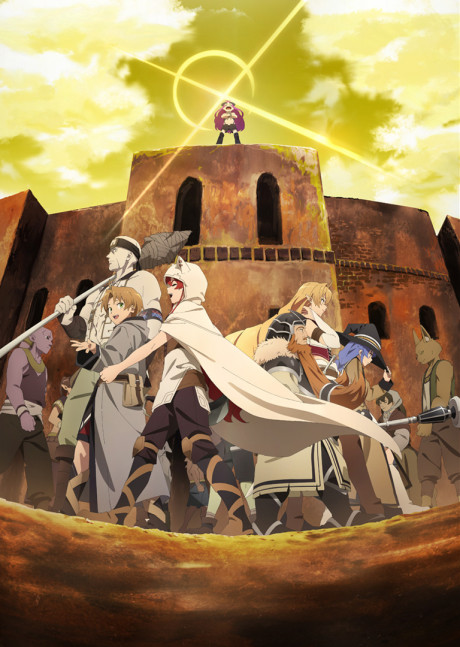
Mushoku Tensei: Jobless Reincarnation Season 1 is not interested in making reincarnation look clean or easy. It gives an isolated, deeply flawed adult another life, then spends 23 episodes asking whether he can actually use it better. The result is one of modern isekai’s most immersive first seasons: beautiful, patient, funny, uncomfortable in places, and far more interested in the texture of a life than a shortcut to a final boss.
Hook
A lot of isekai begin with a cheat skill and sprint toward validation. Mushoku Tensei begins with baggage. Rudeus Greyrat is reborn with rare magical talent, but talent does not make him emotionally healthy, socially graceful, or automatically worth rooting for. That difference is why this season landed so hard — and why it still starts arguments.
Studio Bind treats the premise like a real coming-of-age fantasy rather than a conveyor belt of power-ups. A village has weather, meals, chores, awkward silences, language, and roads that feel used. A lesson with a teacher can matter as much as a spell duel. Then the story opens its map and proves it can make that quiet attention pay off in danger, separation, and travel.
This Mushoku Tensei Season 1 review is for viewers deciding whether to begin Jobless Reincarnation, return after hearing the hype, or judge whether its rough edges are deal-breakers. It is an excellent fantasy production and an imperfect recommendation. Both parts matter.
Quick Information
- Anime: Mushoku Tensei: Jobless Reincarnation
- Japanese title: Mushoku Tensei: Isekai Ittara Honki Dasu
- Season: Season 1 (Parts 1–2)
- Episodes: 23
- Studio: Bind
- Original air dates: Part 1: January 11 – March 22, 2021 (episodes 1–11); Part 2: October 4 – December 20, 2021 (episodes 12–23)
- Genres: Fantasy, Adventure, Drama, Isekai
- Source: Light novel series by Rifujin na Magonote, illustrated by Shirotaka
- Music: Yoshiaki Fujisawa
- Opening / ending approach: travel-song openings integrated into episodes; “Only” by Yuiko Ohara as the first ending theme
- Kagex score: 8.8 / 10
- Where to watch legally: Crunchyroll (availability varies by region)
Should You Watch Season 1?
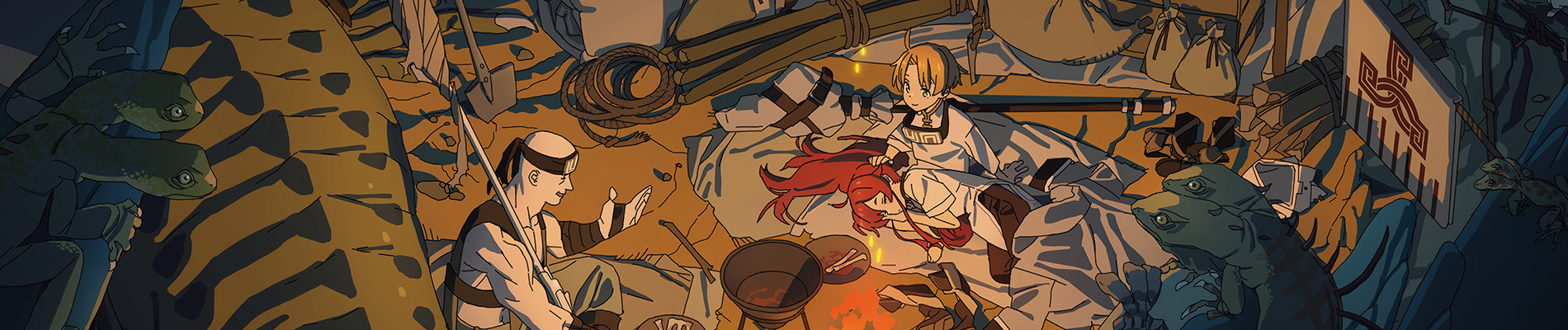
Yes, if you want a character-first fantasy that lets its world breathe. Even with a prodigy at its center, this is not a simple “watch the genius win” show. Rudeus learns fast, but the season keeps putting him in situations that demand judgment, courage, and empathy he does not yet possess. If you like fantasy where a road trip, a tutor, or a hard-won friendship can carry the same weight as a fight, this is a strong start.
Is Mushoku Tensei worth watching? For many viewers, absolutely. The animation, background detail, sound, and sense of place are top tier for a television fantasy. Season 1 also has a satisfying arc of its own: a childhood of safety becomes a journey with real consequences, and the ending leaves emotional stakes rather than just a generic cliffhanger.
But know the warning before you press play. Rudeus begins as a reincarnated adult mind in a child’s body, and the show includes sexual humor and behavior that many viewers will find gross, intrusive, or simply not funny. The series does not ask you to pretend those scenes are absent. It also does not always frame them with the clarity or consequences that critics reasonably want. His flaws are part of the character’s long-term growth, but that is context, not a mandate to tolerate material that ruins the experience for you.
Who will love it? Fans of detailed fantasy travel, patient character writing, magic systems that feel learned instead of downloaded, and emotional payoffs built over time. Who may bounce? Anyone wanting a clean-cut hero, consistently modern sexual politics, or fast battle-anime pacing from episode one.
Bottom line: start with Episode 1. Give the show enough room to establish Rudeus, Roxy, and the Greyrat household. If its craftsmanship and uneasy protagonist have not clicked by the early tutoring stretch, forcing the rest will not change your mind.
Spoiler Warning
Major spoilers for Season 1’s turning point, journey, relationships, and ending follow. The recommendation above is spoiler-free. From here, this review discusses the Teleport Incident, the Demon Continent journey, and the season’s final emotional turn. Skip to Final Verdict or FAQ if you want the short version.
Season Story Overview
Season 1 works as the opening movement of a life story. It moves Rudeus from a protected childhood through his first real independence, then tears away the safety net and makes him navigate a world he only thought he understood. These are arcs, not a weekly checklist: each changes what “a better life” actually means to him.
Childhood, magic training, and Roxy
The opening episodes establish the show’s clearest strength: it makes starting over feel physical. Rudeus is born to Paul and Zenith Greyrat in the rural Buena Village, immediately carrying memories of a life he wasted. His unusual mana capacity and chantless casting could turn this into a smug prodigy story. Instead, the early focus is on habits — learning language, testing boundaries, meeting his parents as people rather than NPCs, and discovering that effort can be enjoyable when someone believes in him.
Roxy Migurdia is the key to that first transformation. She is not merely the blue-haired teacher assigned to explain magic; she is the first adult who gives him a practical path forward and calls him out when he retreats into old fear. Her tutoring lessons make water magic feel tactile, with gesture, concentration, range, and risk. More importantly, the episode built around his fear of leaving home makes a small emotional victory feel as large as a dragon fight. That is the show in miniature: spectacle has value because the inner step came first.
Boreas tutoring and Eris
Rudeus’s move to the Boreas Greyrat household changes the social temperature. He is hired to tutor Eris Boreas Greyrat, a volatile noble girl who has no interest in being shaped by a polite lesson plan. Their early dynamic is funny because neither can control the other: Rudeus’s planning meets Eris’s fists, while Eris’s bluntness keeps puncturing his tendency to narrate himself as the smartest person in the room.
The Roa episodes also widen the series beyond Buena Village. Nobility comes with class anxiety, political calculation, guards who have lived harder lives than the children, and servants with their own loyalty and insight. Ghislaine, in particular, gives Eris a formidable model of discipline and gives Rudeus a reminder that magic is not the only way to become capable. The birthday sequence and its aftermath are where the season starts showing how quickly childhood games can become real danger.
Turning Point: the Teleport Incident
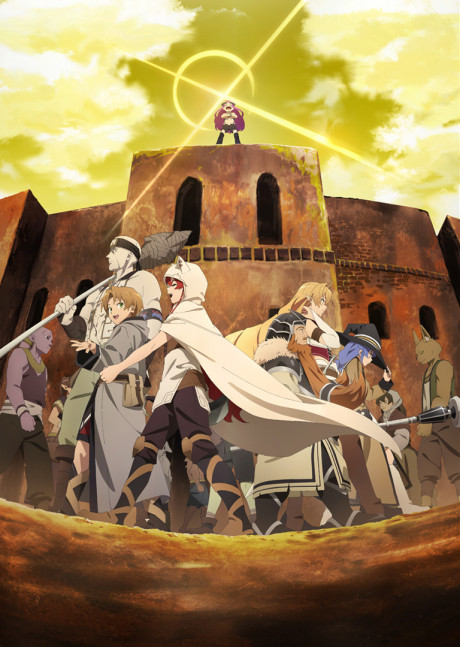
The Mana Calamity is the season’s decisive gear shift. One moment the story is building a routine around lessons, swords, and a growing connection between Rudeus and Eris; the next, a vast magical disaster scatters people across the world. It is a strong turning point because the show does not use disaster only for bigger visuals. It strips Rudeus of every comfortable advantage: familiar adults, local knowledge, a safe bed, and the ability to decide when the story gets serious.
Rudeus and Eris wake on the Demon Continent, a place whose languages, monsters, and customs are hostile to their assumptions. The incident also gives the season a wider emotional question: where are their families, and what did the catastrophe cost everyone else? The plot has finally made travel necessary instead of decorative.
Demon Continent survival and Ruijerd
The Ruijerd Supardia stretch is Season 1 at its most complete. Ruijerd arrives as a frightening legend carrying the stain of the Superd race, but he becomes the group’s protector, moral counterweight, and proof that public stories can outlive the people they flatten. His relationship with Rudeus is not easy mentorship. Ruijerd will protect children at all costs, while Rudeus increasingly thinks in schemes, money, reputation, and routes home. They need each other precisely because their instincts clash.
Calling themselves Dead End, Rudeus, Eris, and Ruijerd cross harsh country one town and compromise at a time. Their adventures are uneven by design: some are monster survival, some are scams that go wrong, and some are tense encounters where the cost of being recognized matters more than winning a fight. This section makes the world feel enormous without burying viewers in a rulebook. It also lets Eris grow from an angry student into someone who can train, decide, and fight for the people beside her.
Reunion stakes and the ending push into Season 2
By the time the party reaches the Central Continent, “get home” has stopped being a simple finish line. Rudeus learns enough about the widespread disaster to understand that his own reunion cannot close the larger wound. The family threads finally carry some of the weight the early domestic scenes invested: relief is mixed with absence, obligation, and the hard fact that not everyone has been found.
The final turn with Eris is deliberately painful. It refuses the neat reward Rudeus expects after surviving the journey and confuses him in a way that exposes how much of his confidence was borrowed from progress. The season ends with him hurt, isolated, and still moving. That is a better handoff to Season 2 than a victory lap would be. It says growth is not a scorecard, and the life he wants remains work.
Story Analysis
The strongest idea in Jobless Reincarnation Season 1 is that reincarnation does not erase a person’s bad patterns. Rudeus has a second body, a loving family, and absurd potential; he still tries to control relationships, hides behind cleverness, and reaches for gratification when he should listen. The show’s best scenes do not excuse that. They show him taking a small step outside it — leaving home, teaching patiently, protecting a friend, admitting fear, or accepting that a plan caused harm.
The pacing is patient rather than slow for its own sake. Part 1 spends meaningful time on childhood because the later separation needs a home to destroy. Part 2 becomes a travel narrative, and the stop-start rhythm of Dead End’s route can feel less immediate than the central disaster. Yet those stops build culture, distrust, and group chemistry. The season is not an episode dump because every phase changes the scale of Rudeus’s responsibility.
The tonal problem is real. The series can pivot from lovely domestic observation to ecchi material that feels juvenile, especially in the early stretch. The controversy around Rudeus is not manufactured outrage; viewers are responding to content on the screen. What keeps the season from collapsing into that discomfort for some people is its refusal to make him a spotless fantasy avatar. But the execution is inconsistent enough that “he improves later” is not a universal answer. An honest recommendation has to leave room for a viewer to walk away.
Compared with other first-season isekai, this one is less about system screens and more about continuity. A lesson learned at five changes how Rudeus casts at ten; a person met in a village remains emotionally relevant after the map expands. The fantasy has consequence because the show remembers its people. Its large-scale turning point works because it interrupts a life that had begun to feel lived in.
Character Analysis
Rudeus Greyrat
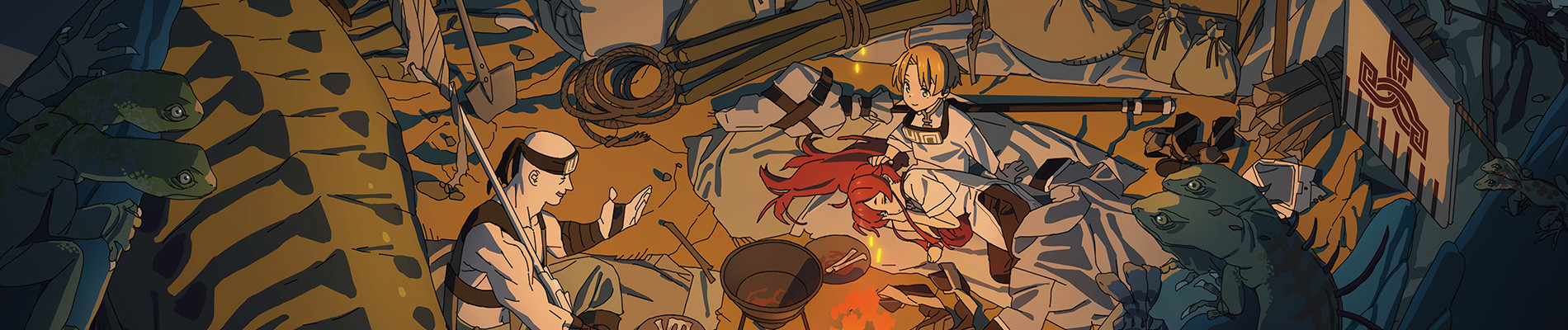
Rudeus is the season’s asset and obstacle. His curiosity, tactical mind, and commitment to magic make him fun to watch, while his immaturity and inappropriate impulses make him intentionally difficult to endorse. The writing becomes strongest when it does not confuse self-awareness with redemption. He can know he was awful in his previous life and still make selfish choices now. Season 1 earns its emotional turns by making improvement incremental. Read more in our Rudeus Greyrat guide.
Roxy, Eris, and the people who make growth possible
Roxy is the model of a future Rudeus can imagine: skilled, independent, and still kind enough to teach. Eris is the season’s most visible growth arc besides Rudeus. Her anger has comic force at first, but discipline, fear, and loyalty gradually make her more than a tsundere obstacle. Their relationship works best when it is about two children learning trust under impossible pressure, not when the show leans into its weakest sexual comedy.
Ruijerd completes the core trio. He gives the journey moral gravity and makes Rudeus confront the gap between a clever solution and a good one. Paul, Zenith, Ghislaine, and the wider Greyrat orbit matter too because the season understands that family is not a reset button. It is a web of histories, mistakes, affection, and people who can disappoint each other without becoming disposable.
Catalysts, not disposable monsters
Season 1’s threats are strongest when they reveal a social rule or pressure a relationship. A beast, a noble scheme, or a dangerous adventurer can create action, but the memorable conflicts test whether the group can preserve its humanity while surviving. That is why Ruijerd’s reputation and the aftermath of the Teleport Incident linger more than a standard villain-of-the-week would.
World Building
Studio Bind and the source material make this world feel inhabited before they make it impressive. The show cares about regional languages, racial memory, adventurer work, noble etiquette, mana, and the practical differences between a village, a city, and a hostile continent. None of that arrives as a lecture. It shows up when someone cannot communicate, needs a job, fears a name, or has to decide which road is safer.
Magic is equally grounded. Rudeus’s chantless casting is rare and powerful, but training still has form and limits. Water, earth, wind, and fire magic have presence; sword styles have schools and social standing. The series makes fantasy competence look learned, which is a major reason its power scenes feel earned even when Rudeus is unusually gifted.
Animation Review
Studio Bind’s Season 1 work is exceptional television fantasy craft. Environments have a lived-in softness, from sunlit Buena Village rooms to the alien color and brutal distance of the Demon Continent. The direction often lets scenes begin before dialogue or linger after it, trusting visual information: a character’s posture, an empty road, a quiet meal after a bad decision.
Action is fluid and clear without turning every encounter into a fireworks reel. Spells carry scale, sword movement has weight, and the camera understands where people are in a fight. The bigger achievement is consistency. Small domestic moments receive enough care that later spectacle feels like it belongs to the same world. A few action beats are obviously prioritized over others, but the overall production floor remains unusually high.
Music and Voice Acting
Yoshiaki Fujisawa’s score does much of the invisible work. It gives early village life warmth, travel a sense of open distance, and the Teleport Incident a genuine feeling of rupture. Rather than relying on one huge anthem, the music colors locations and emotional states. That restraint makes the moments when it swells feel earned.
The opening approach is a standout: songs frequently play over the episode’s travel and daily life instead of stopping the story for a conventional title sequence. It makes the world feel like it is already moving when the episode begins. The Japanese cast sells the core trio’s shifting balance especially well — Rudeus’s nervous calculation, Eris’s explosive pride, and Ruijerd’s restrained severity never blur together.
Best Moments
Roxy helping Rudeus leave the house. A modest win with enormous emotional truth.
The first real magic lessons. The show makes learning magic feel exciting before it makes it overpowering.
Eris beginning to train in earnest. Her competence grows from effort, not a convenient personality switch.
The Teleport Incident. A visually striking rupture that changes the story’s entire contract.
Dead End finding its rhythm. Rudeus, Eris, and Ruijerd become a real traveling party because their values keep colliding.
The final emotional break. It hurts because the season never promised that survival would guarantee happiness.
Pros and Cons
Pros: outstanding fantasy atmosphere; detailed and consequential world building; high-end animation; strong trio chemistry; a turning point that changes the entire season; emotional growth that feels incremental rather than automatic.
Cons: ecchi material and Rudeus’s behavior can be alienating or upsetting; tonal shifts are sometimes clumsy; the journey’s middle can feel episodic on a weekly watch; a few viewers will understandably find the protagonist’s starting point impossible to get past.
Final Verdict
Mushoku Tensei: Jobless Reincarnation Season 1 is one of the best-crafted isekai first seasons of its era, not because it invents every fantasy ingredient, but because it gives every ingredient time to matter. It turns magic lessons into character work, travel into world building, and disaster into a real rupture in a young life. Its uncomfortable material is not a footnote, though; it is the clearest reason the series will never be an effortless recommendation.
For viewers able to engage with that friction, this is a rich, emotionally effective binge and a strong launch point for the larger story. For viewers who need the protagonist and sexual humor to feel less abrasive immediately, skipping it is reasonable. The production deserves the praise; the caveats deserve to be said in the same breath.
- Story: 8.9 / 10
- Characters: 8.7 / 10
- Animation: 9.3 / 10
- Music: 8.6 / 10
- Enjoyment: 8.8 / 10
- Overall: 8.8 / 10
What Comes Next
Season 2 follows the fallout of Season 1 rather than pretending the ending was a temporary sad beat. Expect a more inward chapter for Rudeus before the story widens again. If you make it through this first season, continue for the emotional consequences — not just because the next arc promises stronger spells. For the current franchise destination, see our Mushoku Tensei Season 3 review.
FAQ
Is Mushoku Tensei Season 1 worth watching?
Yes for viewers looking for unusually polished, character-driven fantasy. Be aware that Rudeus’s early behavior and sexual humor are a real barrier, not a minor content note.
How many episodes are in Jobless Reincarnation Season 1?
Season 1 has 23 episodes: Part 1 is episodes 1–11 from January to March 2021, and Part 2 is episodes 12–23 from October to December 2021.
Is Mushoku Tensei beginner friendly?
Narratively, yes. Episode 1 is the correct starting point and no light-novel knowledge is needed. Content-wise, it depends on your tolerance for the protagonist’s early flaws and ecchi comedy.
Is Rudeus supposed to be likable?
Not in a simple, instant way. The series frames him as someone with serious failings trying to change. Whether the execution earns your patience is a personal call.
Is Season 1 slow?
It is deliberate. Part 1 spends time on childhood and training; Part 2 has a travel rhythm after the Teleport Incident. If you need constant combat, it may feel slow. If you enjoy atmosphere, the pacing is a strength.
Do I need to watch anything before Season 1?
No. Start with Episode 1; extras can wait until after the main season.
Where can I watch Mushoku Tensei legally?
It has been available through Crunchyroll in many regions. Check the current catalog where you live because streaming rights change.
Should I continue after Season 1?
If the world, the core trio, and the ending’s emotional consequences worked for you, yes. Season 2 picks up the aftermath rather than resetting the story.
Keep exploring
- Mushoku Tensei anime hub
- Season 1 Episode 1 review
- Mushoku Tensei overall review
- Mushoku Tensei Season 3 review
- Rudeus Greyrat explained
- Browse seasons & episodes
Your turn
Did the early Roxy lessons or the Demon Continent journey sell you on the series? Where did you land on Rudeus as a protagonist after 23 episodes? And did Season 1’s ending make you want to continue straight into Season 2?