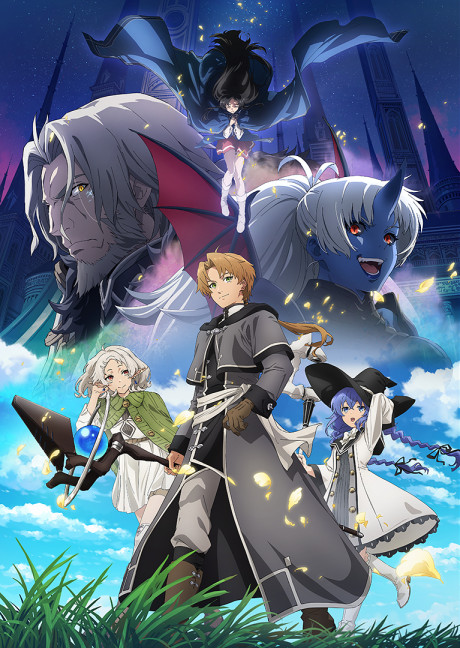
Mushoku Tensei: Jobless Reincarnation is one of the best-looking, most emotionally invested isekai anime of its generation — and one of the hardest to recommend without a warning label. It turns reincarnation into a full life story rather than a shortcut to power: childhood, bad choices, family fractures, travel, grief, romance, and the slow work of becoming less selfish. But its lead begins in a place many viewers will reasonably find ugly, and the series does not always handle that material with the distance or judgment it needs.
That contradiction is the real answer to “is Mushoku Tensei worth watching?” If you can engage with a flawed-protagonist fantasy that asks for patience, Studio Bind delivers world-building and character continuity that few isekai can match. If sexual comedy around its early protagonist is an immediate deal-breaker, skip it without guilt. This Mushoku Tensei review explains both sides before you invest in a multi-season binge.
Hook
Most reincarnation anime start with a reset button: an ordinary adult dies, wakes up special, and becomes a cooler version of himself before the opening theme finishes. Jobless Reincarnation starts with a much less flattering question. What does a person do with a second life when the first one was spent hiding from it?
Rudeus Greyrat is reborn with memories of an isolated, emotionally stunted adult. He has natural magical talent, but talent is not the point. The series keeps returning to the habits he carries into a new world: avoidance, entitlement, fear of failure, and a desire to make other people fit a story centered on him. When the anime is at its best, that makes every earned connection feel unusual for the genre. Rudeus does not simply level up; he has to learn that another person is not a reward for his self-improvement.
Season 3 airing in Summer 2026 makes this a useful time to catch up or return. Just do not start there. The emotional machinery of the current story was built in Season 1’s childhood foundation and Season 2’s harder, more adult growth. Start with Season 1 Episode 1, then use the current Season 3 review once you are caught up.
Quick Information
- Title: Mushoku Tensei: Jobless Reincarnation
- Japanese title: Mushoku Tensei: Isekai Ittara Honki Dasu
- Source: Light novels by Rifujin na Magonote
- Animation studio: Studio Bind
- Genres: Fantasy, adventure, drama, isekai, coming-of-age
- Current status: Season 3 airing Summer 2026
- Where to watch: Crunchyroll (availability varies by region)
- Best starting point: Season 1 Episode 1
- Kagex score: 8.8 / 10
Is Mushoku Tensei Worth Watching?
Yes, for viewers who want a patient fantasy life story with exceptional craft. The show earns its reputation through atmosphere, travel, tiny changes in relationships, and the conviction that its world existed before Rudeus arrived. A village visit can matter two cours later. A tutor, a parent, or a party member is allowed to have goals that do not exist to support the protagonist. That continuity makes the high points hit harder than the usual “new arc, new boss” rhythm.
It is not a universal recommendation. Rudeus’s behavior, especially early on, includes sexualized and invasive conduct that many viewers will find distressing or exhausting. The anime presents him as deeply flawed, and there is genuine growth over time, but “the character improves” is not the same as “the material will be comfortable” or “the framing always works.” Viewers who do not want to spend time with that content should skip it. That is not missing the point; it is knowing what you want from entertainment.
Watch it if: you enjoy detailed fantasy cultures, emotionally messy long-form character arcs, travel stories, quiet domestic scenes, and action that arrives after the show has made you care about the people in danger. Consider skipping it if: you need a likable lead from episode one, prefer clean power fantasies, or do not want sexual humor and uncomfortable behavior tied to the central viewpoint.
For everyone else, give Season 1 enough room to establish its rhythm. It is not flawless, but it is far more interested in consequence than most isekai. By the time it reaches its major turning points, the show has made a family, a map, and a future worth worrying about.
Spoiler Warning
Moderate spoilers for Seasons 1 and 2 follow. This review discusses broad arcs, character growth, relationships, and the kind of stakes Season 3 inherits, but avoids specific Summer 2026 episode developments. If you only want the spoiler-free verdict, jump to Pros and Cons, Final Verdict, or the FAQ.
Series Overview
Season 1: a foundation built on childhood and distance
Season 1 has the toughest job in the franchise: it must introduce a protagonist carrying a lifetime of baggage, make his new family feel real, teach viewers the rules of magic, and persuade us that this is a world rather than an RPG lobby. It succeeds most when it slows down. Rudeus’s early education, his bond with parents Paul and Zenith, and his work as a tutor establish a fantasy society through ordinary interactions instead of encyclopedia narration.
The first season also makes its central promise clear: time will matter here. Children grow up. Parents make mistakes. Distance changes relationships. The world is not conveniently waiting for Rudeus to become strong enough to visit the next city. A major disaster sends people scattering across the map, shifting the show from childhood comedy into a real journey. The result is a season that can feel meandering to viewers looking for constant plot acceleration, but its patient setup pays off.
Read our full Mushoku Tensei Season 1 review for the deeper starting-point breakdown. The short version: Season 1 builds the emotional vocabulary the entire anime uses later. Skipping it to reach the currently airing season would turn major reunions and hard choices into empty plot points.
Season 2: growth is not a clean upward line
Season 2 is where the series proves it is willing to spend time on aftermath. Rather than immediately escalating to a larger demon king problem, it follows Rudeus through loneliness, depression, new companions, school life, and a more complicated understanding of what he wants from adulthood. Some viewers find this stretch less exciting than the broad travel of Season 1. Others see it as the show’s clearest statement of purpose: saving the world is easier than admitting you are hurt or building a stable life with someone else.
The pacing can drag when the story lingers on school routines or romantic uncertainty. Still, this is where the supporting cast gains breathing room. Friendships are not just party slots, and romance is not only a trophy after an adventure. The better episodes let people disagree, fail each other, and carry wounds that magic cannot solve in one scene. When the story turns back toward family and larger danger, that domestic investment gives the escalation weight.
Season 3: the current Summer 2026 chapter
Season 3 is currently airing in Summer 2026, continuing a story that has deliberately moved from “gifted child discovers magic” toward the responsibilities attached to the life he has built. The important thing for a new viewer is not a specific plot tease; it is the scale of the payoff. The anime has spent years tracking relationships across time, so current choices carry the memory of earlier promises and failures.
For weekly coverage and a spoiler-aware view of the new season, visit the Season 3 review. If you are deciding what to watch this season, it is also included in our Summer 2026 anime trending guide. Newcomers should still begin at the beginning; this is a serial drama, not a franchise built for random-season sampling.
Story Analysis
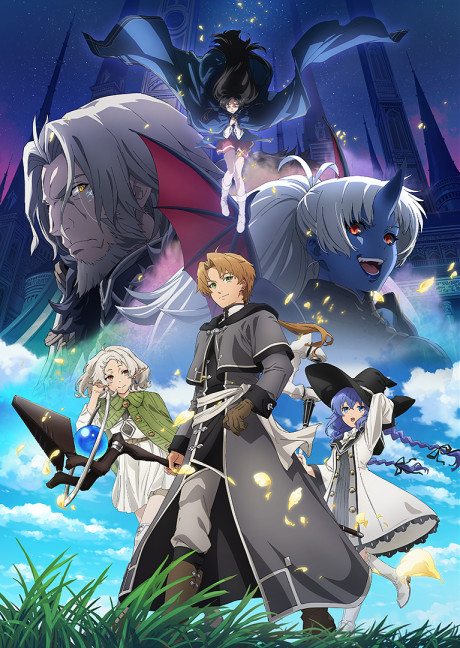
The strongest part of Mushoku Tensei is its sense of accumulated life. The plot is not afraid to stop for a lesson, a meal, a letter, a disagreement, or a difficult reunion. Those scenes are not always equally sharp, but they make the world feel lived in. When trouble arrives, characters have homes, history, and unresolved feelings that can actually be threatened.
The light novels by Rifujin na Magonote give the adaptation an unusually broad foundation. Cultures, languages, magic, monsters, regions, and family histories are not introduced only when a fight needs scenery. Studio Bind’s version understands that the audience should feel the distance between places. Travel has weather, fatigue, danger, and cultural friction. Even a short location can leave behind a custom, a political tension, or an image that resurfaces later.
Its biggest storytelling weakness is tied to its biggest ambition: the series can be indulgent. Some scenes linger after their point is made, and comedy can clash with a serious emotional turn. The handling of Rudeus’s sexuality is the more significant issue. The story wants to portray a person with ugly habits learning to take responsibility, but the anime sometimes leans into the gag or the point-of-view appeal in ways that dull its own criticism. That tension never fully disappears.
Still, the show is more than a redemption slogan. It does not pretend a better intention immediately repairs old damage. Rudeus can act generously and remain selfish; he can love people and misunderstand them. The narrative is strongest when it lets growth be partial, awkward, and costly. That is why its emotional peaks land: they are not rewards for completing a morality checklist, but consequences of years spent trying and failing to live differently.
Character Analysis
Rudeus is both the reason the anime stands out and the reason it divides audiences. He is not designed to be an uncomplicated hero. He is talented, observant, funny in a dry way, and capable of loyalty, but he can also be manipulative, cowardly, and painfully self-absorbed. The series asks viewers to watch him become better, not to excuse what he was. Whether that balance works for you is the key personal question behind this Jobless Reincarnation anime review.
The important support characters do not feel like interchangeable rewards. His parents are allowed to be loving, flawed adults with their own limits. Friends and mentors often possess information or needs Rudeus cannot solve by casting a bigger spell. Romantic relationships have genuine tenderness, but the show is most persuasive when it treats the people involved as full characters rather than evidence that Rudeus has “won.”
The time span helps everyone. A child who annoyed you early can gain perspective; a confident figure can reveal uncertainty; a companion separated by geography can return changed. This is why the franchise benefits from being watched in order. The emotional impact comes from remembering who people were when they met, not just from learning their next power level. For a focused look at the lead, visit Rudeus Greyrat explained.
World Building
Few modern isekai anime sell physical space as well as Mushoku Tensei. Studio Bind gives its locations texture: muddy roads, wind through grasslands, busy markets, old stone, unfamiliar architecture, and rooms that look used rather than staged for exposition. The fantasy world has a history beyond the protagonist, and the show trusts viewers to absorb it through travel and conversation.
The magic system is satisfying because it supports character rather than replacing it. Rudeus’s aptitude explains how he can affect events, but it does not erase fear, communication problems, or the consequences of being young in a dangerous world. Other characters bring distinct fighting styles and values to the same setting. Magic looks beautiful, yet it is never the only language the series speaks.
Its geography is just as important. Crossing a continent changes the story’s mood, challenges, and social rules. That scale makes reunions meaningful and prevents the usual isekai problem where every kingdom feels like the same tavern with a new flag. The world is not merely rich; it is paced. The anime lets you miss a place before it moves on.
Animation
Studio Bind was created with this adaptation as its central mission, and the care shows. The animation is not only impressive during magic clashes. It is especially strong in movement through space: a character hesitating before a reply, a group walking through a town, a landscape establishing the mood before dialogue begins. Background work and color design give each region an identity without making the world look like a collection of game zones.
Action is fluid and readable, with enough scale to sell powerful magic while keeping character reactions central. The show also understands restraint. A quiet room, a close expression, or a long travel shot can do as much work as a flashy spell. There are production variations across a long-running television project, but the overall visual direction remains among the genre’s best.
Music and Voice Acting
The sound design and score contribute heavily to the show’s travelogue feeling. Music often arrives as atmosphere rather than a demand to feel a specific emotion, allowing scenes to breathe. The franchise’s use of vocal themes and location-sensitive sound helps transitions feel like chapters in a life rather than isolated arcs.
Voice performances carry the uncomfortable and vulnerable material with more care than the scripts sometimes deserve. Rudeus has to sound intelligent, immature, ashamed, and sincere without becoming one note; the supporting cast makes that possible by refusing to play every interaction as unconditional approval. The result is a series that can move from humor to raw domestic pain quickly, sometimes too quickly, but often effectively.
Pros and Cons
- Pros: exceptional fantasy atmosphere and art direction; long-term character continuity; a world that feels geographically and culturally real; expressive animation from Studio Bind; emotional payoffs earned over seasons.
- Pros: willing to slow down for family, travel, friendship, and the awkward work of growing up instead of treating every episode as a power-up delivery system.
- Cons: Rudeus’s early behavior and sexualized comedy are a real barrier, not a minor disclaimer; the series does not always frame that material as critically as it should.
- Cons: deliberate pacing and domestic arcs will frustrate viewers who want nonstop action; some comedy undercuts otherwise serious scenes.
Final Verdict
Mushoku Tensei: Jobless Reincarnation is a landmark isekai adaptation because it treats a second life as a whole life. Studio Bind turns the light novels’ scale into weather, distance, family history, and a fantasy world you can almost feel under your feet. Its best moments are not just huge spells; they are the moments when someone chooses to speak honestly, come home, or accept responsibility after years of running from it.
That praise needs its warning attached. The protagonist’s early conduct and the show’s uneven handling of it will make this a bad fit for some viewers, and that is a valid reason to pass. For viewers who can tolerate that material and want a character-driven fantasy with real long-range payoff, it remains one of the most rewarding isekai to follow into Season 3.
- Story: 9.0 / 10
- Characters: 8.7 / 10
- World Building: 9.4 / 10
- Animation: 9.1 / 10
- Music: 8.6 / 10
- Enjoyment: 8.8 / 10
- Overall: 8.8 / 10
Recommendation: start from Season 1 if you want a richly made fantasy drama and can accept the content warning. Continue through Season 2 for the full emotional shape. If the early material makes you uncomfortable, do not force yourself through it for a future payoff.
FAQ
Is Mushoku Tensei worth watching in 2026?
Yes for viewers who want a long-form, character-driven fantasy and are comfortable with its content warnings. Season 3 airing in Summer 2026 makes it a good time to catch up, but begin with Season 1.
Is Mushoku Tensei good for isekai beginners?
It is a strong technical and storytelling example of the genre, but not the safest beginner recommendation because of Rudeus’s behavior and the sexual comedy. Know the premise before starting.
Can I start with Season 3?
No. Season 3 depends on years of relationships, family history, and earlier consequences. Start with Season 1 Episode 1.
Where can I watch Mushoku Tensei?
The anime is available on Crunchyroll in many regions. Check the service in your country for current availability.
What is Mushoku Tensei about?
A shut-in adult dies and is reborn as Rudeus Greyrat in a fantasy world. With memories of his first life intact, he tries to live more fully while navigating magic, family, travel, and the consequences of his choices.
Is Rudeus meant to be a good person?
Not at the beginning. The story is about imperfect growth, but viewers are not required to enjoy or forgive his early behavior. The anime’s framing of that behavior is also one of its most debated weaknesses.
Is it mostly action?
No. It has excellent action, but it spends just as much energy on travel, conversation, family, relationships, and world-building. Think fantasy life story before battle shonen.
Do I need to read the light novels first?
No. The anime works as an entry point. The light novels offer more detail, but new viewers can follow the adaptation from Season 1.
Keep exploring
- Mushoku Tensei anime hub
- Mushoku Tensei Season 1 review
- Season 1 Episode 1 review
- Mushoku Tensei Season 3 review
- Rudeus Greyrat explained
- What is worth watching in Summer 2026?
Your turn
Did Mushoku Tensei win you over with its world-building, or did the lead’s early behavior stop the show from working for you? Which season has delivered the strongest emotional payoff so far? Drop your score and tell us whether Season 3 has brought you back for weekly viewing.