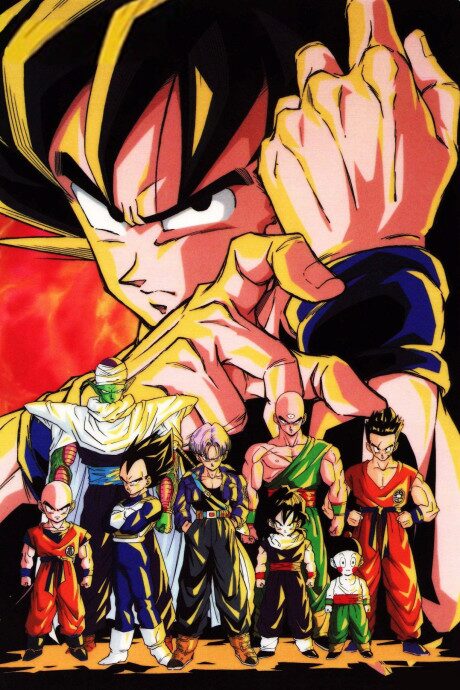
Some pilots have to convince you a franchise is worth forty years of attention. This one just has to introduce a kid, a car, and a wish. Dragon Ball Episode 1 — “The Secret of the Dragon Balls” (ブルマと孫悟空, “Bulma and Son Goku”) — is where the entire franchise starts: a boy raised alone in the mountains meets a girl obsessed with seven magic orbs, and neither of them has any idea what they are about to build. Stay for the car-throwing. Stay for the pterodactyl rescue. Stay if you want to know whether the episode that launched Dragon Ball still holds up as an actual introduction, not just nostalgia bait.
Hook
Before Dragon Ball was a merchandising empire, it was a very small, very funny premise: what if the strongest kid in the world had no idea he was strange? Episode 1 opens on Son Goku living completely alone in the mountains, self-sufficient in a way that reads as charming rather than sad. He has a walking stick that extends on command and a single glowing orange ball with four red stars — an heirloom from his late grandfather, Gohan. He does not know what it does. He just knows it was important to someone he loved.
Then a car hits him. Goku is completely unfazed, picks the car up, and throws it — casual proof that this kid is not going to be an ordinary protagonist even by shonen-pilot standards. The driver, a sharp and short-tempered girl named Bulma, shoots him out of shock, and the bullets barely sting. Two strangers, two overreactions, and Dragon Ball’s entire dynamic snaps into place in about five minutes.
The question this page answers is simple: does “The Secret of the Dragon Balls” actually earn its place as one of anime’s most famous premieres, or is its reputation carried entirely by what the franchise became later?
Quick Information
- Anime: Dragon Ball (Dragon Ball, 1986)
- Season / Episode: Season 1, Episode 1
- Japanese episode title: ブルマと孫悟空 (“Bulma and Son Goku”)
- Runtime: about 24 minutes
- Studio: Toei Animation
- Genres: Adventure, Comedy, Fantasy, Martial arts shonen
- Original air date: February 26, 1986
- Kagex score: 8.8 / 10
- Where to watch legally: Crunchyroll and other official streaming platforms (availability can vary by region)
- Characters to know: Son Goku, Bulma, and a small tyrant named Pilaf introduced late in the episode
Should You Watch It?
Is Dragon Ball Episode 1 worth watching? Yes — even decades later, it is a clean, funny, well-paced introduction to two characters whose chemistry still carries entire arcs of the franchise. You do not need any manga knowledge going in; this episode assumes zero prior context and explains everything it needs to.
Is it slow? Not at all by 1980s shonen standards. The car crash, the Dragon Ball explanation, the road trip setup, and the pterodactyl rescue all happen inside one episode without padding. It moves briskly because it has to introduce a whole premise in under 24 minutes.
Is it beginner friendly? Completely. This is the actual starting point of the entire Dragon Ball franchise — no prior seasons, no assumed lore. Everything from Goku’s tail to the Dragon Balls’ wish mechanic is explained on-screen.
Who will enjoy it? Fans of classic adventure comedy, martial arts fantasy, and road-trip buddy dynamics between a naive powerhouse and a sharp-tongued genius. If you have only seen later, more battle-focused Dragon Ball content, the tone here is lighter and more comedic than you might expect.
Bottom line: watch it. Episode 1 is a genuinely well-constructed pilot — funny, fast, and confident about the exact premise it wants to sell you in one sitting.
Spoiler Warning
Spoilers for Dragon Ball Episode 1 follow. Stop above if you want a clean first watch. No later-episode plot beyond what this episode itself sets up.
Story Recap
Ordinary Life (a boy alone in the mountains)
Goku’s “ordinary” is nobody else’s ordinary. He lives by himself deep in the mountains, hunting and surviving without any adult supervision, armed with his Power Pole — a magical staff that extends to enormous lengths on command — and a single treasured item: the Four-Star Ball, a keepsake left to him by his late grandfather, Gohan. He does not know what the ball actually does. It is simply precious because of who gave it to him.
This opening does a lot of quiet work. It establishes Goku as physically extraordinary but socially blank — a kid with no context for how strange his own strength is, because he has never had anyone around to compare himself to.
Unexpected Incident (a car, a gun, and a very confused introduction)
That isolation ends abruptly when a car plows into Goku on a forest road. He is completely unharmed, picks up the vehicle, and throws it — an instinctive reaction that terrifies the driver, a girl named Bulma. Convinced she has hit some kind of monster, Bulma pulls a gun and fires. The bullets bounce off Goku, stinging him only slightly, and the confrontation resolves into confused, wary curiosity on both sides rather than a real fight.
It is a perfect comedic mismatch: an overwhelmed inventor with modern tools and a completely unbothered mountain kid who does not understand why anyone would be afraid of him.
New World (the Dragon Balls, explained)
Once the initial panic settles, Bulma escorts Goku back toward his home and lays out the premise that gives the show its name: there are seven Dragon Balls scattered across the world, and anyone who gathers all seven can summon a dragon that grants a single wish. Bulma already has two of them tracked down using her own technology. Goku, without realizing its significance until now, has been carrying a third — his grandfather’s Four-Star Ball — the entire time.
This is the episode’s cleanest piece of world-building. The wish mechanic is explained simply and completely in one conversation, giving the entire franchise’s central hook a plain, understandable foundation before any bigger stakes get introduced.
First Discovery (an unlikely team, and a very cool motorcycle)
Bulma proposes a partnership: combine their Dragon Balls and go find the rest together. Goku, who has no reason to say no and every reason to be curious about the world beyond his mountain, agrees. Their journey begins with a burst of the setting’s sci-fi flavor — Bulma pulls a fully functional motorcycle out of a small capsule, casually demonstrating a piece of technology Goku has never seen anything like.
The capsule tech moment matters beyond its cool factor. It signals early that Dragon Ball’s world blends old-fashioned martial arts fantasy with playful, futuristic gadgetry — a combination the franchise will keep leaning on for its entire run.
Important Encounter (a pterodactyl, a rescue, and a rival introduced)
The road trip’s first real danger arrives when a pterodactyl swoops down and snatches Bulma mid-journey, carrying her off before Goku can react normally. He responds by extending his Power Pole to enormous length, using it to reach up and pull her to safety — the episode’s clearest early demonstration that his strength is paired with genuine quick thinking, not just raw power.
With that crisis resolved, the episode introduces its first antagonist: Pilaf, a small, ambitious tyrant who wants the Dragon Balls for himself, with a wish for world domination in mind. Pilaf’s introduction is brief but clear — Goku and Bulma are not the only ones who understand what the seven balls can do, and not everyone who wants them has good intentions.
Story Analysis
Episode 1’s job is the hardest job any pilot has — introduce two leads, explain the entire premise, and end on a hook — and it does all three without feeling rushed. Akira Toriyama’s original structure gives the episode a clean, almost fable-like shape: ordinary loneliness, sudden collision, shared goal, first team victory.
Pacing is brisk and confident. Every scene either develops a character trait or advances the Dragon Ball premise; there is very little wasted motion for a 1986 episode working within tighter runtime and animation constraints than later franchise entries.
Emotional impact comes from small character details rather than big drama — Goku’s attachment to his grandfather’s keepsake, Bulma’s mix of greed and genuine curiosity, the easy trust that forms once the initial fear wears off. Neither character needs a tragic backstory dump to feel likable.
Comedy is the episode’s real engine. The car-throwing, the gunfire that barely registers, Bulma’s indignant reactions to a boy who has never seen a girl before — all of it plays broad but character-driven, setting the tone for a franchise that will always mix serious martial arts stakes with genuinely silly humor.
Theme is companionship formed by accident. Neither Goku nor Bulma sets out looking for a partner; the Dragon Balls simply give two very different people a reason to need each other, and the episode trusts that shared goal to build a friendship without over-explaining it.
Character Analysis
Son Goku — pure strength, zero context
Episode 1’s Goku is defined by an unusual combination: superhuman strength and durability paired with total social innocence. He does not understand why his actions frighten people, because he has never had anyone around to teach him what “normal” looks like. That innocence is played for comedy here, but it is also the foundation for the character’s entire arc — a fighter whose honesty and lack of ego will define him for the rest of the franchise.
Bulma — the genius who starts the adventure
Bulma is the episode’s driving force in every sense. She has the technology, the Dragon Radar, the plan, and the impatience to actually act on all three. Her sharp temper and materialistic streak are introduced as flaws, but they are also exactly why the plot moves at all — without her ambition, Goku would have stayed in the mountains indefinitely.
Pilaf — small tyrant, big ambition
Pilaf’s introduction is short but purposeful. He is not physically imposing, but his stated goal — using the Dragon Balls to conquer the world — immediately raises the stakes of a quest that had, until this point, felt like harmless treasure hunting. His presence tells the audience that Goku and Bulma are not adventuring in a vacuum; other people have already noticed what the Dragon Balls are worth.
Grandpa Gohan — present through memory
Goku’s late grandfather never appears on screen, but his influence shapes the entire episode. The Power Pole, the Four-Star Ball, and Goku’s name itself all trace back to him. Episode 1 uses that absence efficiently — a single sentimental detail gives an otherwise comedic premiere a small, grounded emotional anchor.
World Building
Episode 1 lays down Dragon Ball’s foundational rule in one clean scene: seven Dragon Balls, scattered across the world, grant a single wish when gathered together. That is the entire premise of the franchise’s first major arc, delivered without a lecture — Bulma simply explains it because she needs Goku to understand why his grandfather’s keepsake matters.
The introduction of capsule technology is just as important in a quieter way. By showing Bulma pull a working motorcycle out of a small capsule, the episode establishes that this world blends ancient martial arts tradition with playful, advanced science — a tonal combination that will define locations and gadgets throughout the entire series.
Pilaf’s brief appearance also plants a structural idea the franchise will return to constantly: the Dragon Balls attract attention from people with very different intentions, turning what could have been a simple scavenger hunt into a story with actual competition and danger.
Animation Review
Toei Animation’s 1986 work holds up better than many viewers expect from a nearly forty-year-old pilot. Character designs are clean and expressive, particularly in comedic beats like the car-throwing and gunfire exchange, where exaggerated reactions do a lot of storytelling work without dialogue. The pterodactyl rescue sequence stages scale and danger clearly despite the era’s technical limits, using Goku’s extending Power Pole as a genuinely satisfying visual gag and rescue tool at the same time.
It is not a spectacle-driven episode by modern standards, and it does not need to be — the animation’s job here is comedic timing and character expression, and it delivers both consistently.
Music and Voice Acting
The episode’s score leans into a sense of open-road adventure, matching the tone of two strangers setting out on a quest neither fully understands yet. Voice performances establish the core dynamic immediately: Goku’s guileless, straightforward delivery contrasts sharply with Bulma’s sharper, more excitable line readings, and that contrast alone carries most of the episode’s comedic chemistry before any real plot complexity arrives.
Hidden Details
Watch how deliberately the episode withholds explanation about Goku’s strength. Nobody in-universe comments on it as supernatural; it is simply presented as normal to him, which is exactly why Bulma’s shock lands as the audience’s shock too. That choice keeps the tone playful rather than turning Goku into a mystery box this early.
The Four-Star Ball’s sentimental value is easy to overlook on a first watch, but it is the emotional hinge the entire episode depends on — without Goku’s attachment to his grandfather’s memory, there would be no reason for him to take the Dragon Ball quest seriously at all.
Pilaf’s late introduction is also worth rewatching closely. The episode does not dwell on him, but placing his ambition right at the end — after establishing the Dragon Balls as something wonderful — is a clean setup for conflict without needing a cliffhanger fight to sell the stakes.
Best Moments
The car throw. The single funniest, most efficient character introduction in the episode.
Bullets that barely sting. A perfect comedic escalation of the same joke.
The Dragon Ball explanation. Franchise-defining lore delivered in one clear, unhurried scene.
The capsule motorcycle reveal. A small moment that tells you exactly what kind of world this is.
The pterodactyl rescue. Power Pole competence paired with real quick thinking.
Pilaf’s introduction. A short scene that instantly raises the stakes of the whole quest.
Pros and Cons
Pros: tight, confident pilot pacing, instantly likable lead duo, clean and complete premise explanation, effective blend of comedy and adventure, strong hook into the wider quest.
Cons: animation shows its 1986 age in places; Pilaf’s introduction is brief enough that his threat level is more promised than proven yet; some humor leans on now-dated gender-based comedic beats.
Final Verdict
Dragon Ball Episode 1 is a genuinely well-built pilot that still works as an introduction decades later, not just as nostalgia. It sells its premise, its leads, and its sense of adventure in one confident episode. For Kagex Blog, that is an 8.8: a classic starting point that earns its reputation instead of coasting on it.
- Story: 8.8 / 10
- Characters: 8.7 / 10
- Animation: 8.5 / 10
- Music: 8.6 / 10
- Enjoyment: 8.9 / 10
- Overall: 8.8 / 10
Recommendation: start here. If the car-throwing gag and the Dragon Ball explanation both land for you, the rest of the franchise’s adventure setup is exactly your speed.
What to Expect Next
Episode 1 ends with Goku and Bulma committed to the Dragon Ball quest and Pilaf newly aware of what they are after. Expect the next episode to push the search forward and develop the stakes Pilaf’s introduction just raised — without this page spoiling how. If the road-trip chemistry and the Dragon Ball premise hooked you, the quest is only just getting started.
FAQ
Is Dragon Ball Episode 1 worth watching?
Yes. It is a tightly built pilot that introduces the entire franchise premise clearly and with genuine comedic charm.
What is the Japanese title?
ブルマと孫悟空 — “Bulma and Son Goku.”
Do I need any prior knowledge to watch Episode 1?
No. This is the true starting point of the Dragon Ball franchise, and it explains everything from scratch.
What are the Dragon Balls?
Seven magical orbs that, when gathered together, summon a dragon capable of granting one wish.
How many Dragon Balls does each character have at the start?
Bulma has two, tracked with her own technology. Goku has one — the Four-Star Ball, inherited from his grandfather.
Who is Pilaf?
A small but ambitious tyrant introduced at the end of Episode 1, who wants to use the Dragon Balls to conquer the world.
Is Episode 1 action-heavy?
Lightly. There is a brief scuffle and a rescue sequence, but the episode is more comedy-and-setup focused than combat focused.
Where can I watch Dragon Ball Episode 1 legally?
Crunchyroll and other official platforms carry the series, though availability can vary by region.
Keep exploring
- Dragon Ball — anime hub
- Browse seasons & episodes
- Dragon Ball characters
- Episode 2 review — coming soon
Your turn
Did the car-throwing gag or the Dragon Ball explanation hook you first? Are you rooting for Bulma’s plan, or do you think Goku should have just stayed in the mountains? What score would you give Dragon Ball Episode 1 — and are you continuing to Episode 2?