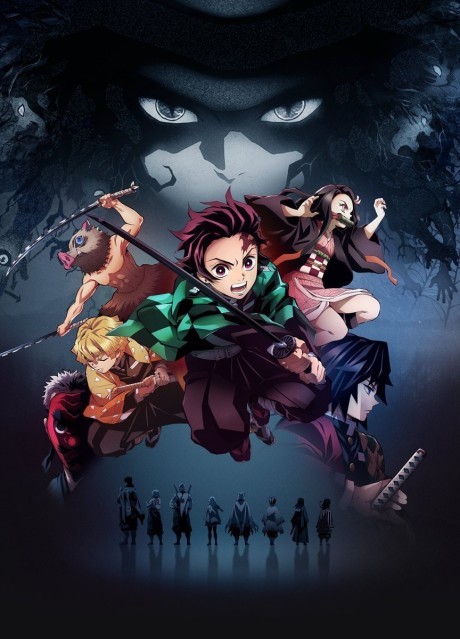
Episode 1 destroyed a home. Episode 2 asks whether kindness can survive the road that follows. Demon Slayer: Kimetsu no Yaiba Season 1 Episode 2 — “Trainer Sakonji Urokodaki” — is where Tanjiro and Nezuko leave the mountain path Giyu pointed them toward, meet a temple demon, and learn that sunlight and resolve are part of the job description. Stay for Nezuko’s kick. Stay for the hesitation. Stay if you want to know whether Episode 2 is worth continuing after “Cruelty.”
Hook
A premiere can make you cry. A second episode has to prove the series can move. Demon Slayer Episode 2 does that without pretending Tanjiro is already a swordsman. He has an axe, a basket, a sister who drools at blood, and a nose that keeps pulling him toward other people’s disasters.
The temple sequence is the franchise’s first “regular” demon fight after the origin nightmare — weird regeneration, severed head growing arms, compassion turning into deadly delay. Then a tengu-masked stranger arrives not as a savior speech, but as a standards check: what will you do if Nezuko eats someone?
So the question this page answers is simple: after a devastating pilot, is Episode 2 just travel filler, or the real start of Tanjiro’s Demon Slayer education? (Note: the title is Trainer Sakonji Urokodaki — 育手・鱗滝左近次 — not “Someone’s Dream,” which belongs to a later season.)
Quick Information
- Anime: Demon Slayer: Kimetsu no Yaiba
- Season / Episode: Season 1, Episode 2
- Japanese episode title: 育手・鱗滝左近次 (“Trainer Sakonji Urokodaki”)
- Runtime: about 24 minutes
- Studio: ufotable
- Genres: Action, Fantasy, Drama, Historical
- Original air date: April 13, 2019
- Kagex score: 8.5 / 10
- Where to watch legally: Crunchyroll; Netflix (availability can vary by region)
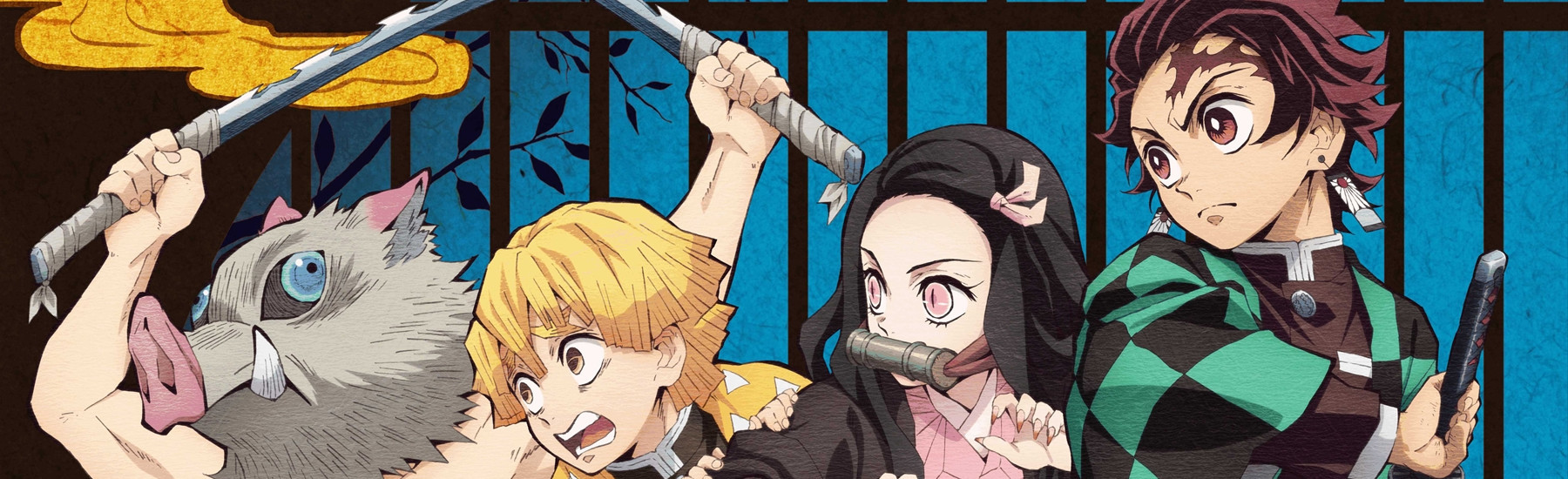
- Characters: Tanjiro Kamado, Nezuko Kamado
Should You Watch It?
If Episode 1 wrecked you in the right way, Episode 2 is an easy continue. It keeps the emotional thesis — protect Nezuko, kill demons, stay human — then stress-tests it on the road to Mount Sagiri. You do not need manga homework. You do need stomach for gore and for a fight that is grotesque before it is elegant.
Is it worth watching? Yes. Skip it and you skip Nezuko’s first clear choice to protect Tanjiro against hunger, plus the introduction of Sakonji Urokodaki as the trainer gate.
Is it slow? The basket-crafting travel stretch is quieter than the temple. That quiet is useful: it lets Tanjiro’s stubborn kindness show in daylight before night turns the plot into a slaughterhouse again.
Is it beginner friendly? Yes after Episode 1. This is not a skip-to-Entertainment-District franchise. Episode 2 is still foundation — rules of demons, sunlight, and the Corps’ harsh expectations.
Who will enjoy it? Viewers who like character-driven action, sibling bonds under horror pressure, and ufotable fight staging. Who might bounce: people who wanted Final Selection energy immediately, or who found Tanjiro’s hesitation frustrating instead of thematic.
Bottom line: watch it. Episode 2 is where Demon Slayer becomes a journey, not only a tragedy short.
Spoiler Warning
Spoilers for Season 1 Episode 2 follow. Stop above for a clean first watch. No Sabito/Makomo training spoilers beyond what this episode itself reaches.
Story Recap
Ordinary Life (road rules after the end)
There is no ordinary life left, only survival logistics. Tanjiro heads toward Mount Sagiri on Giyu’s instruction, carrying Nezuko and the mission to find someone who can help. He bargains stubbornly for a damaged basket, straw, and bamboo — insisting on paying even when a farmer tries to refuse. The beat is small and perfect: kindness as habit, not branding.
Nezuko hides from sunlight, digs into earth, then shrinks to fit the repaired basket on Tanjiro’s back. Day travel becomes possible. Night travel becomes inevitable. Locals warn that people have gone missing. Episode 2 lets you feel the road as a haunted commute.
Unexpected Incident (blood in the temple)
At nightfall, Tanjiro smells blood from a temple and runs toward help like the boy Episode 1 trained you to love. Inside is not a wounded traveler. It is a demon feeding on corpses. Nezuko salivates. Tanjiro freezes at the scene, then fights with a hatchet that cannot keep up with regeneration.
The demon’s speed and healing turn the temple into a horror room. Tanjiro’s courage is real. His tools are not enough. That gap is the episode’s first lesson: heart without method gets people killed.
New World (Nezuko chooses her brother)
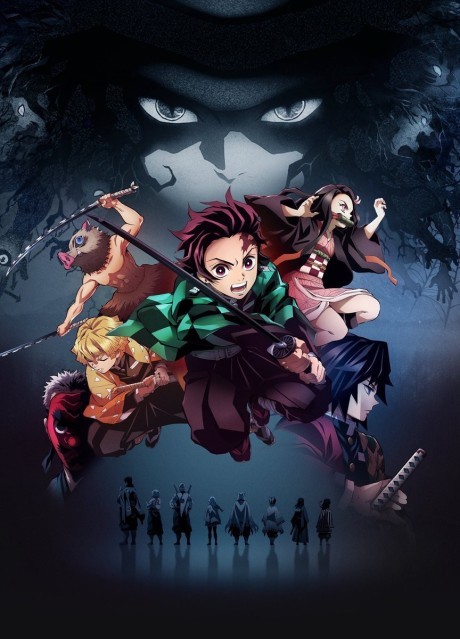
When the demon nearly finishes Tanjiro, Nezuko overrides hunger and kicks the head clean off. The body keeps moving. The head grows arms. The fight splits into twin nightmares — Tanjiro wrestling a talking skull-limb monster, Nezuko battered by a headless body toward a cliff.
This is Demon Slayer’s first proof that Nezuko is not only a victim to carry. She is an ally with agency under curse pressure. The “new world” of Episode 2 is a sibling combat duo before any Water Breathing forms exist.
First Discovery (sunlight as weapon)
Tanjiro pins the head, saves Nezuko from the cliff, and faces the finishing blow with a knife. He hesitates — still smelling humanity in the wrong place, still too kind for the Corps’ preferred tempo. A masked man appears, tells him a knife will not work, and points him toward a rock. Even then, Tanjiro freezes.
Dawn decides for him. Sunlight burns the demon to ash. Tanjiro learns a hard world rule in fire and dust: demons die in the sun. He also learns Nezuko’s survival depends on darkness and shelter — she is already back in the basket, safe from morning.
Important Encounter (Urokodaki’s standard)
After burying the dead, the masked man introduces himself as Sakonji Urokodaki — the trainer Giyu sent Tanjiro to find. He cuts through introductions with the only question that matters: what will you do if Nezuko eats someone? Tanjiro’s slow answer earns a slap and a brutal charge: never let it happen; if it does, kill her and yourself.
Episode 2 ends less like a victory lap and more like enrollment. The temple fight proved demons are monsters. Urokodaki proves the path forward will demand resolve as sharp as any blade.
Story Analysis
Episode 2’s job is transition with teeth. It converts grief into motion, motion into first combat failure/success, and success into apprenticeship terms. The structure is clean and cruel.
Pacing balances daytime character beats with a dense night fight. Some viewers want Final Selection faster. Fair. But without the basket, the salivation, and the hesitation, Urokodaki’s slap would feel like generic tough-mentor anime. Here it feels earned.
Emotional impact comes from Nezuko’s choice and Tanjiro’s unfinished kill. The show refuses to make kindness free. Compassion slows his hand; sunlight bails him out this time. That tension is the series engine.
Horror comedy sneaks in through the armed head and slapstick-adjacent body fight without undercutting corpse stakes. ufotable walks a weird line and mostly keeps dignity.
Theme is clear: protecting Nezuko means becoming capable enough that kindness is not negligence.
Character Analysis
Tanjiro Kamado — kind to a fault
Episode 2 confirms Tanjiro’s first impression and problematizes it. He pays fairly, runs toward blood, fights beyond his gear, then cannot finish a demon efficiently. Urokodaki smells that kindness as a liability. The audience smells it as the reason to care. Both can be true. Guide: Tanjiro Kamado explained.
Nezuko Kamado — demon who still protects
Nezuko’s temple intervention is her character thesis in one kick. Hunger hits. Family wins. She is not a silent mascot; she is the story’s first miracle and first responsibility. Guide: Nezuko Kamado explained.
Sakonji Urokodaki — the gate, not the hug
Urokodaki arrives as evaluation, not comfort. Mask, smell-sense, impossible question, physical correction. Episode 2 needs that coldness after Episode 1’s warmth so the training path feels dangerous enough to matter.
World Building
Episode 2 teaches demon rules through emergency, not lecture. Regeneration can outpace crude weapons. Decapitation is not always enough if the pieces keep fighting. Sunlight is lethal. Some demons can shrink or otherwise warp their bodies — Nezuko’s basket fit is the soft version of that body horror.
It also introduces Corps pedagogy by implication: Giyu sends candidates to Urokodaki; Urokodaki demands absolute accountability for a demon sister. The organization is not a friendly club. It is a wartime filter.
Animation Review
ufotable makes the temple fight memorable without needing a named Breathing form yet. Night color, blood black-reds, the head’s arm growth, cliff staging, and sunlight disintegration all read cleanly. Daytime travel scenes stay painterly — forests, paths, soft light — so the horror cut hits harder.
Compared with later season peaks, Episode 2 is foundational rather than maximal. Judged as “second episode after a traumatic pilot,” the craft priorities are right: sell panic, sibling teamwork, and the trainer’s arrival.
Music and Voice Acting
Score work tightens when blood scent hits, then opens again at dawn’s ugly relief. Voice performances sell the sibling bond without needing long dialogue from Nezuko — breath, effort, muffled urgency. Tanjiro’s hesitation sounds like conscience, not incompetence cosplay. Urokodaki’s masked delivery makes kindness feel like something that must be sharpened, not abandoned.
Hidden Details
Episode 2 hides future structure without spoiling training arcs. Tanjiro’s smell sense keeps guiding him into responsibility. Nezuko’s daylight weakness becomes logistics forever. Urokodaki smelling “kindness” reframes Tanjiro’s virtue as detectable and contestable. Also notice the farmer beat: Tanjiro’s fairness is not saved for tragic flashbacks. It is how he moves through ordinary people after hell.
Another detail: Giyu is mostly absent here on purpose. Episode 1 handed off the path. Episode 2 forces Tanjiro to walk it — and to meet the next adult standard alone.
Best Moments
Paying for the broken basket. Soft character proof after absolute loss.
Nezuko fitting into the basket. Practical, eerie, and sibling-intimate.
Nezuko kicking the demon’s head off. The series’ first “she chooses him” combat beat.
Tanjiro’s unfinished kill. Theme over cool factor.
Urokodaki’s question and slap. Enrollment into a harsher world.
Pros and Cons
Pros: strong Nezuko agency, clear demon rules, excellent tonal bridge from tragedy to training, ufotable fight readability, Urokodaki introduction with teeth.
Cons: travel setup may feel soft to action-only viewers; Tanjiro’s hesitation can read as stalling if you miss the theme; full training payoff is still ahead.
Final Verdict
Season 1 Episode 2 is a high-value continue. It is not as emotionally singular as “Cruelty,” and it does not need to be. It turns grief into a road, a road into a first demon war, and that war into a trainer’s impossible demand. For Kagex Blog, 8.5 — slightly under the pilot’s gut-punch, ahead of most “episode two logistics” entries.
- Story: 8.5 / 10
- Characters: 8.8 / 10
- Animation: 8.7 / 10
- Music: 8.3 / 10
- Enjoyment: 8.5 / 10
- Overall: 8.5 / 10
Recommendation: watch immediately after Episode 1. If Nezuko’s kick and Urokodaki’s question both land, you are in the correct series.
What to Expect Next
Episode 2 ends on enrollment energy. The next stretch has to test whether Tanjiro can turn kindness into capability under Urokodaki’s methods — mountain work, survival pressure, and training that will not flatter him. No heavy spoilers: if Episode 2 made you care about the siblings’ road, keep going.
FAQ
Is Demon Slayer Episode 2 worth watching?
Yes. It introduces Urokodaki and proves Nezuko will fight for Tanjiro.
What is the Episode 2 title?
“Trainer Sakonji Urokodaki” (育手・鱗滝左近次). “Someone’s Dream” is a different season’s episode title.
Does Giyu appear in Episode 2?
He is the reason Tanjiro travels to Mount Sagiri, but the episode’s living mentor reveal is Urokodaki.
Is Episode 2 action-heavy?
The temple fight is the centerpiece. Travel scenes are quieter setup.
Where can I watch it legally?
Crunchyroll and Netflix in many regions.
Should beginners start at Episode 1?
Yes. Do not skip “Cruelty.”
Why can’t Tanjiro finish the demon?
Compassion slows him — a theme the show treats as both virtue and danger.
Do Sabito and Makomo show up here?
Not as the episode’s main on-screen focus; Episode 2’s human gatekeeper is Urokodaki.
Keep exploring
- Episode 1 review
- Demon Slayer — anime hub
- Browse seasons & episodes
- Tanjiro Kamado explained
- Nezuko Kamado explained
- Episode 3 review — coming soon
Your turn
Did Nezuko’s rescue or Urokodaki’s slap hit harder? Was Tanjiro’s hesitation frustrating or honest? What score would you give Episode 2?