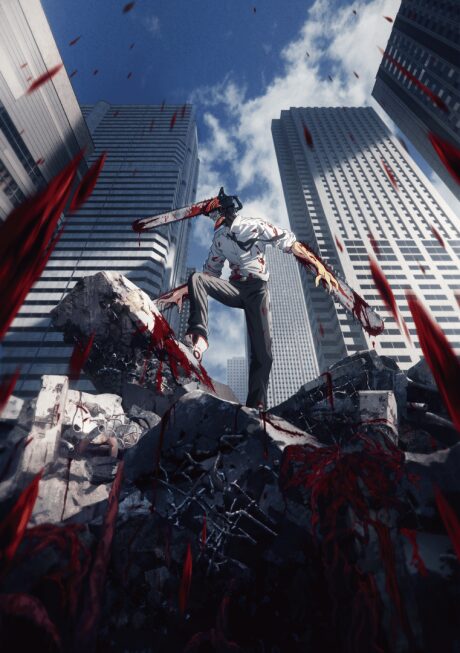
Most dark fantasy premieres spend an episode convincing you the world is dangerous. Chainsaw Man Season 1 Episode 1 — “Dog & Chainsaw” — spends it convincing you a broke teenager and his dog deserve better, then takes almost everything from them anyway. Stay for the debt. Stay for Pochita. Stay for the ending that turns a devil hunter procedural into something much stranger the moment Makima shows up.
Hook
Denji does not want to save the world. He wants jam on toast and a girlfriend who likes him. That is the entire ambition driving the opening act of Chainsaw Man, and it is a deliberately small dream for a story about a boy who fuses with a devil shaped like a chainsaw-eared dog. MAPPA’s premiere understands that the gap between what Denji wants and what he actually has is the whole engine of the episode.
What he has is a dead father’s debt, a body he is willing to rent out to yakuza as bait for low-tier devils, and one loyal companion in Pochita, the Chainsaw Devil living in the shape of a small, injured dog. “Dog & Chainsaw” spends its first half establishing exactly how little room Denji has to dream before it takes his life away entirely — then gives it back in a form nobody in the room expected.
The question this page answers: does Chainsaw Man’s first episode earn its reputation as one of the strongest anime premieres of the decade, or is the hype outrunning what twenty-four minutes can actually deliver? Short answer up front — the hype is earned, and the reasons are specific enough to spell out.
Quick Information
- Anime: Chainsaw Man (Chainsaw Man)
- Season / Episode: Season 1, Episode 1
- Japanese episode title: 犬とチェンソー (“Dog & Chainsaw”)
- Runtime: about 24 minutes
- Studio: MAPPA
- Genres: Action, Dark Fantasy, Horror, Supernatural
- Original air date: October 12, 2022
- Kagex score: 9.0 / 10
- Where to watch legally: Crunchyroll (availability can vary by region)
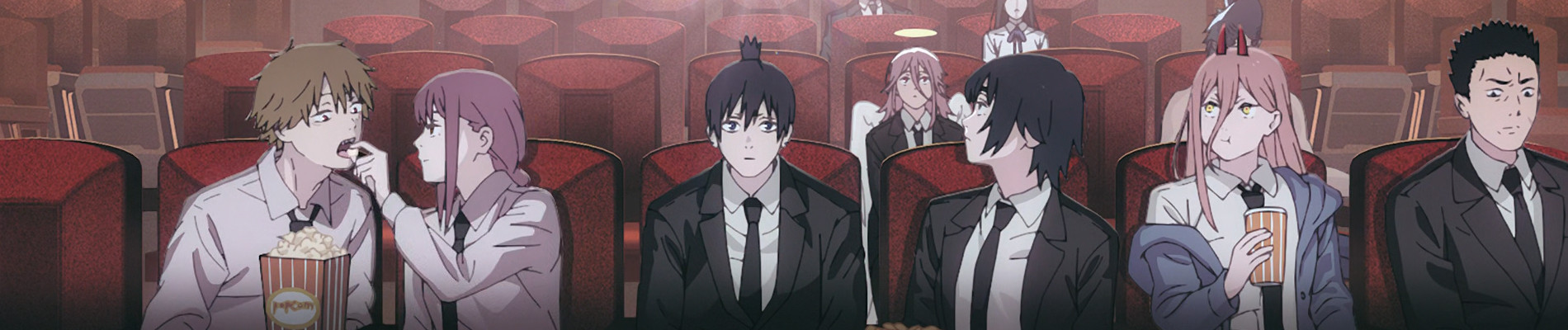
Should You Watch It?
If you want a dark, violent, emotionally sincere action premiere with almost no prior knowledge required, yes — start here. Chainsaw Man Episode 1 is built to be a complete, self-contained gut-punch: introduction, tragedy, transformation, and a genre-shifting final scene, all in one sitting.
Is it worth watching? Yes. It is one of the best-reviewed anime premieres of the past several years for a reason — the craft is immediately obvious and the emotional setup is simple enough to land without homework.
Is it slow? Not really, though it is patient about establishing Denji’s misery before it accelerates into violence. The back third moves fast and stays brutal; the front two-thirds are doing quieter character work that pays off hard once the yakuza betray him.
Is it beginner friendly? Very. Chainsaw Man Episode 1 adapts the manga’s opening chapter closely and needs no context beyond what it shows you on screen.
Who will enjoy it? Fans of ultraviolent seinen action with real heart underneath — Devilman Crybaby and Tokyo Ghoul comparisons are fair, though Chainsaw Man earns its own identity fast. Who might bounce: anyone sensitive to graphic gore; the episode’s climax is genuinely gruesome, not implied violence.
Bottom line: watch it. Few premieres this decade have made a first episode feel this complete while still leaving you desperate for the next one.
Spoiler Warning
Spoilers for Season 1 Episode 1 follow. Stop above if you want a clean first watch. No Episode 2+ plot beyond what this episode itself sets up.
Story Recap
Ordinary Life (a debt he did not choose)
Denji lives in a collapsing shack with Pochita, working off a massive debt his dead father left behind by hunting devils for the yakuza who now effectively own him. The pay is minimal and gets skimmed further before it ever reaches him; the jobs are dangerous enough that most professional hunters would not take them for the money offered. Denji does it anyway, because the alternative is worse, and because a small, stubborn part of him still believes it will eventually add up to something.
His relationship with Pochita softens all of this without erasing it. Pochita is a Chainsaw Devil living as an injured dog, kept alive on Denji’s own blood after Denji found him near death and chose to help rather than walk past. Their bond is the emotional ballast of the entire episode — two creatures with nothing, sharing the little they have.
Unexpected Incident (small devils, smaller dreams)
The episode shows Denji doing his actual job: hunting minor devils like the Tomato Devil for whatever bounty the yakuza deign to hand over. It is unglamorous, physically dangerous work dressed up as a living. Between jobs, Denji fantasizes about ordinary pleasures — jam on toast instead of the sawdust-and-ketchup approximation he currently eats, a girlfriend, anything resembling a normal life. Those dreams are the episode’s quiet thesis: this is not a boy chasing power. He is chasing the most basic comforts other people take for granted.
The yakuza, meanwhile, are drowning in their own devil-related debts. The episode does not spend long establishing them as villains with depth — it does not need to. Their function is betrayal, and the show telegraphs just enough desperation in them to make what happens next feel like cause and effect rather than a random twist.
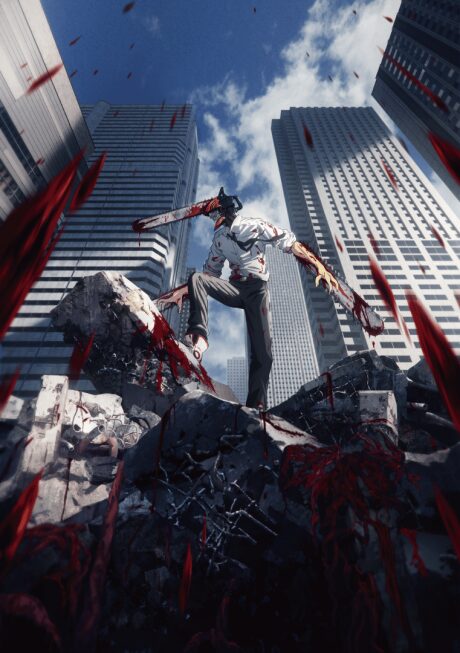
New World (the betrayal and the deal with Pochita)
To settle their own debts, the yakuza sell Denji out to the Zombie Devil, luring him into a trap disguised as another job. He is stabbed, dismembered, and left to die — a sequence the episode stages with unflinching brutality rather than cutting away. As his life ends, Denji’s last coherent thought is regret: not fear of death, but grief that he never got to appreciate the small good things, like simply talking with Pochita about his dreams.
Pochita, dying from his own wounds in the same massacre, offers Denji a way out. He gives Denji his heart, literally, in exchange for one request: let him see Denji’s dream fulfilled. It is a trade built on affection rather than power-fantasy convenience, and the show frames it that way — Pochita is not granting a wish so much as refusing to let the one person who was kind to him disappear for nothing.
First Discovery (becoming Chainsaw Man)
Denji wakes up with Pochita’s heart beating in his chest and a literal chainsaw pull-cord growing out of his sternum. The revival does not make him instantly powerful — he is torn apart again almost immediately by the same zombies, and it takes a second, more complete transformation before he understands what he has actually become. Once the shift locks in, Denji-as-Chainsaw-Man is a different register of threat entirely: chainsaws erupting from his head and arms, tearing through the Zombie Devil and its horde in a sequence built for maximum visceral impact.
The fight is not elegant. It is fast, messy, and gruesome in a way that matches the episode’s established tone rather than sanitizing it for a more conventional shonen power-up beat. Denji does not fight like a hero discovering his destiny; he fights like an animal that has just been given teeth big enough to matter.
Important Encounter (Makima’s offer)
By morning, the massacre is over and Public Safety has arrived to investigate. Makima, a Devil Hunter with the organization, finds Denji still in his chainsaw hybrid form — feral, exhausted, and unrecognizable as human. She approaches without obvious fear, identifies what she is looking at, and hugs him. The contact reverts him to his human body, and Makima lays out the only offer on the table: she can kill him like the devil he currently resembles, or keep him alive as a human and make sure he is fed.
Denji, half in shock and mostly just hungry, responds to the food part of the offer more than the mortal-danger part of it, which is exactly the kind of tonal whiplash the show will keep using as a signature move. The episode ends there — not on a victory lap, but on the quiet, unsettling calm of a boy who just survived his own death accepting a new leash from someone he does not yet understand.
Story Analysis
“Dog & Chainsaw” succeeds because it never confuses grimness with hollowness. Denji’s misery is specific — a debt, a diet, a dog, a fantasy about toast — rather than generic dark-fantasy suffering, and that specificity is why the violence that follows actually costs something instead of just looking impressive.
Pacing is efficient without feeling rushed. The episode adapts the manga’s entire opening chapter and still finds room to let Denji and Pochita’s relationship breathe before the plot demands blood. That patience is why the sacrifice lands as tragedy rather than as mechanics.
Tone shifts hard and often — bleak poverty, genuine warmth, body horror, gallows humor, and a final scene that plays almost deadpan comedic against a backdrop of mass slaughter. The show is telling you upfront that it will not settle into one register, and viewers who need consistent tone will want to notice that immediately.
Theme is want versus deprivation. Denji does not dream of saving anyone; he dreams of a normal life he has never gotten to have. Pochita’s gift is not power for its own sake — it is a chance for someone to finally get something good. That framing keeps the episode from feeling like empty shock value even at its most graphic.
The Makima cliffhanger works because it refuses to resolve the tone the episode just spent twenty minutes establishing. Is she a savior, a new owner, or something else entirely? The premiere does not say. It just hands Denji — and the audience — a new leash and lets the discomfort sit.
Character Analysis
Denji — a small dream in a brutal body
Denji’s defining trait in Episode 1 is not toughness. It is a stubborn, almost naive optimism about what a good life would look like, paired with a willingness to endure real physical horror to get there. His grief when he dies is not about unfinished business or vengeance — it is about not appreciating what little he had. That emotional register makes his transformation feel earned rather than merely spectacular.
Pochita — the dream’s first believer
Pochita is the episode’s emotional core. A devil that could reasonably be feared or exploited instead chooses loyalty to the one person who was kind to it, and his sacrifice reframes the entire premiere: this is not a story about a boy gaining monstrous power. It is a story about a dog-shaped devil who wanted his friend to live long enough to be happy.
Makima — calm at the center of a massacre
Makima gets minimal screen time but maximum impact. Her composure around a blood-soaked hybrid monster, her casual authority over life and death, and the specific, almost domestic terms of her offer — fed, kept, human — establish her as someone operating on rules the episode has not explained yet. That restraint is deliberate; Episode 1 wants you curious, not informed.
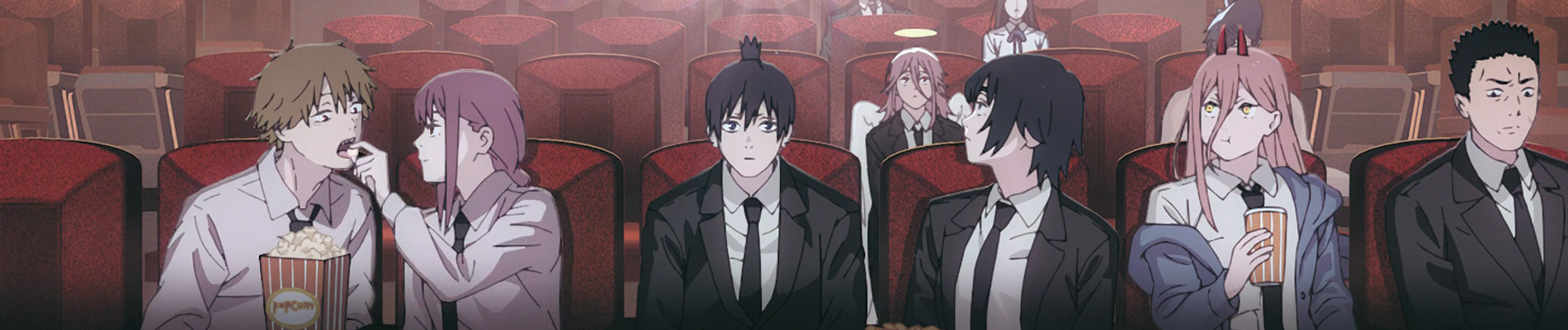
World Building
Episode 1 keeps its lore close to the ground and lets you infer the bigger picture. First, devils are common enough to have an economy built around hunting them — bounties, yakuza contracts, and desperate freelance hunters like Denji all exist because devils are a persistent, monetizable problem, not a rare event. Second, Public Safety is the professional, government-adjacent tier above street-level hunting, arriving only once the body count is high enough to matter. Third, devils can bond with humans through sacrifice, as Pochita’s fusion with Denji demonstrates — a rule the episode shows rather than explains, trusting the emotional logic to carry it.
None of this needs a glossary. The episode teaches its rules through what happens to Denji, which keeps the world feeling dangerous and specific rather than encyclopedic.
Animation Review
MAPPA’s production makes an immediate case for itself. Backgrounds carry real texture and grime appropriate to Denji’s poverty; the Zombie Devil massacre is staged with confident, readable choreography even at its most chaotic, and the final transformation sequence sells scale and menace without losing clarity in the carnage. This is not restrained, tasteful violence — the episode leans into gore because the story’s stakes are physical and immediate, and the animation backs that choice up with weight and follow-through rather than empty shock cuts.
Character acting during the quieter Denji-and-Pochita scenes is just as important as the action. Small gestures — Denji sharing his own blood, Pochita’s tired posture — do the work of making their bond legible before the plot asks you to grieve it.
Music and Voice Acting
Kensuke Ushio’s score threads abrasive, almost industrial cues through the action while leaving space for quiet, melancholy stretches around Denji and Pochita. Kenshi Yonezu’s opening theme, “Kick Back,” debuts alongside the premiere and immediately signals the show’s confidence in its own identity, while Vaundy’s “Chainsaw Blood” closes the episode as the first of what becomes a rotating cast of ending themes — a structural choice that turns the soundtrack itself into part of the show’s appeal.
Kikunosuke Toya’s performance as Denji, in his first major role, balances scrappy resentment with real vulnerability, particularly in the death scene. Tomori Kusunoki’s brief turn as Makima is deliberately underplayed — calm, pleasant, faintly unreadable — exactly the register the character needs for a first impression that raises more questions than it answers.
Hidden Details
Denji’s fixation on small comforts — toast with jam, a girlfriend, breakfast — recurs specifically enough that it functions as a character motif rather than throwaway characterization; watch for how often the show returns to food as a stand-in for basic dignity. Pochita’s choice to give his heart rather than simply lend power is also worth noting: the gift is framed as continuation of Pochita himself, not a tool handed to Denji, which sets up a relationship that outlives the dog’s literal death.
Makima’s specific phrasing — kill you like a devil, or keep you as a human — plants a rule the show has not explained yet about how she categorizes the people and creatures around her. It is a small detail on first watch and a much larger one in hindsight.
Also notice how little screen time the yakuza get once their betrayal is complete. The episode has no interest in relitigating their motives; their only narrative job was to take everything from Denji so Pochita’s gift could give it back in a different shape.
Best Moments
Denji and Pochita’s blood-sharing bond. Quiet, tender, and the reason the later sacrifice hurts.
The betrayal and death. Brutal without being gratuitous for its own sake — every wound serves the emotional turn.
“I’ll give you my heart.” The episode’s thesis in one line.
The Chainsaw Man massacre. Visceral, confident, and exactly as unglamorous as the premise demands.
Makima’s hug. A tonal gear-shift that turns horror into something colder and more curious.
Pros and Cons
Pros: exceptional emotional setup for a premiere this violent, MAPPA’s confident action direction, a genuinely moving Denji-Pochita bond, a cliffhanger that reframes the entire show’s tone without over-explaining.
Cons: the gore is graphic and unflinching, which will be a hard limit for some viewers; the yakuza antagonists exist purely as plot mechanism with almost no interiority.
Final Verdict
“Dog & Chainsaw” is a rare premiere that is simultaneously a complete emotional arc and an effective hook for everything after it. Denji’s poverty and Pochita’s sacrifice give the violence real stakes, and Makima’s entrance closes the episode on exactly the right note of unresolved unease. For Kagex Blog, that is a 9.0 — one of the strongest first episodes in recent dark fantasy anime.
- Story: 9.1 / 10
- Characters: 8.9 / 10
- Animation: 9.3 / 10
- Music: 9.0 / 10
- Enjoyment: 8.8 / 10
- Overall: 9.0 / 10
Recommendation: watch it, with a graphic-violence content note in mind. If Pochita’s sacrifice hit you, Chainsaw Man has earned your Episode 2.
What to Expect Next
Episode 1 ends with Denji alive, fed, and newly obligated to Makima and Public Safety. Without spoiling how, expect the next stretch to answer what Denji’s life actually looks like as Chainsaw Man on a leash — new coworkers, new rules, and the beginning of whatever Makima actually wants from him. If the ending made you uneasy rather than reassured, that unease is doing exactly what it is supposed to.
FAQ
Is Chainsaw Man Episode 1 worth watching?
Yes. It is a complete, self-contained premiere widely regarded as one of the strongest episode-one anime debuts in recent memory.
How graphic is the violence?
Very. The Zombie Devil massacre and Denji’s death are shown directly, not implied. This is not a series for viewers sensitive to gore.
Who is Pochita?
The Chainsaw Devil, living as Denji’s dog for most of the episode before fusing with him to save his life.
Who is Makima?
A Public Safety Devil Hunter introduced in the episode’s final scene. Her full role is deliberately left unclear at this point.
Do I need to read the manga first?
No. The episode adapts the opening chapter closely and needs no outside context.
Is Episode 1 action-heavy?
The back third is intensely action-heavy; the front two-thirds are character setup with only minor devil-hunting skirmishes.
Where can I watch it legally?
Crunchyroll is the common legal home; check your region.
Is Chainsaw Man good for beginners to seinen action anime?
Yes, with the graphic-violence caveat. It assumes no prior genre knowledge and explains its rules as it goes.
Keep exploring
- Chainsaw Man — anime hub
- Browse seasons & episodes
- Chainsaw Man Season 1 review — coming soon
- Chainsaw Man full series review — coming soon
- Episode 2 review — coming soon
Your turn
Did Pochita’s sacrifice or Makima’s entrance hit harder for you? Were you expecting the gore level this early, and did it work for the story? What score would you give Episode 1, and are you continuing straight into Episode 2?